Bridging Divides Through Entrepreneurship
In a landscape where hopes for resolving the Israeli-Palestinian conflict remain dim, a unique startup accelerator program, 50:50 Startups, is actively fostering collaboration between Israeli and Palestinian entrepreneurs. Now in its seventh year, the program, co-founded by Israeli-American Amir Grinsteen, aims to build lasting bridges and advance the cause of peace by encouraging individuals from opposing sides to build businesses together. This year’s cohort, however, is smaller than usual, as the ongoing war has significantly hampered travel for many participants, with over half attending virtually via Zoom, according to reports.
Salah Hussein, a 33-year-old Palestinian entrepreneur from Nablus, exemplifies the program’s mission. Having experienced trauma from an encounter with Israeli soldiers in his youth, he once viewed all Israelis as a threat. Decades later, Hussein has willingly partnered with Yana Shaulov, an Israeli Jew, as his co-founder. Their venture, Qanara Tech, is developing AI-powered cameras to detect and prevent greenhouse pests, an innovative solution aimed at improving food security. Hussein’s determination stems not only from the practical need for resources and capital but also from a deep-seated desire for change. “If we are not the ones looking for change, who will be? We are the right people at the right place, at the right time. We have to move on,” he stated, emphasizing his commitment to creating a world free from hatred for his children. Hussein also noted that a previous venture of his fell apart shortly after Hamas’s attack on Israel on October 7th, 2023, and the subsequent war, citing the immense tension as a factor.
Shaulov, a 37-year-old molecular biologist, joined the 50:50 program with her own startup idea but found a stronger synergy with Hussein’s team. Having grown up in a mixed neighborhood in Haifa, she is accustomed to coexistence. “It’s not always easy, you can feel the tension sometimes, but [Israelis and Palestinians] are both here to stay, and we have to live together at the end of the day,” Shaulov remarked. She acknowledges that the collaborations within 50:50 are a “small start” but believes their efforts can be “contagious,” inspiring others to see the possibility of working together. She added that it is “already worth it just to show other people that it’s possible.”
The 50:50 Startups program, co-founded by Amir Grinsteen in 2019, partners with institutions like Tel Aviv University and Northeastern University in Boston. Grinsteen’s core belief is that creating a business together is one of the most profound ways to bond two people, fostering a partnership built on equality, shared goals, mutual trust, and reliance. “Its very intimate, it’s very intense, it’s up and down like a roller coaster, and it’s long term,” Grinstein described the process. “They have to try hard to work together. They’ll fail together or they’ll succeed together.” The program has navigated significant challenges, including the COVID-19 pandemic, the events of October 7th, 2023, and subsequent wars, all of which have disrupted travel and participation. This year, over half of the entrepreneurs could only join the culminating session in Boston virtually via Zoom.
Despite these hurdles, Grinsteen emphasizes that 50:50 is not a political organization, allowing it to create an environment where participants can see each other as individuals rather than adversaries. The program facilitates organic trust-building, with Grinsteen hoping that the friendships forged will transcend business and enable more challenging conversations. Unlike other coexistence programs, there are no specific dialog workshops or trust-building exercises; Grinsteen believes this happens organically. “The elephant is obviously in the room, so we’re not ignoring it,” Grinstein says. “But what I want is to see the Israelis and Palestinians develop friendships that transcend the business, and then naturally you will have coffee with your partners and you might be in a better position – after you build trust, after you work together — to have conversations that are tough and challenging.”
The program’s impact extends beyond the direct participants. Since its inception, 50:50 has engaged approximately 320 individuals. The relationships formed have ripple effects on their friends and families, as well as on the Northeastern undergraduates who intern with the startups. Senior Alexa Garcia, who participated in Grinstein’s class, shared how observing the entrepreneurs interact, laugh, and tease each other was a profound learning experience. “Sometimes it’s so easy to forget that they’re on such different sides of a conflict because they seem like such good friends, like the banter is crazy,” she noted. “A lot of times it’s just completely out of my mind that they are on two different sides of conflict.”
Garcia and other students in the class reported a shift in their perspectives. Initially holding distinct leanings towards either Israelis or Palestinians, their views evolved as they got to know the entrepreneurs personally and understood the hardships faced by both sides. Incidents like delayed team meetings due to a Palestinian being held at a checkpoint or an Israeli needing to seek shelter from rocket fire highlighted the shared difficulties. “Both sides have been through so much, both have done right, both have done wrong,” Garcia concluded. “The more I learn, there’s no side for me.”
Navigating Past Grievances Toward Future Possibilities
The program is not without its difficult moments. Salah Elsadi, a Palestinian who lived in Gaza for 15 years, initially joined 50:50 solely to build his business, not bridges. However, he found himself in a candid conversation with Sarah Blum, a French Israeli woman, at a public event in Boston. Blum recounted a knife attack she experienced about ten years prior by a Palestinian man from Jerusalem, stating, “He wanted to kill me.” Elsadi was taken aback but listened as Blum shared how close Palestinian friends were among the first to check on her, underscoring the importance of dialogue even in dire circumstances. When Blum inquired about Elsadi’s family in Gaza, his response was grim: “Not good. They’re struggling to find water or food. My youngest brother has chronic disease and can’t get medicine.” Blum, in turn, shared the trauma of close family friends who were in Kfar Aza on October 7th, losing loved ones taken hostage and killed in Gaza, and facing a lack of medicine during captivity, as reported by NPR. This emotionally charged exchange, which could have easily escalated, concluded with a hug. Both participants expressed that the encounter reinforced their belief in shifting focus from past grievances to future possibilities. “We need to start a new thing, not just to remember the last things which remind us that ‘Oh, I need to take revenge,'” Elsadi stated. “We cannot continue war, war, war, war. How long do we want it to continue?”
In another instance, a Palestinian man who grew up in a refugee camp near Hebron shared his experiences of humiliation by Israeli soldiers at checkpoints. He later discovered that one of the Israeli participants he had befriended in the program was, in fact, one of the soldiers stationed near his home. The Palestinian man found it striking to hear the former Israeli soldier describe the intense fear he and his colleagues felt towards Palestinians, constantly on edge, anticipating attacks. “They feel [the Palestinians] will attack them, or maybe shoot them, so they always stand by, [with] nerves tense,” the Palestinian man said, as reported by NPR. He added, “At the end of the day [the soldier is] a human being. He’s someone like me who just wants to get back home safe and have dinner with [his] family.”
However, sharing such perspectives can be fraught with peril back home. The Palestinian man requested anonymity, explaining that such talk is often perceived as betrayal, particularly in the current climate. “People say it’s like betraying, especially in this situation, [where] everything is on fire,” he said, fearing he might become a target. This highlights the societal pressures and potential backlash that participants may face for engaging in cross-cultural dialogue and collaboration, as noted in the NPR report.
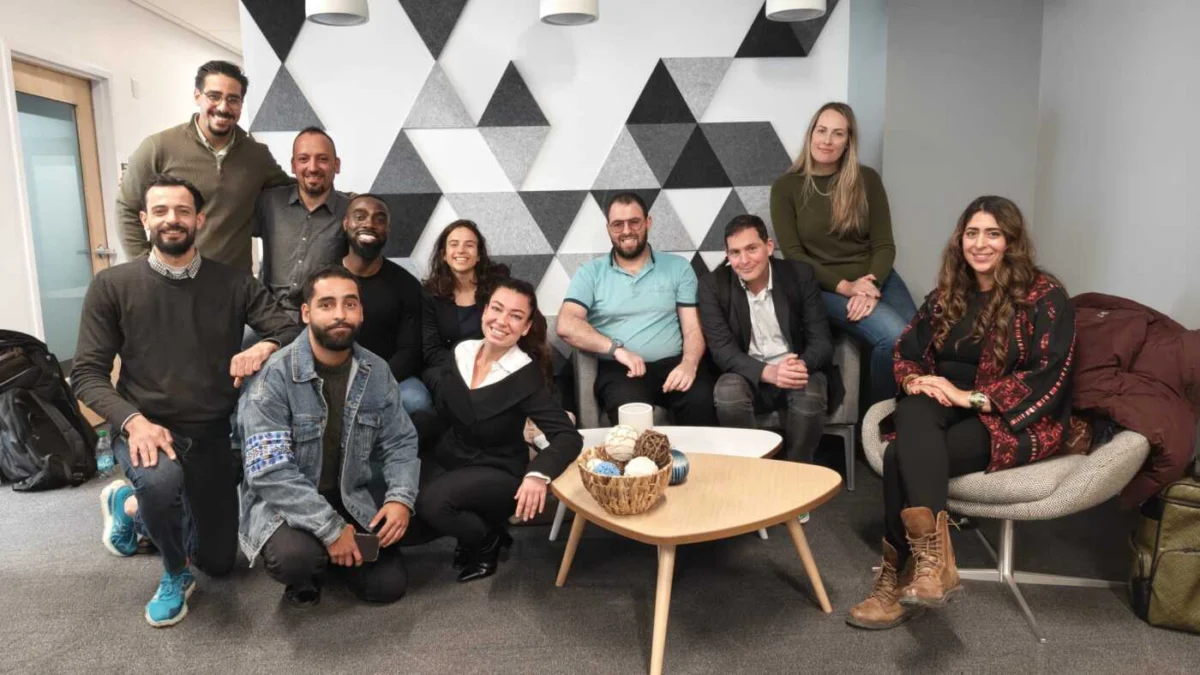
The program culminates in a Shark Tank-style event in Boston, where teams pitch their ventures to potential investors. Investors scrutinize not only the business ideas but also the dynamics of the partnerships, recognizing that they are investing in the team as much as the product. While some investors may view these cross-cultural collaborations as inherently risky, others perceive them as a potential asset, acknowledging the unique resilience and perspective they can bring. Hagar Shmaia, an Israeli entrepreneur, was among the approximately dozen Israeli and Palestinian entrepreneurs who presented their ideas, showcasing the diverse range of innovations emerging from the program.
The 50:50 Startups program, despite its small scale, has successfully fostered an environment where individuals from conflict-ridden backgrounds can find common ground through entrepreneurship. The program’s emphasis on organic relationship-building and shared business goals provides a unique platform for fostering understanding and potentially contributing to a more peaceful future, one startup at a time. The resilience of the program, having weathered global crises and regional conflicts, underscores the enduring human desire for connection and progress, even in the most challenging circumstances.