The Fizz-Free Frontier
The beverage industry is witnessing a significant shift as non-carbonated drinks, both alcoholic and non-alcoholic, are increasingly capturing consumer attention and market share, challenging the long-held dominance of seltzers and other bubbly beverages. This trend, particularly pronounced among Generation Z consumers, signals a potential evolution in drinking preferences, moving away from the effervescence that defined much of the beverage market over the past decade.
For years, flavored seltzers, epitomized by brands like LaCroix, experienced a meteoric rise, becoming ubiquitous in refrigerators and on store shelves. However, this era of carbonation appears to be waning, giving way to a growing demand for still, or non-carbonated, options. “If you think about where there’s more growth, where there’s more consumer interest relative to a few years ago, it’s a shift more to still, across both [alcohol] and non-alc,” stated Randy Burt, Americas director of consumer products at consulting firm AlixPartners. While carbonated beverages are unlikely to disappear entirely, their growth trajectory has demonstrably slowed, prompting beverage companies to redirect innovation efforts toward fizz-free alternatives.
This shift is particularly evident in the alcoholic beverage sector. Malt-based hard seltzers, which include prominent brands like White Claw, experienced a volume decline of 1.1% in the 52 weeks ended April 26, according to data from market research firm Circana. In stark contrast, the ready-to-drink (RTD) premixed cocktail category saw a remarkable volume surge of 46.4% during the same period. This growth has been significantly propelled by brands such as Surfside, Sun Cruiser, BuzzBallz, and Anheuser-Busch InBev’s Cutwater Spirits, the latter offering a mix of both carbonated and non-carbonated options.
Gen Z Drives the Bubble-Free Movement
The primary catalyst behind the move from bubbly to non-carbonated drinks is Generation Z, a demographic typically defined as individuals born between 1997 and 2012. This generation has grown up in an era marked by declining soda consumption from its 1998 peak, the widespread adoption of reusable water bottles, and the mainstreaming of diverse drink categories like refreshers and dirty sodas. Gen Z consumers exhibit a distinct preference for exploring new products, often displaying less brand loyalty compared to older generations when it comes to alcoholic beverages.
Scott Scanlon, executive vice president of alcoholic beverages for Circana, observed a trend of “promiscuity within consumption and alcohol around new products,” referencing the initial surge of brands like White Claw and Truly approximately eight years ago. He noted that today’s consumers, particularly Gen Z, are quick to adopt the next new product, such as Surfside and Sun Cruiser. This generational divergence is clear as Gen Z comes of drinking age, with their preferences diverging from those of millennials, who were enthusiastic adopters of seltzers. “Gen Z is a lot more likely to order tea-based beverages at happy hour, and they’re sort of moving from carbonated — or seltzers — as their default, ‘better for you’ pick,” Burt explained. He further elaborated that this shift aligns with a broader trend toward wellness and functionality, especially from a Gen Z perspective.
Beyond generational preferences, several other factors contribute to the appeal of non-carbonated beverages. For consumers seeking functional teas and coffees that offer benefits like stress relief or immune support, a fizz-free format often makes more sense. Additionally, not all consumers perceive carbonation as a healthy choice. Carbonated water, being slightly acidic, can potentially erode tooth enamel with excessive consumption, particularly when citric acid is used for flavoring. Furthermore, fizzy drinks can lead to bloating and burping for some individuals. There is also a lingering association between bubbles of any kind and sugary sodas, which many consumers are actively trying to avoid.
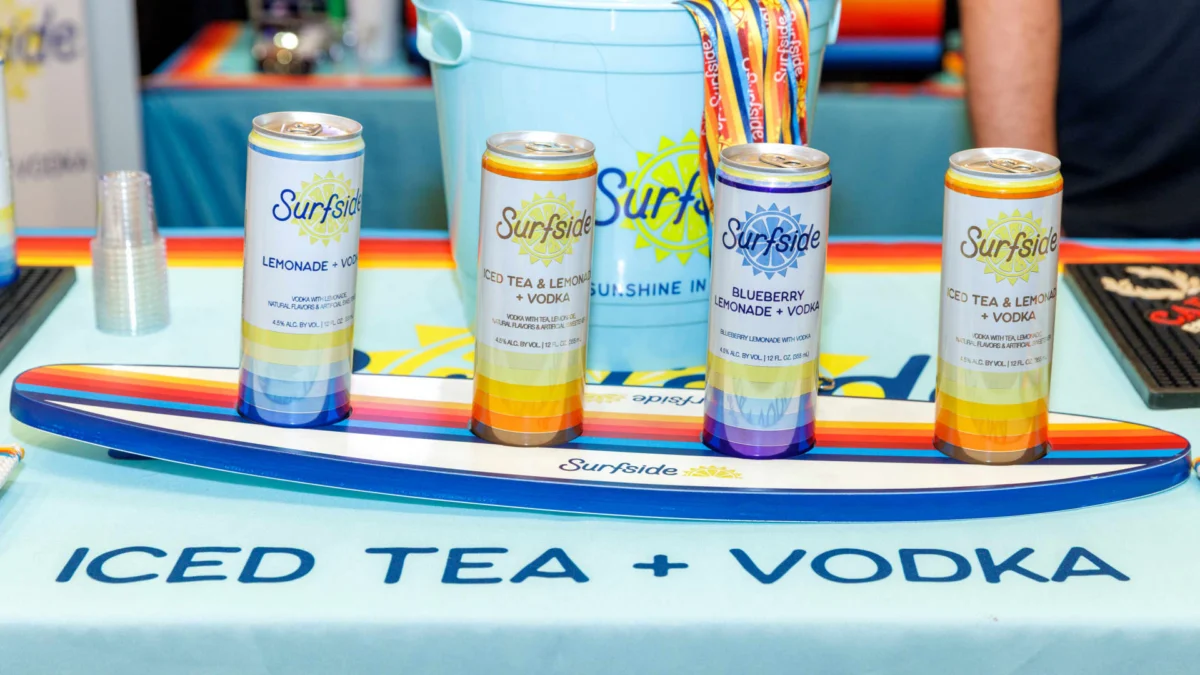
The rise of Surfside, an indie vodka distiller’s hard iced tea brand launched in 2022 by Stateside Brands, exemplifies the success of non-carbonated alcoholic options. The ready-to-drink beverage combines vodka with iced tea and lemonade. At its inception, carbonation was prevalent across the alcohol industry. Clement Pappas, co-founder and CEO of Stateside, expressed surprise at the market’s saturation with carbonated iced tea and lemonade, questioning the rationale behind it. “Who carbonates iced tea? That seems unholy,” he remarked. Consumers, it appears, agreed. By 2024, Surfside had become the fastest-growing alcohol brand in the U.S., according to Nielsen IQ data. Pappas attributed this success to a “huge pent-up demand for non-carbonated options,” particularly in a ready-to-drink format, noting the scarcity of such products.
Surfside’s consumer base predominantly comprises women, many of whom, according to Pappas, dislike carbonation due to its tendency to cause bloating, especially after consuming multiple drinks. In response to this demand, Stateside is expanding its fizz-free offerings with its new brand, Super Lyte, which also uses vodka as a base but incorporates a mixer inspired by sports drinks. While Surfside has significantly disrupted the seltzer market, other non-carbonated alcoholic beverages have also experienced rapid growth. Cutwater’s canned cocktails, for instance, have nearly doubled their volume growth over the past year, as reported by Scanlon. BeatBox, a wine-based punch brand now majority-owned by InBev, has seen a surge in demand following increased distribution by the beverage giant. BuzzBallz, a pre-mixed cocktail brand established in 2009, experienced a significant growth acceleration after its acquisition by Sazerac in 2024. Established players are also entering the non-carbonated space; Boston Beer, the owner of Twisted Tea, launched Sun Cruiser in 2024 to directly compete with Surfside. Currently, Surfside holds a larger share of the overall market, though Sun Cruiser is demonstrating faster growth.
Celsius Leads the Non-Alcoholic Charge
On the non-alcoholic front, the transition to bubble-free drinks is less pronounced than in the alcoholic sector, according to AlixPartners’ Burt. Nevertheless, signs of a market shift are emerging. Some carbonated beverages continue to exhibit strong growth, including PepsiCo’s Poppi and energy drinks like Celsius and Ghost. Celsius, in particular, has strategically expanded its fizz-free line of energy drinks this year, driven by Gen Z’s emphasis on wellness and the broader trend toward noncarbonated beverages across various categories.
Traditionally, the energy drink aisle is dominated by carbonated options, providing Celsius with a unique opportunity to differentiate itself and attract consumers who might otherwise opt for tea or coffee for their caffeine intake. The brand’s existing noncarbonated peach mango green tea flavor has consistently ranked among Celsius’s top 10 performers, currently holding the fourth position among all its flavors, according to Celsius Chief Brand Officer Kyle Watson. This expanded fizz-free line has been instrumental in boosting Celsius’s sales among Gen Z and women, two crucial demographic segments within the energy drink market.
Watson highlighted insights from consumer focus groups, noting that even brand ambassadors at universities express a dislike for carbonated beverages. He further explained that consumers seeking “functional beverages — like those touting high protein content, prebiotics, caffeine or other benefits — they want ‘a better flavor experience.'” According to Watson, the appeal of Celsius’s fizz-free line lies in its “really smooth” texture, making it a more suitable accompaniment to meals. Approximately 37% of Celsius consumers reportedly drink their energy drinks with a meal. Recognizing the importance of this attribute, Celsius has prominently featured its noncarbonated status on the packaging of its expanded line, emphasizing the smooth, refreshing flavor profile.
Other beverage brands are also capitalizing on the growing aversion to carbonation. Michael Pengue, CEO of Hint, a flavored water company founded in 2005, believes that the shift away from bubbles will invigorate sales for his brand, which has seen stagnated growth despite a loyal following, particularly in Silicon Valley. Hint, which offers some sparkling options but primarily focuses on still water, is implementing new packaging and an advertising campaign to attract consumers. Pengue draws a parallel to his earlier career at Nestle, where he managed water and tea brands like Perrier and San Pellegrino. He recalled how the demand for healthier alternatives to sugary sodas led consumers to sparkling waters, causing a boom in that segment. “All of sparkling [water] exploded. We’re seeing the same exact thing now, just the opposite,” Pengue stated, suggesting that the current trend favors still beverages.
Hint’s still flavored water is promoted for its “drinkability” and “pure hydration,” offering an advantage over sparkling waters that are consumed more slowly. Pengue also noted its “sensory softness,” which appeals to consumers who dislike the sharp sensation of carbonation. For beverage companies, aluminum cans present a cost-effective and sustainable packaging solution compared to glass or plastic bottles. Consumers also perceive cans as keeping beverages colder and, perhaps more importantly, as being trendier, echoing the appeal of beverages during the seltzer boom.
The aluminum can itself is becoming a symbol of this shift. Ronald Lewis, CEO of Ball Corporation, the world’s largest manufacturer of aluminum packaging, noted on a recent earnings call that “the can is winning.” Liquid Death, a canned water brand, is credited by Celsius’s Watson with paving the way for consumer acceptance of fizz-free canned drinks. When Liquid Death founder Mike Cessario launched the company in 2017, he faced challenges in finding U.S. bottlers capable of canning still water. Unlike carbonated beverages, which maintain their shape due to internal pressure, non-carbonated drinks require a nitrogen infusion to prevent can collapse. Cessario’s strategy for encouraging consumers to buy canned water, an initially unconventional idea, was to position Liquid Death as a cool, beer-like brand rather than just another bottled water. This branding approach resonated with consumers, and Liquid Death has since expanded to include sparkling and flavored sparkling lines, while also returning to its non-carbonated roots with iced tea in 2023.


