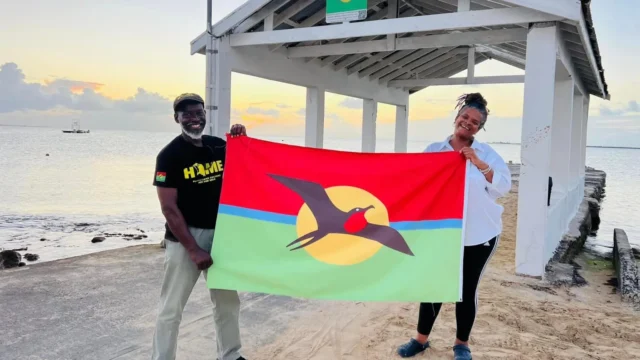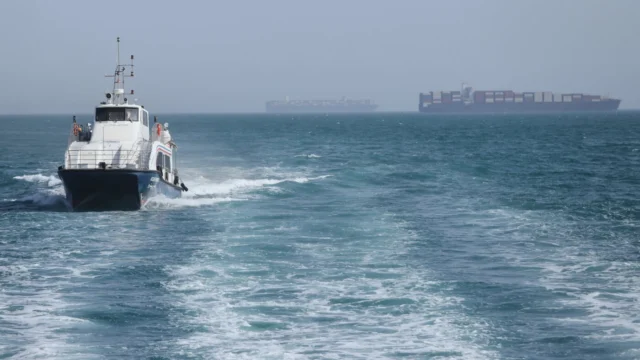
Morocco is intensifying its promotion of tourism in Western Sahara, a move that rights advocates and international law experts contend could serve as a strategy to bolster its claims over the disputed territory. While destinations such as Dakhla are being marketed as premier Moroccan locales, the United Nations continues to classify the region as a "non-self-governing territory," where the indigenous population has yet to exercise its right to self-determination through a vote.
Morocco's concerted efforts to develop tourism infrastructure, including the expansion of air travel routes and the establishment of new accommodations, have reportedly led to a significant increase in visitor numbers. Data from the Moroccan Ministry of Tourism indicates a rise of over 50% in tourist arrivals to the Morocco-administered parts of Western Sahara over the past seven years. Specifically, visitor numbers are reported to have climbed from 490,297 in 2019 to an anticipated 743,133 by 2025. This growth is significantly influenced by airlines like Ryanair, Transavia France, and Binter Canarias, which now offer direct flights from European cities to the region.
The marketing practices of these airlines and other travel companies, which often list Western Sahara's destinations as part of Morocco, are drawing considerable criticism. Erik Hagen of the campaign group Western Sahara Resource Watch argues that such commercial activities risk distorting international law and public perception. He emphasizes that these practices raise critical questions about corporate responsibility when operating in politically sensitive areas that are subject to international dispute and potential illegal occupation.
While Booking.com states it provides information to help travelers make informed decisions and advises consulting official government travel advisories, the company acknowledges that certain regions may be categorized as disputed or impacted by conflict. Expedia has declined to comment on the matter, and Trivago has been approached for a statement. Dr. Andrea Maria Pelliconi, an international human rights law expert at the University of Southampton, suggests that companies failing to clearly distinguish Western Sahara from Morocco could face legal challenges. These potential lawsuits could stem from violations of international law, the Sahrawi people's right to self-determination, and consumer protection regulations, particularly under EU law.
Western Sahara was a Spanish colony from 1884 until 1976. Following Spain's withdrawal, Morocco laid claim to the territory, initiating an armed conflict with the Polisario Front, a Sahrawi independence movement. A United Nations-brokered ceasefire in 1991 established provisions for a self-determination referendum, a vote that has yet to be conducted. Currently, Morocco administers approximately 80% of Western Sahara, which it considers its "southern provinces," while the Polisario Front controls a smaller eastern segment of the territory.
In a significant political development, the UN Security Council recently prioritized Morocco's proposal for Western Sahara to become an autonomous region within Morocco. This decision was accompanied by the extension of the UN peacekeeping mission in the area for an additional 12 months. This move followed the United States' 2020 decision under President Trump to recognize Morocco's sovereignty claim over Western Sahara, a decision made in exchange for Morocco's normalization of relations with Israel.
The Polisario Front views Morocco's substantial investments in tourism and infrastructure within Western Sahara as an attempt to impose a "fait accompli" and legitimize its de facto control. Sidi Breika, the Polisario Front's representative to the UK and Ireland, asserts that the majority of tourists visiting the region are not adequately informed about the ongoing territorial dispute. He contends that economic development projects undertaken in the territory under Moroccan administration violate the Sahrawi people's fundamental right to self-determination and independence, rights that are clearly recognized by the UN.
Breika further stated that the Polisario Front is closely monitoring the operations of airlines such as Ryanair and is actively considering legal action against them. He emphasized that economic projects do not supersede the Sahrawi people's will to decide their own future. Despite Morocco's diplomatic efforts and shifts in international political alignments, the international legal framework continues to underscore the necessity of a mutually agreed-upon political solution under UN supervision. The Polisario Front has consistently rejected the autonomy proposal, maintaining that any resolution must respect the Sahrawi people's right to self-determination.
Tom Ruck, a UK tourist who recently visited Dakhla, described the area as having numerous new resorts but noted that they felt largely unoccupied. He observed a limited number of other tourists, suggesting the area was still in its early stages of development for tourism. Ruck also noted the presence of Moroccan flags and that his passport received a Moroccan stamp upon arrival, reinforcing the perception of Moroccan administration.
Morocco's national carrier, Royal Air Maroc, along with international airlines like Ryanair and Transavia France, now operate direct routes to Dakhla and Laayoune, the territory's largest city. Transavia France has stated that it operates flights to Dakhla in accordance with authorizations received from the relevant authorities. Ryanair has not yet responded to requests for comment. In contrast, Binter Canarias, the airline of Spain's Canary Islands, distinguishes the region by referring to it as Western Sahara in its flight listings, operating services to both Dakhla and Laayoune.
Erik Hagen of Western Sahara Resource Watch highlights that airlines and booking platforms referring to the territory as part of Morocco are both concerning and misleading. He argues that such practices contribute to a distortion of international law and public understanding, raising significant questions about corporate due diligence in politically sensitive and potentially illegally occupied territories.
When searching for accommodations in Western Sahara on major international booking platforms such as Expedia, Booking.com, and Trivago, listings are often categorized under Morocco. Booking.com's policy is to add information for disputed or conflict-affected regions to aid traveler decision-making, recommending consultation of official travel advisories. Expedia has declined to comment, and Trivago has been approached for a statement.
Dr. Pelliconi's legal analysis suggests that companies failing to differentiate Western Sahara from Morocco could face litigation for violating international law, the Sahrawi people's right to self-determination, and consumer protection rules. This legal scrutiny could extend to fair competition regulations within the EU.
Campaign group pressure has yielded some results, with Airbnb previously ceasing to list properties in Western Sahara as being in Morocco. The ongoing situation underscores the combination between economic development, tourism promotion, and the unresolved political status of Western Sahara, with significant implications for international law and corporate accountability.