Barbuda: A Fight for Coastal Access
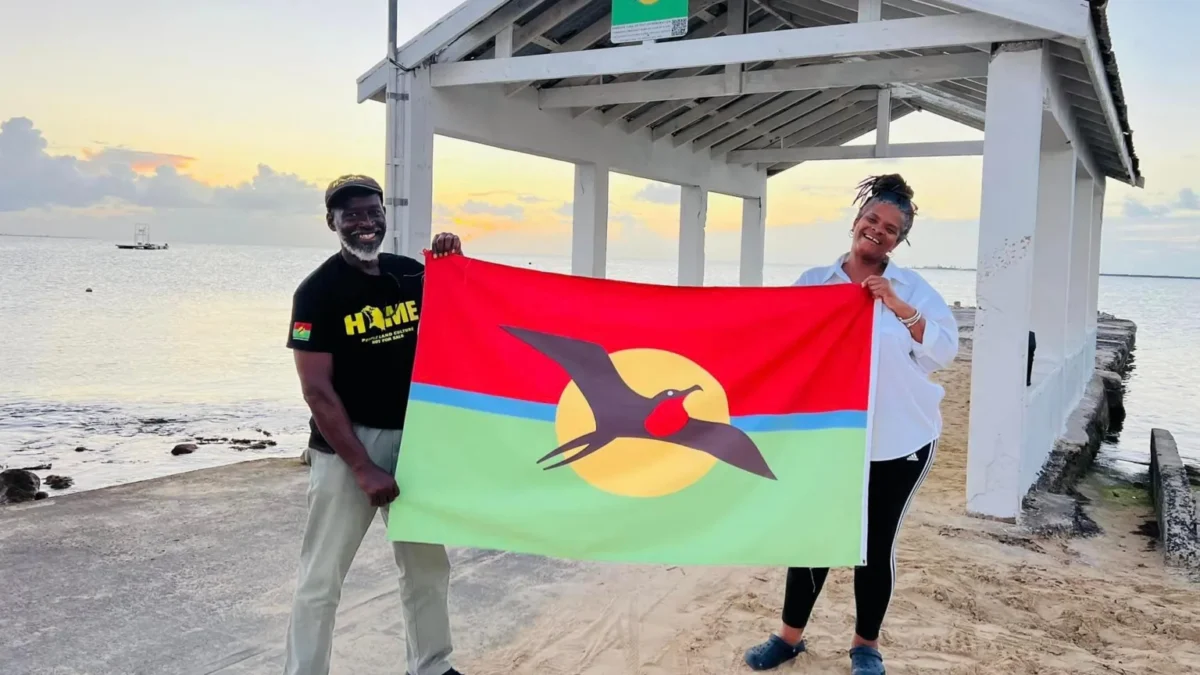
On the small Caribbean island of Barbuda, the Pink Sands Beach Bar was a beloved local gathering spot for over two decades. “It was a very warm place,” recalls Miranda Beazer, its former owner, describing how locals would congregate there for dominoes or to relax after Sunday church services. The bar, named for its distinctive rose-tinted sand, was a pillar of the community. However, its existence was tragically cut short in 2017 when Hurricane Irma devastated the island, forcing the evacuation of nearly 2,000 Barbudans to the sister island of Antigua. Both Miranda’s bar and her home were destroyed in the storm. “There’s nobody that was unscathed… it was devastating. I cried for two weeks,” she recounted. The personal tragedy deepened when her husband passed away before the bar could be rebuilt. In the aftermath, foreign developers began approaching Miranda with substantial financial offers for her land, all of which she refused. “It’s not the money that I’m after,” Miranda stated, “I actually want to retain my land.” Despite her wishes, bulldozers arrived and demolished what remained of the bar, an act Miranda alleges was carried out by foreign developers. She has since been engaged in a legal battle to reclaim access to what she asserts is her property. This struggle is complicated by the unique property laws of Antigua and Barbuda. In Barbuda, land ownership is communal. While individual citizens can apply for a lease to occupy a plot, they do not hold private title. Instead, all land is collectively owned, and citizens possess the shared right to be consulted and to have the final say on significant development projects. This system of land tenure was established following the abolition of slavery in Barbuda in 1834 and was formally recognized by the government of Antigua and Barbuda in 2007 with the passage of the Barbuda Land Act. Miranda claims to hold a lease for 30 acres of coastline but currently has access to only eight. The Global Legal Action Network (GLAN), a legal support group assisting her, contends that the remaining land is being unlawfully occupied by foreign developers Murbee Resorts and Peace Love and Happiness (PLH). Murbee has stated in a press release that it is a legal leaseholder in Barbuda and “has not carried out construction activity on any land for which it does not have legal authority to do so, or at all.” PLH has asserted that it “does not and has never” occupied the land and has “strictly followed” all agreements since securing a lease for land in Barbuda in February 2017. Nevertheless, Miranda, alongside other Barbudan campaigners, remains resolute in her fight for access. “If you were to ever come here and experience it yourself, you would really understand why we’re so committed to this little piece of rock that we have.” Miranda’s plot represents the last remaining stretch of Barbuda’s southern coastline accessible to locals. However, in common with many beaches on islands throughout the Caribbean, where local populations lack robust property law protections, it faces the threat of wealthy developers aiming to transform it into an exclusive tourist enclave.
Jamaica and Beyond: A Wider Caribbean Challenge
Just a few miles down the coast from Miranda’s property, the Oscar-winning actor Robert de Niro is involved with Paradise Found, the developers behind The Beach Club Barbuda. This expansive 400-acre resort, slated for completion later this year, is set to feature the Nobu Beach Inn, a luxury hotel comprising 17 villas, alongside 25 beachfront homes. Local residents report that they can no longer access or even view the beach where the resort is situated, following the construction of a new bypass road designed to encircle the complex. The starting price for a plot within The Beach Club site is reportedly $7 million (£5.2 million). The resort’s website advertises it as a “rare Island community on one of the Caribbean’s last untouched shores.” However, John Mussington, chairman of the Barbuda Council, the local governing body, argues that this “community” was only realized through the circumvention of the 2007 Land Act. To permit the construction of The Beach Club, the government enacted a new law, the Paradise Found Act, in 2015, which stipulated that the 2007 act would not apply to the Beach Club complex. Campaigners initiated a legal challenge that progressed to the Judicial Committee of the Privy Council (JCPC) in the UK, the highest court for Antigua and Barbuda. The legal framework in Antigua and Barbuda has maintained this structure since gaining independence from the UK in 1981. In 2022, the JCPC ruled in favor of the Antiguan and Barbudan government, determining that “the rights accorded to individual Barbudans solely on account of their status as Barbudans… do not constitute an interest in or right over property.” Paradise Found stated in its official release that The Beach Club was “developed in accordance with the laws and approval processes of Antigua and Barbuda” and that public access to Princess Diana beach, now part of the complex, “remains unchanged.”
Barbuda is not an isolated case; colonial-era laws are at the core of land disputes on numerous Caribbean islands. Traveling approximately 1,600 km (1,000 miles) west to Jamaica, a long-standing campaign is underway advocating for increased beach access for local residents. Devon Taylor, president of the Jamaica Beach Birthright Environmental Movement (Jabbem), asserts that Jamaica’s current land legislation is discriminatory towards Jamaicans, as it “clearly states we have no rights in or over the foreshore.” The Jamaican government recently put forth a proposal for a new law intended to enhance beach access for locals. However, Taylor contends that rather than improving Jamaicans’ land rights, the proposed law imposes further restrictions on their movement by incentivizing hotels to sell beach passes to locals. “You’re selling back the access to the people,” he remarked, suggesting this move represents a regression to a form of “colonial logic.” The Jamaican government has been approached for comment regarding this matter. According to Jabbem, less than 1% of Jamaica’s coastline is currently freely accessible to locals. In conjunction with other local organizations, Jabbem is actively involved in five separate legal challenges against the Jamaican government and private developers concerning local beach access. As tourist interest expands to less-explored destinations, smaller Caribbean islands like Grenada are also experiencing similar legal disputes. Kriss Davies, chairperson of the campaign group Grenada Land Actors, expresses concern that the growing demand for tourism could lead to the proliferation of large resorts, potentially diminishing Grenada’s unique charm for both locals and visitors. The United Nations Development Programme highlights that the Caribbean is “the most tourism-dependent region in the world.” Approximately half of all holidaymakers to the region are from the United States. For governments across the Caribbean, the sustained growth of the tourism sector presents an attractive avenue for economic advancement and development. However, as Devon Taylor aptly puts it: “Travel is never neutral – it carries both an economic and moral weight.” He further elaborates that “These developments often displace residents from ancestral coastlines, restrict public access to beaches, and channel wealth away from the very people whose culture sustains the tourism experience.” With the demand for a slice of paradise continuing to escalate, land defenders in the Caribbean remain apprehensive that tourism, instead of fostering opportunity, could permanently alter the places they call home.