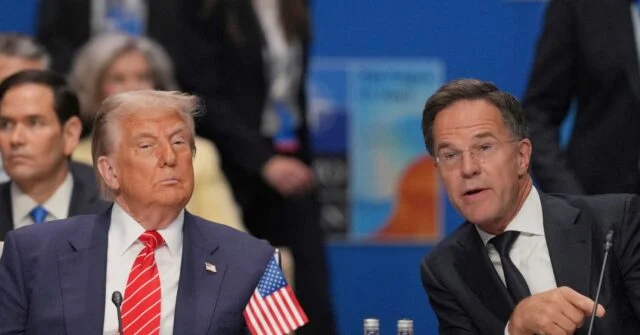
NATO Secretary General Mark Rutte has indicated that European nations have received and understood a message from U.S. President Donald Trump regarding their commitment to collective security and base access. Rutte, who has recently taken the leadership role at NATO, has been working to bridge differences between European capitals and Washington, particularly in light of recent U.S. military posture shifts.
The Pentagon announced a plan to reduce its military presence in Germany by approximately 5,000 troops over the next six to twelve months. Following this announcement, President Trump suggested that the actual withdrawal of U.S. forces could be significantly larger. He also indicated that U.S. military assets might be relocated from other European countries, such as Spain and Italy, citing instances where these nations reportedly denied access to U.S. military bases or airspace during the recent conflict with Iran.
While Germany did not outright deny access to its bases or airspace, German Chancellor Friedrich Merz initially expressed criticism of the U.S. strategy concerning Iran. Merz stated that the conflict was "not our war" and accused the White House of lacking a clear plan for victory, suggesting that Iran was "humiliating" the United States despite facing military setbacks. This stance emerged amidst declining public support for his government.
However, reports suggest that Chancellor Merz altered his position after President Trump alluded to potential troop withdrawals and the imposition of tariffs on European automobiles, a move that would significantly impact Germany's crucial automotive industry. Subsequently, Merz posted on X, affirming that "The United States is and will remain Germany’s most important partner in the North Atlantic Alliance… We share a common goal: Iran must not be allowed to acquire nuclear weapons."
In response to these developments and the perceived friction between the U.S. and Europe, NATO Secretary General Mark Rutte commented on Monday. Speaking to reporters at a European Political Community summit in Armenia, Rutte stated that Europeans "have gotten the message" from the U.S. administration. He acknowledged "some disappointment from the U.S. side" but emphasized that European countries have been attentive to the concerns raised.
Rutte, who has reportedly referred to President Trump as "daddy," also noted a trend among European nations to pursue bilateral agreements with the United States. These agreements are intended to secure access to military bases for future contingencies. Furthermore, he observed that an increasing number of European countries are preparing to contribute to efforts aimed at keeping the Strait of Hormuz open, thereby preventing Iran from leveraging this critical oil supply route for its benefit. This includes the potential deployment of mine-sweeping vessels to the Persian Gulf as part of the ongoing conflict's "next phase."
Despite these diplomatic efforts and statements, it remains uncertain whether Merz's revised remarks or Rutte's comments will alter the Pentagon's decision to reduce troop levels in Germany. This drawdown aligns with a long-standing objective of President Trump, dating back to his previous term in office. He has consistently criticized Germany for not meeting NATO's defense spending targets while relying on U.S. protection, including against potential threats from Russia, from whom Germany has continued to purchase significant amounts of oil and gas.
The potential withdrawal of U.S. forces from Germany, a country that has hosted American troops in varying capacities since the end of World War II, could have substantial economic repercussions. Public broadcaster DW reports that over 10,000 German jobs are directly linked to U.S. military installations. An additional 70,000 jobs in Germany are indirectly sustained by the presence of these American forces. Currently, approximately 36,000 U.S. military personnel are stationed across roughly 40 locations throughout Germany.