The Federal Reserve has announced its decision to maintain current interest rates, leaving the benchmark federal funds rate within the range of 3.5% to 3.75%. This marks the second consecutive meeting where policymakers opted to hold rates steady, following a series of three quarter-point rate reductions implemented in the latter part of the previous year. The Federal Open Market Committee (FOMC), the body responsible for setting monetary policy, voted 11-1 in favor of this decision. A notable dissent came from Fed Governor Stephen Miran, who advocated for a 25-basis-point rate cut. Furthermore, three other FOMC members – Beth Hammack of the Cleveland Fed, Neel Kashkari of the Minneapolis Fed, and Lorie Logan of the Dallas Fed – dissented on the inclusion of language that suggested a leaning towards easing monetary policy. This collective dissent, totaling four, represented the highest number of dissenting votes at an FOMC meeting since 1992, signaling a divergence of views within the committee.
This particular FOMC meeting is widely anticipated to be the last presided over by Federal Reserve Chairman Jerome Powell, as his tenure as chair is scheduled to conclude on May 15. Powell indicated his intention to continue serving on the Fed's Board of Governors for an undetermined period. This decision stems from his ongoing concerns regarding investigations initiated by the Trump administration into the Federal Reserve's operations. Powell's term as a governor on the Board extends until January 31, 2028, but his role as chairman will officially end next month.
The FOMC's official statement highlighted that the ongoing conflict in the Middle East is a significant factor contributing to a heightened level of uncertainty surrounding the economic outlook. The committee observed that the economy is experiencing expansion, but noted a slowdown in job gains and persistently elevated inflation. This inflation surge is attributed, in part, to the recent escalation in global energy prices.
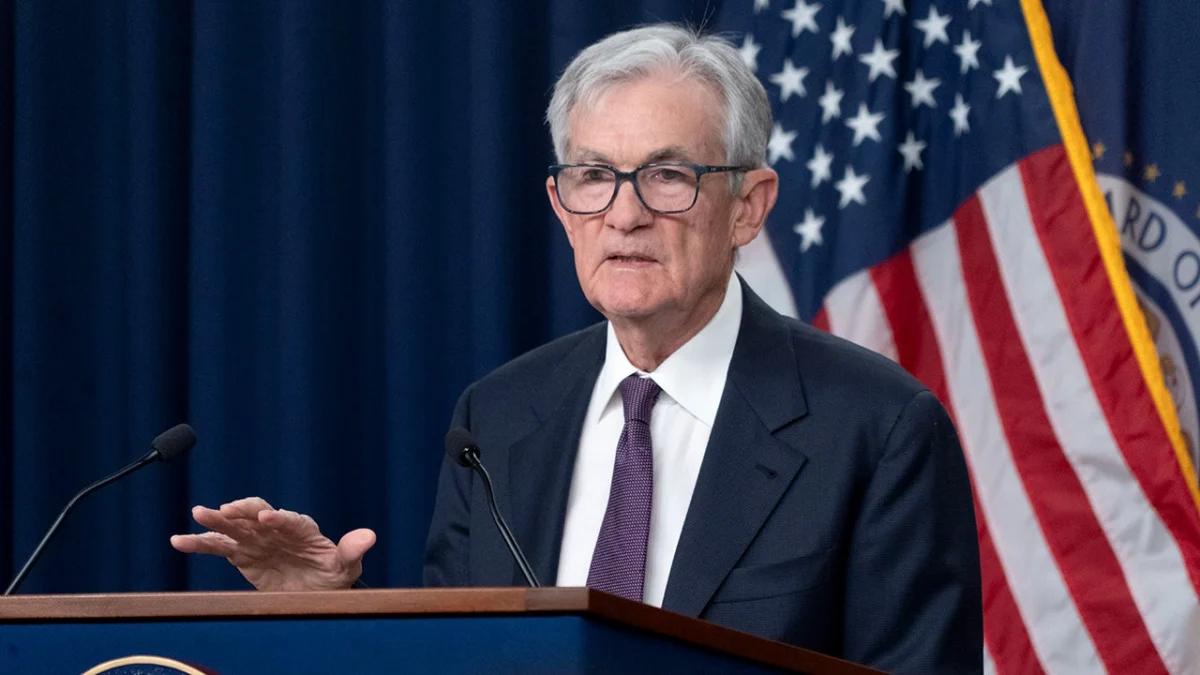
During his press conference, Chairman Powell emphasized that the policymakers' primary focus remains on achieving the Federal Reserve's dual mandate: maximizing employment and ensuring price stability for the benefit of the American public. He elaborated on the factors contributing to the deceleration in job growth, pointing to a reduced expansion of the labor force. This, he explained, is a consequence of decreased immigration levels and a decline in labor force participation. Regarding inflation, Powell reiterated that recent increases are partly driven by a substantial rise in global oil prices, which he linked directly to the conflict in the Middle East.
When questioned about the impact of the current oil price shock, Powell referenced economic theory, suggesting that such shocks are typically temporary and tend to reverse. He noted that monetary policy operates with significant and variable lags, implying that immediate reactions are not always warranted. Powell further stated that this cautious approach is even more pertinent given that inflation has been above the 2% target for several years and the economy is also contending with the effects of tariffs. He indicated that the Fed would need to observe a decline in energy prices and progress on tariff-related issues before considering any reduction in interest rates. The Fed's stance suggests a deliberate and measured approach, prioritizing the stabilization of inflation before contemplating policy easing.
FOX Business' Edward Lawrence raised the issue of the four dissents, inquiring whether Powell believed he was leaving a divided Federal Reserve to his successor. Powell acknowledged that vigorous and excellent debates have always been a feature of FOMC meetings. He attributed the current divergence of views to the exceptionally challenging environment characterized by multiple supply shocks. Powell identified at least four major shocks: the pandemic, the invasion of Ukraine, the imposition of tariffs, and the current oil price spike stemming from the conflict involving Iran. He explained that each supply shock has the potential to simultaneously increase inflation and unemployment, presenting a difficult balancing act for central banks. Powell asserted that the Fed's framework is designed to navigate these challenges by seeking to balance the achievement of its dual mandate goals. He concluded that a range of views within the committee is natural, especially given the extraordinary circumstances and the prolonged period of dealing with these complex supply shocks over the past five to six years.
Looking ahead, Powell confirmed that this would be his final press conference as Fed chair. He extended congratulations to his anticipated successor, former Fed Governor Kevin Warsh, whose nomination had advanced from the Senate Banking Committee earlier that day. Powell reiterated his plan to remain on the Fed's Board of Governors after his chairmanship concludes. This decision is influenced by persistent concerns about the Trump administration's legal actions against the Fed. Powell mentioned the recent announcement by the U.S. Attorney for the District of Columbia to close the criminal investigation, while also noting the possibility of its reopening. He also referenced assurances from the Department of Justice regarding their approach to any potential appeals or new subpoenas, indicating a desire for finality and transparency in these matters.
Powell expressed that his decisions regarding his continued service would be guided by what he believes is in the best interest of the institution and the public it serves. He articulated his primary concern as the series of what he termed "illegal attacks" on the Fed, which he believes threaten the institution's ability to conduct monetary policy free from political considerations. He clarified that this concern does not extend to verbal criticism from elected officials, which he has never viewed as a problem. However, he characterized the administration's legal actions as unprecedented in the Fed's 113-year history and highlighted the ongoing threats of further actions. Powell worries that these persistent attacks are undermining the institution and jeopardizing its crucial function: conducting monetary policy without political interference. He underscored the importance of an independent central bank, free from political influence, as a foundational element of the robust U.S. economy and its standing as the envy of the world.
Powell stated his intention to maintain a low profile as a Fed governor once Warsh assumes the chairmanship. He clarified that there is only one Chair of the Federal Reserve Board, and that Warsh, upon confirmation and swearing-in, will hold that position. He also noted that Warsh's new colleagues on the board would elect him to chair the FOMC. Powell had initially planned to retire at the conclusion of his chairmanship but decided to defer his departure until the investigations are definitively concluded with transparency. He indicated he would leave when he deems it appropriate.
Experts offered their perspectives on the Fed's decision and the broader economic landscape. Ellen Zentner, chief economic strategist at Morgan Stanley Wealth Management, described Powell's tone after the meeting as consistently cautious. She argued that the current economic conditions—characterized by robust growth, persistent inflation, and a stable job market—do not warrant a reduction in interest rates. Zentner believes the Fed's "wait-and-see" approach will persist unless this economic picture significantly changes. She also pointed out that Kevin Warsh has not signaled an intent to pursue aggressive easing, and any policy shift would necessitate a consensus among FOMC members. The wide range of opinions evident in the recent meeting, which will soon include Powell as a governor, suggests that a change in leadership at the top is unlikely to alter the central bank's fundamental calculus or operational process.
Kay Haigh, global co-head of fixed income and liquidity solutions at Goldman Sachs Asset Management, interpreted the Fed's latest guidance as indicative of a stable policy direction, despite some members advocating for more flexible language. Haigh noted that while the risks of rising inflation have increased, the Fed is simultaneously monitoring potential weaknesses in economic growth and the labor market. This balancing act, she suggested, could lead to rates returning to neutral levels later in the year. However, Haigh cautioned that the FOMC will remain highly sensitive to any re-escalation of tensions in Iran and subsequent increases in energy prices. In such a scenario, the Fed might opt to maintain restrictive monetary policy.


