Treasury Department Engages in Preliminary Planning for $250 Bill
The U.S. Treasury Department is undertaking preliminary planning and due diligence concerning the potential production of a $250 commemorative note, which could feature the likeness of President Trump. This initiative is a direct response to legislation introduced by allies of the President in Congress. Current federal law prohibits the printing of U.S. currency bearing the image of a living person. However, the proposed bill aims to create a specific exception for this commemorative note, intended to coincide with the nation’s 250th anniversary.
A spokesperson for the Treasury Department confirmed to the BBC that the agency is engaged in “appropriate planning and due diligence” in response to the legislative efforts. The lawmakers behind the bill have stated that the $250 denomination is symbolic of the country’s upcoming 250th anniversary this year. The Washington Post was the first to report on the Treasury Department’s preparations for this potential currency issuance.
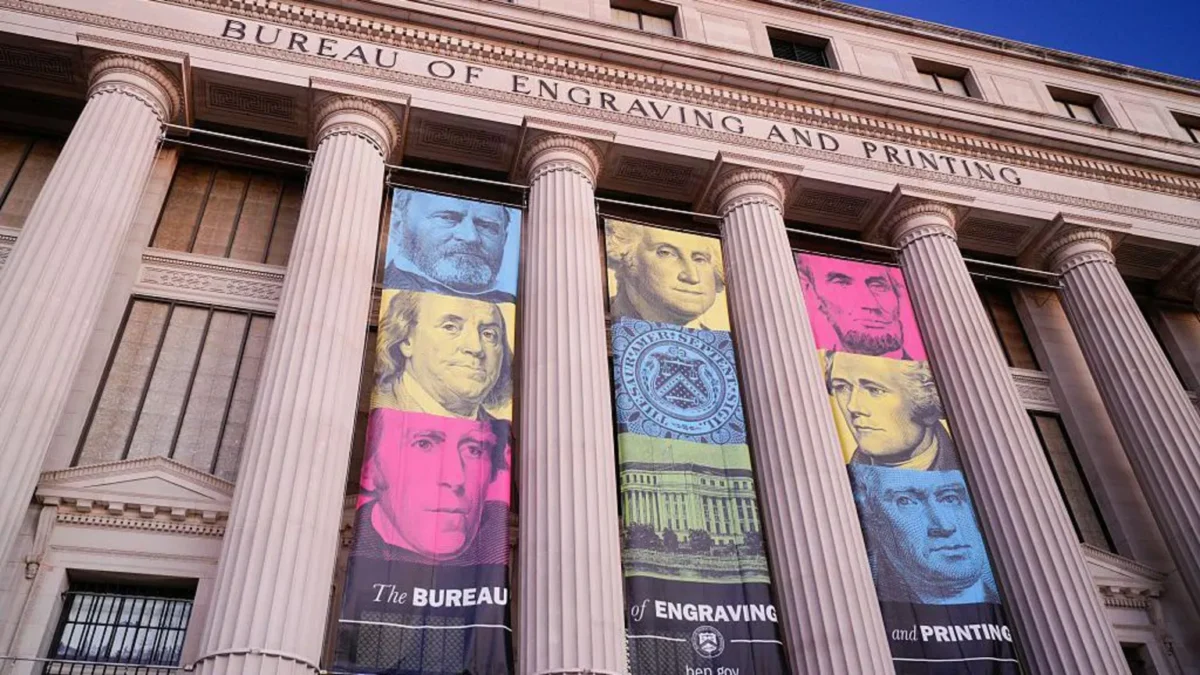
“Should this legislative mandate be signed into law, the BEP is moving proactively to produce a $250 commemorative note which will appropriately recognize the 250th Anniversary of our great nation,” the Treasury spokesperson stated in a prepared statement. The Bureau of Engraving and Printing (BEP), a sub-agency within the Treasury responsible for developing and producing U.S. currency, has reportedly been requested to develop artistic concepts for the $250 bill, though these have not yet been publicly released.
President Trump’s signature is already slated to appear on U.S. paper notes as part of the nation’s semiquincentennial celebrations. The legislation enabling the potential $250 bill was introduced last year by U.S. House Representative Joe Wilson, a Republican from South Carolina. For the bill to become law, it would require approval from both the U.S. House of Representatives and the Senate.
Treasury Secretary Addresses Legislation and Denomination Law
During a White House briefing on Thursday, Treasury Secretary Scott Bessent addressed inquiries about the potential new bill. He indicated that the matter is entirely “in the hands” of Congress. Secretary Bessent affirmed that while his department is preparing for the possibility of the legislation passing, the Treasury would ultimately adhere to the law as enacted. He also commented that he saw “nothing untoward” with the idea of featuring an image of the individual in office during the nation’s 250th anniversary on a bill commemorating that milestone.
The proposed $250 note could also potentially conflict with another federal law that specifies the denominations of currency that can be legally produced. This existing law does not currently include $250 as a permissible denomination. The U.S. has historically issued larger denomination bills, including $500, $1,000, and $10,000 notes, but these were discontinued in 1969. While these older notes remain legal tender, they are no longer in general circulation and are primarily held by private currency collectors.
U.S. Senator Mark Warner, a Democrat from Virginia and a member of the Senate’s Committee on Banking, has voiced criticism regarding the plans. “As Americans struggle with the rising cost of gas, groceries, housing, and health care, President Trump’s priorities for taxpayer dollars are completely detached from the challenges families face every day,” Warner stated. He further commented, “If this White House put even half as much energy into working to lower costs as it does into stoking the president’s ego, American families wouldn’t need that new $250 bill just to fill up their gas tanks.”
The development of new currency notes is a complex and lengthy process, typically taking several years. It involves coordination among various agencies, including the Federal Reserve Board and the U.S. Secret Service. The designs themselves are kept confidential until closer to the release date. According to the BEP, “Note designs are typically made public six to eight months ahead of time for global public education and cash handler education purposes.” The bureau cautions that releasing designs earlier could potentially aid counterfeiters and cause marketplace confusion, thereby diminishing confidence in U.S. currency.
It remains uncertain whether the commemorative notes could be produced in time to be available for the 250th anniversary, which falls on July 4th. This potential currency issuance follows a pattern observed since President Trump took office, where he and his allies have sought to place his image, name, and likeness on various national institutions and symbols. Examples include the renaming of the Kennedy Center to include Trump’s name, the planned inclusion of his portrait on U.S. passports, and the repainting of the presidential jet Air Force One in Trump’s preferred colors.