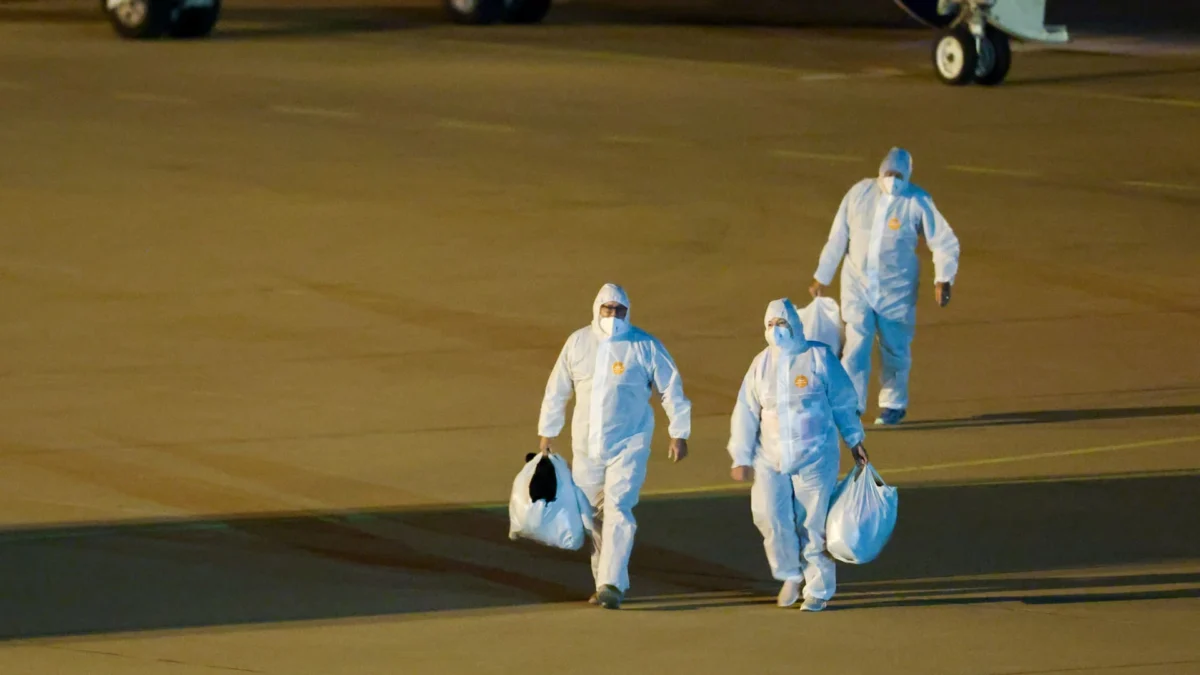
A hantavirus outbreak linked to the MV Hondius cruise ship has raised public concern and rekindled fears of widespread health crises, but health experts are working to temper public anxiety, emphasizing that this situation does not represent a repeat of the COVID-19 pandemic. The World Health Organization (WHO) reported 11 cases associated with the outbreak as of Tuesday, nine of which have been confirmed, including three fatalities. No American citizens have tested positive for the virus as of Wednesday. Several passengers are currently undergoing monitoring in specialized medical facilities, with 18 individuals in the U.S. being observed across Nebraska and Atlanta. Additionally, a small group of people not directly connected to the cruise are also being evaluated for potential exposure to the virus in several states.
Moderna has initiated early research into a potential vaccine for hantavirus, with its shares rallying significantly. However, health experts are stressing that the specific Andes strain of hantavirus involved in this outbreak does not transmit easily between humans, unlike viruses such as measles or influenza. This characteristic significantly lowers the risk of widespread public transmission. Experts anticipate that more cases may emerge in the coming weeks due to hantavirus's prolonged incubation period, which can extend up to six weeks. Dr. Nicole Iovine, chief hospital epidemiologist and an infectious disease physician at the University of Florida, stated in an interview that a large number of infections are not expected, and cases are likely to remain confined to those exposed aboard the ship, particularly with containment measures now in place.
The outbreak has, however, prompted some experts to voice broader concerns regarding the United States' preparedness for future infectious disease threats. These concerns are amplified by past significant budget reductions at the Centers for Disease Control and Prevention (CDC) and the Trump administration's decision to withdraw from the WHO. While the CDC appears to be managing the current hantavirus situation effectively, some experts believe the outbreak has exposed vulnerabilities in the nation's public health infrastructure. These weaknesses could have more severe consequences if faced with a pathogen that is more easily transmissible.
Lawrence Gostin, a professor of public health law at Georgetown University, remarked that while he does not foresee a significant risk to the American public from this specific outbreak, the situation serves as a critical stress test for the nation's response capabilities. "If this is a stress test, we failed this. Just imagine if this were actually a highly transmissible agent," Gostin said.
Low Risk to the General Public The risk posed by this particular hantavirus to the general population is considered low by WHO public health experts. This assessment is primarily due to the virus's limited human-to-human transmission capabilities, a stark contrast to viruses like COVID-19. Hantavirus is typically contracted by humans through direct contact with infected wild rodents, most commonly by inhaling airborne particles from their urine, droppings, or saliva. Data from the CDC indicates that hantavirus disease cases are relatively rare in the U.S., with 890 reported cases between 1993 and 2023, predominantly in Western states.
The Andes strain, identified in the current outbreak and prevalent in South America, is the only hantavirus known to be capable of human-to-human transmission. However, such instances are infrequent. Medical professionals are drawing insights from historical outbreaks to inform their approach. Dr. Kari Debbink of the Johns Hopkins Bloomberg School of Public Health explained that the Andes strain usually spreads through close and prolonged contact with an infected individual exhibiting symptoms. This mode of transmission differs significantly from COVID-19, which spread efficiently even with brief exposure.
Hantavirus is not classified as an airborne disease because it does not remain suspended in the air for extended periods, unlike respiratory viruses such as COVID-19, influenza, and measles. Cruise ships, such as the MV Hondius, are recognized as environments conducive to disease transmission due to the close proximity of a diverse group of individuals for extended durations. Dr. Tyler Evans, CEO of the public health organization Wellness Equity Alliance and former chief medical officer for New York City's COVID response, described cruise ships as "one of the greatest threats to public health. They are floating petri dishes isolated in the water."
Origin of the Outbreak Investigators with the WHO suspect that the outbreak originated with a Dutch couple who were passengers on the MV Hondius and subsequently succumbed to their infections. Prior to boarding the ship, the couple had undertaken a bird-watching expedition across Argentina, Chile, and Uruguay. Dr. Tedros Adhanom Ghebreyesus, the Director-General of the WHO, noted during a briefing on May 7 that their itinerary included locations known to harbor rodent species that carry hantavirus.
The extended incubation period of hantavirus, ranging from one to six weeks post-exposure, suggests that additional cases may surface. Dr. Debbink reassured that individuals who have been in contact with infected persons are under close observation in specialized facilities, which should facilitate prompt containment of the outbreak.
Concerns About U.S. Preparedness The U.S. response to the hantavirus outbreak, while likely adequate given the virus's transmission characteristics, has nonetheless drawn criticism from some public health experts. These critics point to a perceived lack of a robust CDC response under the previous administration and express broader anxieties about the nation's readiness to confront future global health emergencies involving more transmissible pathogens.
"CDC has always been at the forefront of global health emergencies – from SARS-CoV-2 to Ebola to Zika," stated Georgetown's Gostin. "And for this, the CDC is missing in action. Their response has been disjointed and late."
For many years, the CDC has held a distinguished reputation as a leading global public health agency, adept at coordinating with the WHO and international governments during outbreaks. However, experts contend that the agency has been weakened by substantial staff reductions, leadership voids, and the Trump administration's decision to disengage from the WHO. In early 2025, the Trump administration implemented workforce reductions at the CDC, cutting approximately 10% of its staff. This downsizing has resulted in fewer epidemiologists and scientific personnel available for critical on-the-ground work and intergovernmental coordination.
Currently, the positions of CDC Director and U.S. Surgeon General remain vacant. These roles are pivotal in the effective management of disease threats. "They don't have the right leadership at the CDC," commented Dr. Evans. "They're sort of on a ship without a captain at the helm, so they're scrambling a bit and doing the best they can. There are serious concerns about it."
Gostin further criticized the CDC's response time, asserting that the agency acted a week after the international community began mobilizing around a potential global health crisis, lagging behind the WHO and European health authorities. The WHO was first alerted to the outbreak on May 2 and promptly initiated actions, including dispatching an expert to the ship. The CDC's initial public statement regarding the outbreak was issued on May 6, followed by its first official health alert to U.S. physicians on May 8, cautioning them about the potential for imported cases. The agency confirmed on May 7 that it had dispatched a team to Spain's Canary Islands, where the ship docked two days later, and a second team to Nebraska as part of an operation to evacuate U.S. passengers.
While the CDC is now collaborating with the WHO, experts argue that the previous administration's decision to sever ties with the international health organization undermines the U.S.'s capacity to respond to future outbreaks. A significant consequence of this disengagement is the loss of direct, real-time access to information from WHO member states concerning emerging health threats.
Neil Maniar, a public health professor at Northeastern University, drew a parallel between the current hantavirus response and the collaborative efforts seen during the COVID-19 pandemic in 2020. "That is what is needed to effectively respond to these types of outbreaks, and that is where the system has really broken down," Maniar stated. "We need to restore our country's expertise and resources to respond because there are going to be future outbreaks," he added. "It should raise significant alarm bells for everyone in terms of our readiness and ability to keep this country safe."