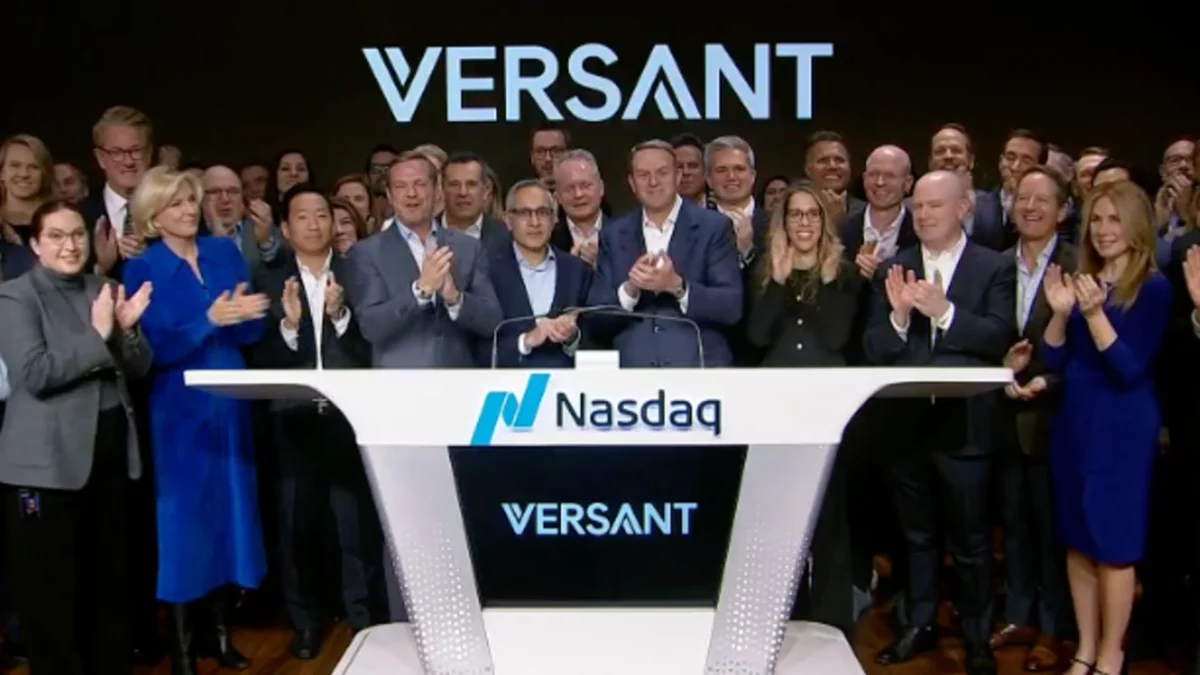
Versant Media, the recently spun-off entity from Comcast's NBCUniversal that includes CNBC, has reported its first-quarter financial results as an independent company. The company experienced a 1% decline in overall revenue, reaching $1.69 billion for the period ending March 31. This downturn was primarily attributed to a decrease in linear distribution and advertising revenues, reflecting ongoing challenges within the traditional pay television sector. However, the company highlighted positive growth in its content licensing and digital platforms segments, signaling a strategic shift towards these newer revenue streams.
Linear distribution revenue, which encompasses a portfolio of pay TV networks such as CNBC, MS Now, the Golf Channel, USA, E!, Syfy, and Oxygen, fell by approximately 7% year-over-year to $1.01 billion. Versant attributed this decline to a reduction in subscriber numbers, though this was partially counteracted by increases in distribution rates. Advertising revenue also saw a decrease of 5%, totaling $368 million. While this represents a decline, the company noted it as an improvement compared to the same quarter in the previous year, which had seen a 12% drop in advertising income.
In contrast to the pressures in its traditional media businesses, Versant's content licensing segment demonstrated significant expansion. Revenue from this area surged by 113.5% to $121 million. This substantial increase was largely driven by the licensing of popular content, most notably the reality television series "Keeping Up With the Kardashians" and associated intellectual property, to Disney's streaming service, Hulu. This move underscores the value of Versant's extensive content library in the evolving media landscape.
The company also emphasized its strengths in sports and news programming. Versant pointed to increased viewership for its news channels, CNBC and MS Now, during the quarter. Furthermore, it noted continued strong performance from the Golf Channel and other live sports events broadcast across its network portfolio. These areas remain critical components of Versant's business, contributing significantly to its audience engagement.
Versant's business model is currently heavily reliant on the pay TV sector, which accounts for over 80% of its total revenue. However, the company's leadership has articulated a clear strategic objective to rebalance this revenue mix. The stated goal is to eventually derive 50% of its income from digital operations, including its platforms, subscription services, ad-supported models, and transactional businesses. This long-term vision aims to create a more diversified and resilient financial structure.
Supporting this strategic pivot, revenue from Versant's platforms business, which includes digital ventures like Fandango and GolfNow, as well as nascent direct-to-consumer units, grew by 9.5% to $192 million. This growth in digital and platform-based revenue is a key indicator of the company's progress in executing its diversification strategy. The company's CEO, Mark Lazarus, expressed confidence in this direction, stating that the performance across platforms and core brands reinforces the company's ability to evolve and deliver long-term shareholder value.
Net income attributable to Versant saw a decrease of 22%, resulting in $286 million, or $1.99 per share, for the first quarter. The company attributed this reduction to lower overall revenue, increased costs associated with operating as a public company, and higher interest expenses following its separation from Comcast. These factors were partially offset by a reduction in tax expenses during the period.
Adjusted earnings before interest, taxes, depreciation, and amortization (EBITDA) fell by 7% compared to the prior year's first quarter, reaching $704 million. However, when comparing performance using a standalone adjusted EBITDA metric, which aims to provide a more direct comparison of the pre-spin portfolio companies to current results, Versant reported an increase of approximately 5%. This improvement was attributed to reduced expenses in entertainment programming and lower selling, general, and administrative costs, which helped to mitigate the impact of revenue declines.
Versant also continued its commitment to returning capital to shareholders, a strategy facilitated by its relatively low debt levels. The company declared its second consecutive quarterly cash dividend of 37.5 cents per share, payable on July 22 to shareholders of record as of July 1. This consistent dividend payout reflects the company's financial stability and its focus on shareholder returns.
In addition to dividends, Versant announced plans to enter into a $100 million accelerated share repurchase agreement, scheduled to commence on May 15 and expected to conclude within the second quarter. This move signals the company's intention to further enhance shareholder value through share buybacks. During the first quarter, Versant had already repurchased nearly 2.7 million shares of its class A common stock, with approximately $900 million remaining under its share repurchase authorization as of March 31.
Versant's strategic focus on expanding its digital footprint and leveraging its content library, while navigating the challenges in the traditional pay TV market, sets the stage for its future performance as an independent media company. The company's ability to successfully transition its revenue streams will be a key determinant of its long-term success and valuation in the competitive media industry.


