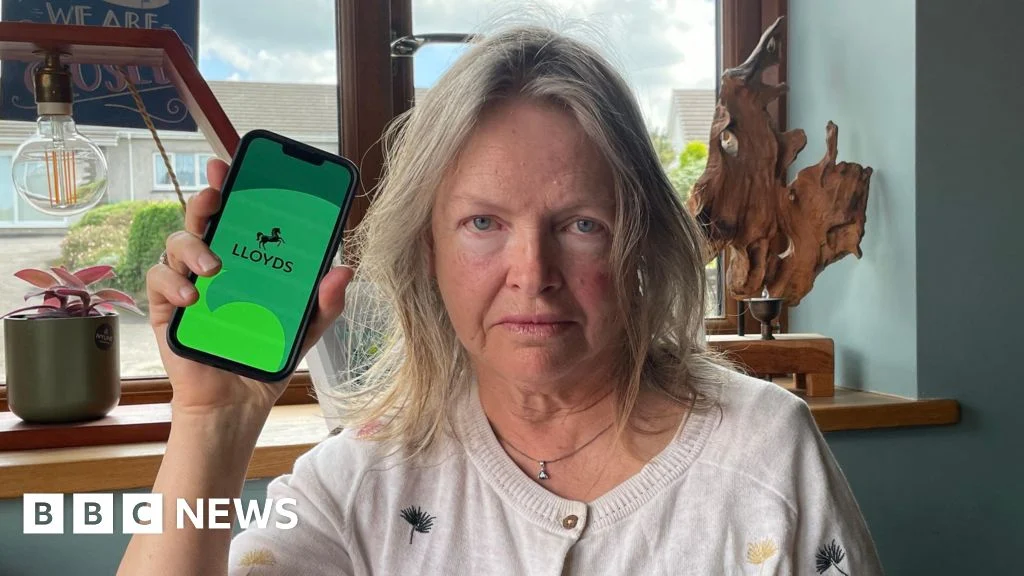
A woman in Cornwall has voiced frustration with Lloyds Banking Group's policies, highlighting the challenges faced by rural communities in accessing essential banking services. Annabel Yates, a resident of Crackington Haven, found herself unable to deposit a £900 cheque from HM Revenue and Customs (HMRC) due to the limitations of modern banking practices.
Ms. Yates's cheque lacked the perforated edges required for online scanning, rendering the bank's mobile app and online deposit options unusable for her specific situation. This led her to seek assistance at her local post office, a common recourse for many in areas with limited branch access.
However, she was informed that a significant change had taken effect in January: customers of Lloyds Banking Group, which encompasses Lloyds, Halifax, and Bank of Scotland, could no longer deposit cheques through the Post Office network. This decision has effectively removed a vital service for many.
Following this development, Ms. Yates discovered that her nearest Lloyds Banking Group branches were located in Okehampton, a considerable 75-mile (120km) round trip, or Truro, an even more extensive 94-mile (150km) journey. These distances underscore the difficulties faced by individuals in sparsely populated regions.
"I think the bank's theory is everything could be done on an app and that's just not always the case. It's very backwards thinking," Ms. Yates stated, expressing her belief that the bank's approach "disenfranchises the rural population."
She also mentioned being informed about a freepost cheque deposit service. However, Ms. Yates expressed reservations about sending a cheque of such a substantial amount through the mail, citing concerns about its security and the uncertainty of its safe arrival.
Reflecting on the bank's historical ethos, she added, "Back in the day, Lloyd's ethos was to make banking easy. I think this is a reversal of that." This sentiment suggests a perceived departure from customer-centric service that once defined the institution.
Industry data indicates a long-term decline in cheque usage, with figures from 2024 showing they accounted for only 0.1% of all UK payments. Despite this trend, the experience of Ms. Yates and others suggests that cheques remain a relevant payment method for a segment of the population, particularly in certain contexts and locations.
Joanna Bickersteth, the postmistress at Marshgate Post Office near Boscastle, corroborated Ms. Yates's account, noting that many customers have expressed frustration over the discontinuation of cheque processing services. She emphasized that cheques are still "used a great deal" and were a regular part of her post office's transactions before the change.
Ms. Bickersteth further explained that the removal of the post office element has significantly reduced the facilities available to customers. She also pointed out that a new banking hub being established in Bude will not be able to cash cheques, as this function was specifically tied to the Post Office service.
Lloyds Banking Group confirmed that it had updated its terms and conditions last year, informing customers about the cessation of cheque deposits at Post Offices. The group reiterated its alternative options: using their mobile app for cheque deposits, visiting any of their branches, or utilizing the freepost cheque deposit service.
This situation highlights a growing tension between the digital transformation of banking and the persistent needs of customers in areas where digital access or adoption may be less prevalent, or where traditional methods remain important for specific transactions.


