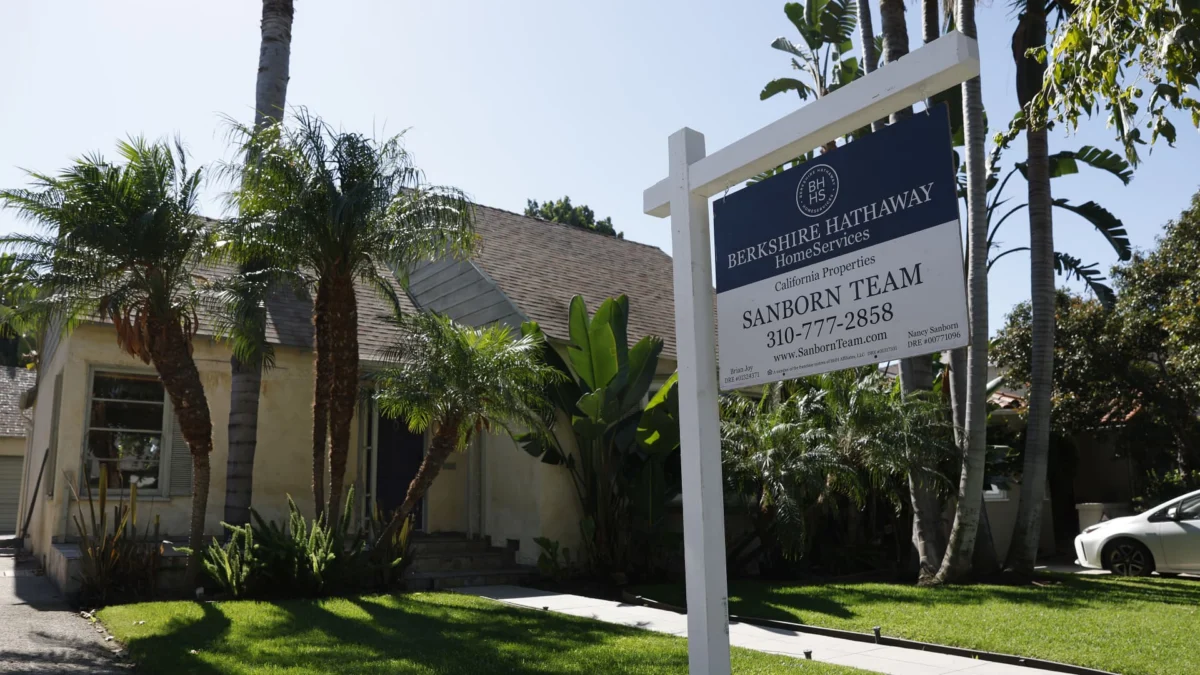
Wall Street is accelerating the sale of single-family rental homes as newly enacted housing legislation restricts further purchases by institutional investors, allowing only certain exceptions such as build-to-rent. An analysis provided exclusively to Property Play by Parcl Labs shows the number of homes owned by institutional investors listed for sale has more than doubled since the start of February, rising from 4,166 listings on Feb. 1 to 9,447 as of this month, with total asking prices around $3.1 billion. The shift comes as lawmakers seek to curb rapid acquisitions by large owners while still permitting strategies like build-to-rent under defined conditions.
The largest landlords are net sellers year-to-date, having offloaded 3,180 more homes than they bought since Jan. 1. Collectively, these firms still own roughly 400,000 homes, indicating a rebalancing rather than an outright exit from the market. VineBrook stands out, with roughly 1,900 homes on the market, about 10% of its portfolio, at an asking total near $285 million. Invitation Homes and AMH have each placed hundreds of homes on sale, while Progress Residential has the smallest visible inventory among the major players, at 143 homes.
The legislation defines institutional investors as those owning 350 or more homes and does not force current holdings to be sold, but it bars new purchases outside certain exceptions, including build-to-rent. The measure aims to address concerns that large, cash-financed buyers were driving up prices and limiting owner-occupants, a policy stance that drew bipartisan support.
Industry observers note the 350-home threshold marks a shift from the prior standard of 1,000 homes and that the 350-plus cohort now accounts for roughly 40% of the year-to-date net selling. The policy is designed to funnel capital toward permissible strategies like build-to-rent and rent-to-renovate, while giving buyers an option to transition renters to owners under specific programs.
Stephen Scherr, co-president of Pretium (the parent company of Progress Residential), said there is broad recognition among White House officials and lawmakers of private capital’s important role for renters, including opportunities to pursue build-to-rent while complying with the new framework. Lenders are reopening opportunities for build-to-rent financing, according to market researchers, which could influence future supply and pricing dynamics as sales cycles unfold.
Despite a higher share of for-sale listings among institutions, price dynamics show selective discounting. Nationally, about 38.7% of all listings have recorded price cuts, while 54% of investor listings in the 350-plus cohort carry price reductions. Since early May, markdowns have deepened to around 4% of asking value. Analysts emphasize that these adjustments may reflect strategic asset reallocation rather than broad liquidation, given the still-large size of institutional portfolios.
As the next six to eight weeks unfold, market participants will watch how builders and lenders respond to the new rules and whether build-to-rent demand can absorb shifts away from outright for-sale transactions. The period signals a transitional phase in the single-family rental market as policy reshapes investor behavior and the flow of homes between sales and rentals.


