President Donald Trump on Monday announced 50% tariffs on most Canadian goods, framing the move as a response to what he deemed unfair discrimination against American autos, alcohol and dairy products. The decision, unveiled after months of rhetoric and diplomatic maneuvering, signals a sharp escalation in a trade clash that already has broad implications for North American commerce and prices facing consumers and businesses on both sides of the border.
The White House and administration officials emphasized that Canada has retaliated against prior U.S. tariffs and must be held accountable for continuing actions that the administration says distort fair trading conditions. Several proclamations were signed under Section 338 of the 1930 Trade Act to implement the new duties, according to a briefing call with reporters conducted on condition of anonymity. The officials noted that the use of Section 338—often described as an economic “nuclear option”—could set a precedent for further tariff actions beyond Canada, raising concerns among trading partners about broader application of the tool.
The tariff package excludes energy products, potash, fish and some critical minerals, but encompasses goods that were previously protected from U.S. import taxes under the United States-Mexico-Canada Agreement, or USMCA. The 2020 pact, which had been in effect before questions about renewal, is part of a complex backdrop to the current dispute as negotiations unfold toward 2036 in some forecasts.
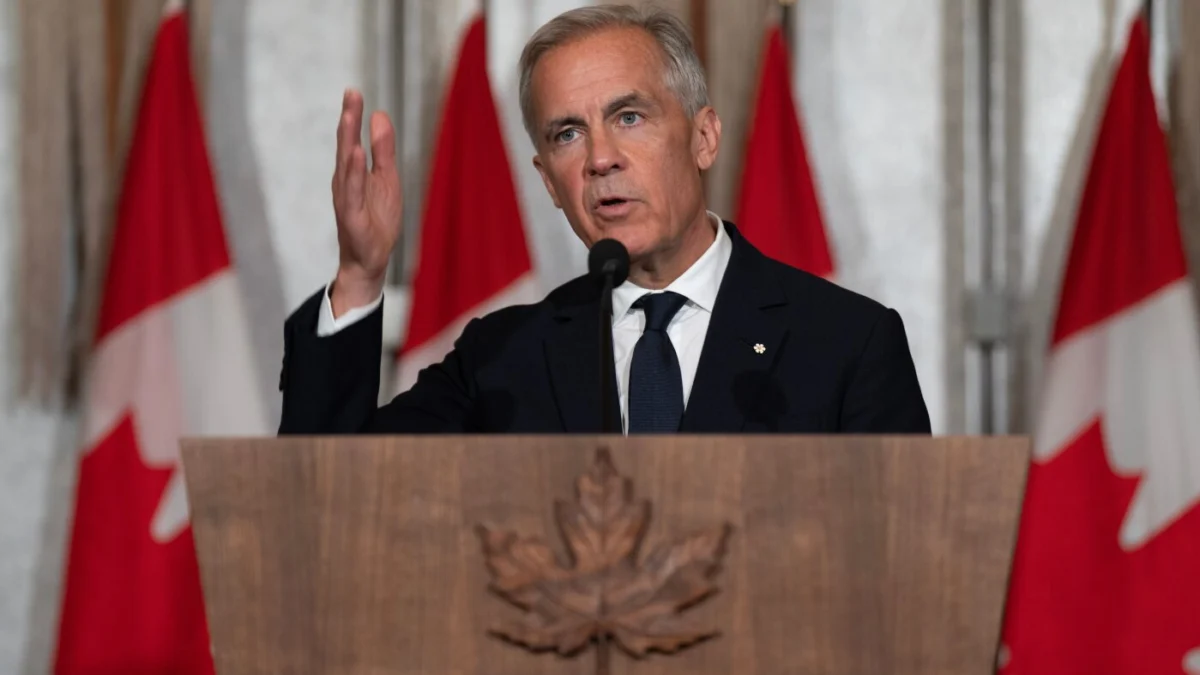
In a brief statement, Canadian Prime Minister Mark Carney affirmed Canada’s commitment to the benefits of free and fair trade and noted that Canada has signed more than 20 new economic and security partnerships. He added that Canada stands ready to negotiate with the Trump administration, underscoring a willingness to engage despite the tensions surrounding tariffs and the broader dispute.
Ontario Premier Doug Ford joined the public discourse, warning of a possible confrontation and urging a measured response. Ford’s social media post suggested a tariff-for-tariff approach should Canada proceed with additional duties, illustrating how political leaders on both sides are positioning the tariff debate amid a fragile economic backdrop.
Canadian commerce officials and business groups reacted with caution. Candace Laing, CEO of the Canadian Chamber of Commerce, called the move regrettable but stressed the importance of using the 30-day window before the tariffs take effect to advance formal discussions that could lead to a negotiated outcome. In the U.S., industry representatives, including leaders of the Distilled Spirits Council of the United States, urged policymakers on both sides to pursue a resolution that preserves market access while avoiding broader harm to the hospitality sector.
Analysts cautioned that the tariffs could inject significant uncertainty into the global economy. Scott Lincicome of the Cato Institute described the 338 invocation as a high-stakes policy tool with potential spillovers beyond North America, and he warned that the move could heighten inflation pressures as import costs rise for various goods.
The tariff announcement also intersects with broader domestic political dynamics. Critics in the Democratic Party have argued that the legal authorities used to justify the tariffs could destabilize the economy, a concern tied to a broader critique of tariff policy during Trump’s tenure. While some supporters contend that the duties will spur manufacturing relocation and job preservation, data on such shifts remains contested as the economy navigates inflationary pressures and energy price volatility linked to global events.
The administration noted that Canada had already placed a 25% tariff on certain U.S. motor vehicle imports since April 2025, a factor cited in Trump’s autos proclamation as part of the justification for the 50% duties. In the background, Canada’s refusal to concede on dairy market access remains a recurrent sticking point, with Trump arguing Canadian policies discriminate against U.S. producers.
The 30-day runway before the new tariffs come into effect will give negotiators a window to test whether a deal can avert a broader escalation. Market participants will be watching closely as Canadian exporters adjust to higher duties on a broad range of goods and as U.S. consumers face potential price upticks on affected products. The evolving dynamic also factors into discussions around energy products and critical minerals whose exclusions may influence sector-specific readiness for continued trade collaboration.
As this dispute unfolds, investors will be gauged by how quickly talks progress and whether additional tariff measures or retaliatory moves emerge. The coming weeks and months will be critical to determining whether the 50% tariffs become a bridge to a broader renegotiation or a prologue to a longer and more costly trade standoff between the two neighbors.


