Market impact
The OECD’s weaker UK growth outlook and higher debt-servicing costs bring fiscal choices into focus ahead of John Healey’s first Budget.
Why it matters: The outlook connects energy-led inflation and borrowing costs with slower growth as the government balances household support, defence spending, tax commitments and fiscal rules.
Key numbers: UK growth forecast: 1% next year, down from 1.1%; UK current-year growth forecast: revised from 0.9% to 1.1%; Global growth forecast: 0.1% lower next year; Ryanair fuel bill: could rise by $1.5bn (£1.1bn) to $7.5bn n; US effective tariff rate: increased by 1% from July
Exposed areas: UK public finances; Airlines; Energy and fuel; Agriculture and food; UK; Organisation for Economic Co-operation and Development (OECD); International Monetary Fund (IMF); Chancellor John Healey; Prime Minister Andy Burnham; Kristalina Georgieva
What to watch: Duration of oil supply disruptions; UK borrowing and debt-interest costs ahead of the Budget; Ryanair fuel costs and ticket prices next summer; Returns on AI investment and climate-related supply shocks
The UK has been warned of rising debt costs and slower economic growth ahead of Chancellor John Healey’s first Budget next month. In a report published on Wednesday, 23 September 2026, the Organisation for Economic Co-operation and Development (OECD) lowered its UK growth outlook for next year. The head of the International Monetary Fund (IMF) also told the BBC that Britain and the US needed to reduce debt as borrowing costs spiralled.
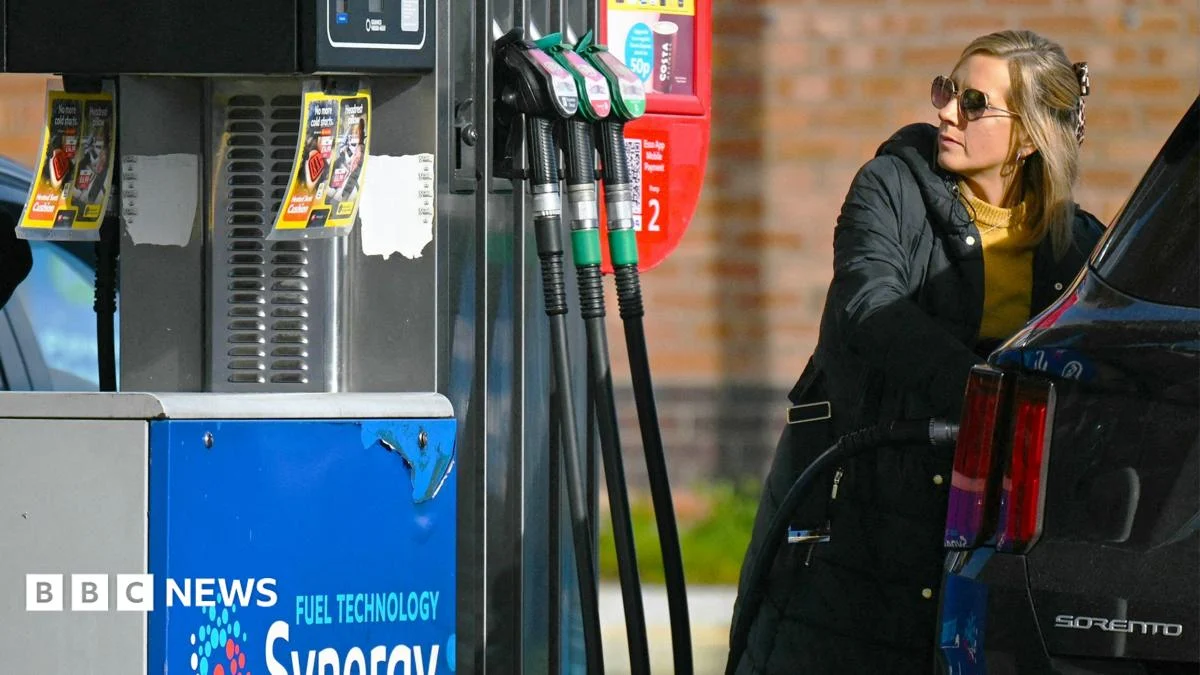
The report comes amid higher crude oil prices linked to the ongoing conflict in the Middle East and the Russia-Ukraine war. Higher fuel and energy costs have added to inflation around the world, increasing pressure on governments and households.
The OECD expects the UK economy to grow by 1% next year, down from its previous forecast of 1.1%. It also raised its estimate for this year’s growth to 1.1%, from 0.9%, saying the UK had proved more resilient than expected.
IMF chief Kristalina Georgieva told the BBC on Tuesday that global economic shocks had been “pushing debt levels up like a staircase not to heaven”. Governments had taken “no action to contain that service cost”, she said, adding: “[It’s] time to take that action.” Georgieva said politicians would need “courage” to take the necessary steps.
In the UK, inflation has raised the interest bill on government debt. An unexpected surge in government borrowing in August has added to the pressure on Healey ahead of the Budget.
Prime Minister Andy Burnham said on Wednesday that the UK’s high borrowing had left it “over-exposed” to global shocks. He also stood by a point he made a year earlier: that Britain should be less “in hock” to bond-market investors. The earlier remarks spooked investors because of fears he was calling for spending restraints to be eased.
Burnham has made reducing household cost-of-living pressures a key aim, while the government faces calls to spend more on defence. He and Healey must balance support for households with Labour’s manifesto commitments on tax and the government’s self-imposed fiscal rules.
The effect of higher fuel prices next year will depend on how long supply disruptions last, the OECD said. Oil stockpiles and supplies from outside the Gulf states have helped cushion the impact on economies so far. Ryanair plans to raise ticket prices next summer because of persistently higher oil prices. Its chief executive, Michael O’Leary, said fares would be “materially higher” and carriers faced an “almost unprecedented” situation. He said Ryanair’s fuel bill could rise by $1.5bn (£1.1bn) next year, to $7.5bn.
The OECD also cited weaker-than-expected returns on AI investment and climate-related supply shocks as risks to the global economy. It expects global growth next year to be 0.1% lower, with Australia, Canada and the euro area among the economies affected. Weather shocks, including a strong El Niño, could hit farmers and push up food prices, it said. Tariffs and export restrictions are adding to uncertainty.
New US tariffs introduced from July as part of the Trump administration’s volatile trade policy have raised the country’s effective tariff rate by 1%, according to the report.
Chief Secretary to the Treasury Emma Reynolds said the UK economy was showing strong resilience despite unprecedented pressures and conflict in the Middle East and Europe. She said the government was “already giving families space to breathe” and starting long-term changes intended to create good jobs and growth in every postcode. Conservative shadow chancellor Andrew Griffith said the OECD urged countries to control spending and improve public-sector efficiency. He argued that the government was instead seeking new ways to tax people while paying borrowing interest rates he described as the highest in the G7.
Ruth Gregory, deputy chief UK economist at Capital Economics, said the UK had so far remained resilient to higher energy prices. She attributed much of that resilience to businesses building up stock and households putting less disposable income into savings, but said the effect would be temporary and growth more muted next year. Gregory said the drag on the economy from energy prices would increase, while debt-interest payments as a share of UK economic output were forecast to reach levels last seen in the mid-1980s.