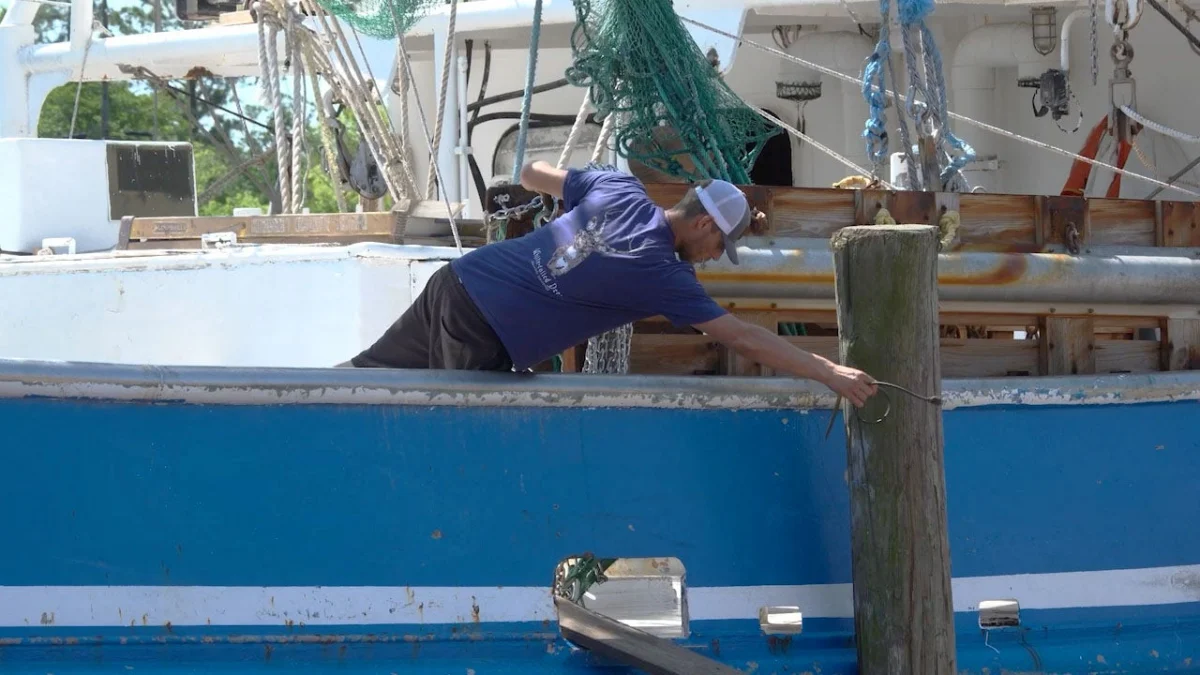
American shrimpers are confronting a significant economic challenge, describing the situation as a "double whammy" due to soaring fuel costs and disputes over tariff refunds. Many shrimp boats along the Gulf Coast are being kept docked, with owners citing the prohibitive price of diesel fuel as a primary reason for delaying their return to the water for the upcoming shrimping season. The rising cost of fuel, influenced by geopolitical tensions that affect global oil supply, is severely impacting the profit margins for shrimpers who depend on large quantities of fuel to power their operations for extended periods.
Joseph Rodriguez, a shrimp boat owner in Bayou La Batre, Alabama, highlighted the precariousness of the situation, noting his dependence on fuel prices, which are beyond his control. He specifically pointed to the ongoing situation in the Middle East, where the Strait of Hormuz, a critical chokepoint for global oil transport, has been a focal point of conflict. According to reports, before recent escalations, approximately 20% of the world's oil supply transited through this vital waterway. Rodriguez reportedly expressed concern that the current climate makes it exceedingly difficult to achieve any profitability in the shrimping business.
In response to the economic pressures, some shrimping crews are dedicating this period of inactivity to conducting necessary repairs on their vessels. This allows them to be fully prepared once fuel prices stabilize and become more manageable. The cost of diesel fuel has seen a substantial increase. AAA reportedly stated that the average price of a gallon of diesel fuel was $5.46 on Tuesday, a significant jump of about $2 compared to the previous year. This surge directly impacts the operational budget of shrimpers, many of whom operate vessels designed to carry tens of thousands of gallons of fuel.
The Southern Shrimp Alliance (SSA) has reportedly emphasized the critical role of fuel costs in the shrimping industry, stating that these expenses "routinely account for more than 50%" of a shrimper's total operating expenditures. The alliance has reportedly warned that persistently high fuel prices could potentially restrict shrimpers' ability to access and harvest sustainable shrimp populations located off the U.S. coast. Rodriguez, echoing the sentiments of many Gulf Coast shrimpers, reportedly voiced support for U.S. actions in Iran, anticipating that a resolution or reopening of the Strait of Hormuz could lead to a decrease in fuel prices.
Rodriguez reportedly expressed optimism that fuel prices would eventually return to a more sustainable level in the near future, allowing the industry to resume normal operations. He described the typical shrimping expedition as one that requires boats to be at sea for weeks at a time, consuming approximately 12,000 gallons of diesel fuel per trip. This significant fuel consumption underscores the direct correlation between fuel prices and the economic viability of individual shrimping businesses.
Adding to the financial strain is a recent Supreme Court decision concerning tariff refunds. In February, the nation's highest court reportedly ruled that President Trump's imposition of tariffs on U.S. importers was unlawful. The SSA reportedly stated that the U.S. had collected $902.7 million in tariff revenue from imported shrimp. The current process involves the U.S. government refunding these collected tariffs to foreign companies, a move that has reportedly drawn criticism from domestic shrimpers who believe this money should be directed towards supporting the American industry.
Industry representatives reportedly argue that these tariff refunds disproportionately benefit foreign suppliers over domestic producers. The SSA has reportedly indicated that a substantial portion of these refunds, estimated at nearly $450 million, is slated to go to India alone. This allocation has reportedly fueled concerns among American shrimpers about the fairness of the system and its impact on their ability to compete in the market.
Rodriguez reportedly advocated for the establishment of a fund to support domestic shrimpers using the refunded tariff money. He reportedly highlighted the competitive disadvantage faced by American shrimpers, particularly when competing against state-subsidized industries in countries like China, a communist country that is a significant exporter of shrimp to the U.S. The competition with foreign imports, he reportedly argued, is a major hurdle for the domestic industry.
He reportedly urged consumers to prioritize purchasing American-caught shrimp over imported varieties, identifying this consumer choice as the industry's "greatest hope" for survival and prosperity. Rodriguez also reportedly raised concerns about the potential risks associated with imported shrimp, suggesting that they may carry a higher likelihood of contamination from pathogens or the use of veterinary drugs during their production processes. He reportedly pointed out that even high-end restaurants sometimes serve imported shrimp, implying a lack of transparency or awareness regarding the origin of seafood served to the public.
The combination of elevated fuel costs, which directly increase operational expenses, and the redirection of tariff revenue away from domestic support mechanisms presents a formidable challenge for the U.S. shrimping industry. This situation shows how global economic factors, trade policies, and domestic industry support can shape the viability of traditional American businesses.


