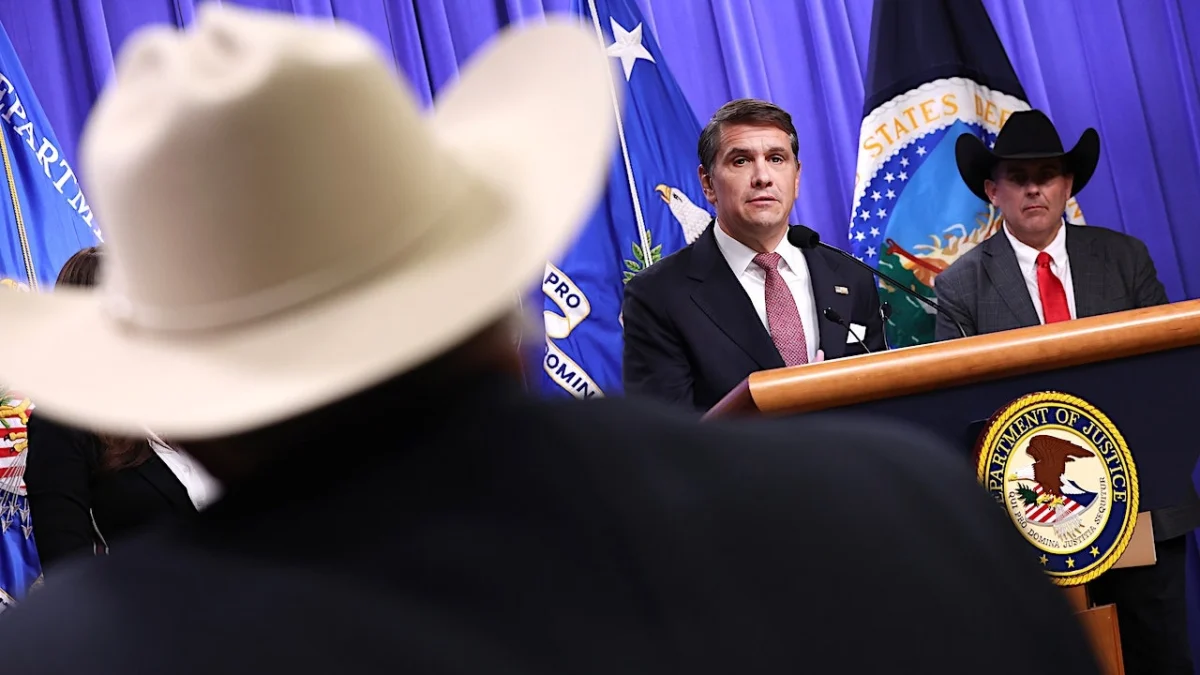
The U.S. Department of Justice has officially confirmed an active criminal antitrust investigation into the nation's beef processing industry. This probe is examining potential violations that may have contributed to the significant surge in beef prices experienced by consumers. Federal officials are scrutinizing the market structure, particularly the high concentration of power among the largest meatpackers, to determine if anticompetitive practices are at play.
Acting Attorney General Todd Blanche announced the investigation, emphasizing that the Justice Department is reviewing a substantial volume of evidence, including over three million documents. The probe aims to uncover whether the dominance of a few major companies in the beef processing sector has led to inflated costs for consumers. Blanche also issued a direct appeal to industry insiders, urging whistleblowers to come forward with any information regarding potential illegal activities.
"If the information you provide helps us secure a criminal penalty in excess of $1 million, you can be entitled to recover and receive 15-30% of the money that we recover," Blanche stated during a news conference, detailing the Department of Justice's fraud whistleblower rewards program. He specifically called on ranchers, purchasers, processors, and other stakeholders to report any suspected instances of price-fixing, bid-rigging, market allocation schemes, or procurement fraud.
The investigation comes at a time when beef prices have seen a sharp increase, causing financial strain for many households. Experts have pointed to a confluence of factors creating a "perfect storm" that is driving up costs. The Justice Department's inquiry seeks to determine if illegal collusion or monopolistic behavior within the industry is a primary driver of this inflation, beyond typical market fluctuations.
Agriculture Secretary Brooke Rollins highlighted broader concerns related to food security and the declining domestic cattle supply. As of January 1, the U.S. held approximately 86.2 million head of cattle and calves, a number not seen since the 1950s. This reduction in supply is a key factor being examined in relation to the rising beef prices.
Rollins attributed the shrinking cattle herd partly to what she described as "leftist anti-cattle, anti-meat activists' alarmism" and "the radical left's ongoing assault against ranching as a way of life." She noted that the country has lost more than 17% of its cattle ranchers over the past decade, with over 100,000 ranches ceasing operations. Addressing the need to increase herd size, Rollins stated that government and state initiatives are already being implemented to find solutions.
Furthermore, Rollins pointed to the significant foreign ownership within the major meatpacking companies as a potential threat to U.S. producers and national security. She identified two of the "big four" processors, JBS and National Beef, as having substantial Brazilian ownership. This concentration of foreign control over a critical U.S. industry is a focal point of the investigation.
White House senior trade adviser Peter Navarro echoed these concerns, identifying a combination of factors fueling the current beef price inflation. He cited the historically small cattle herd, the concentrated market power of processors, the influence of certain lobbying groups, and foreign ownership, particularly by Brazilian entities, as key contributors. Navarro specifically mentioned JBS, suggesting its significant financial contributions to the American political system have yielded substantial returns, which he believes must be curtailed.
Navarro emphasized that a small cattle herd coupled with a high degree of market concentration creates an environment ripe for the kind of beef inflation currently being experienced. He suggested that the situation is a direct consequence of these structural issues within the industry, leading to unfavorable outcomes for consumers and producers alike.
Officials from the Justice Department have not provided a timeline for when the investigation might lead to charges or legal action. They confirmed that civil and criminal antitrust inquiries can proceed concurrently. The effectiveness of the whistleblower program is considered crucial, as these individuals are expected to possess insider knowledge of potential price-fixing or other illicit activities that may not be apparent through standard investigative methods.
Navarro further elaborated on the importance of the whistleblower program, stating that these individuals are best positioned to reveal hidden practices, such as the alleged manipulation of meatpacking plant operations. He alluded to instances where plant shutdowns might have been orchestrated for reasons other than genuine operational issues, suggesting a deeper level of potential misconduct that investigators are seeking to uncover.
The probe involves major players in the U.S. meatpacking sector. The four largest beef processors collectively control over 85% of the U.S. processing market. Among these dominant companies, two have significant Brazilian ownership, raising questions about foreign influence and control over a vital segment of the American food supply chain. The Justice Department's investigation is a significant development in addressing consumer concerns over rising food costs.


