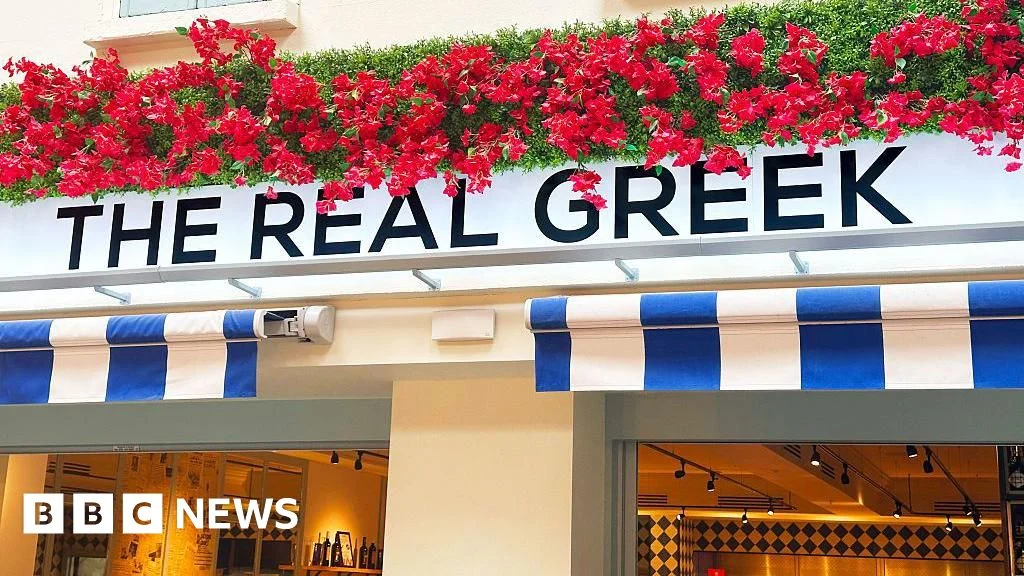
The Real Greek, a popular Mediterranean restaurant chain, has been rescued from potential collapse through an acquisition by the owners of Cote Brasserie. Karali Group, which recently purchased the 70-strong Cote Brasserie chain, has agreed to buy 19 of The Real Greek's 28 locations. This deal aims to save a significant portion of the business and its workforce.
Initially, the owners of The Real Greek, Fulham Shore, had signaled their intention to appoint administrators, raising concerns about the complete closure of the restaurant chain. However, the intervention by Karali Group offers a lifeline to the majority of its outlets. A statement from Fulham Shore indicated that 358 out of 509 jobs will be preserved as a result of the transaction.
Fulham Shore is also the parent company of the Franco Manca pizza chain. Its Japanese owner, Toridoll, had previously announced plans for administration for Fulham Shore, highlighting the severe economic pressures impacting The Real Greek more acutely than its pizza counterpart. Toridoll cited the "deterioration in the economic environment" as a primary factor.
The specific outlets of The Real Greek that are slated for closure include those in Spitalfields, Westfield London, Dulwich Village, Bristol, Strand, Solihull, Gloucester Quays, Glasgow, Edinburgh. These closures represent the nine locations not included in the sale to Karali Group.
Marcel Khan, chief executive of Fulham Shore, stated that the company had observed "clear and sustained improvements" since Toridoll's acquisition in 2023. He noted early signs of positive trading momentum. However, he emphasized the persistent challenges within the hospitality sector, including high cost inflation and a tax environment that disadvantages UK businesses compared to international competitors.
Khan explained that the pre-pack administration process, coupled with the sale to Karali Group, is intended to establish a more stable operational foundation for the acquired sites. This move also allows Fulham Shore to concentrate its resources and strategic focus on the Franco Manca brand and its "significant growth potential."
Founded in London in 1999, The Real Greek aimed to evoke a Greek dining experience through its decor, atmosphere, and menu offerings, featuring dishes like hummus and moussaka. The chain's presence is concentrated in London, with the remaining tavernas located across Scotland and other parts of England.
Financial disclosures from The Real Greek revealed an operating loss of £3.6 million in its latest accounts. The Japanese owners, Toridoll, echoed broader concerns voiced by UK hospitality industry groups regarding escalating costs. These pressures stem from increased business rates, energy expenditures, and labor expenses, including the rising minimum wage.
Toridoll's statement elaborated on the difficult operating climate in the UK, attributing it to high inflation driven by surging energy and food prices, alongside increased labor costs due to minimum wage hikes. These factors have created a more challenging landscape than initially projected for the hospitality industry.
This situation follows a similar restructuring for Fulham Shore's Franco Manca chain. Just two weeks prior, the company announced the closure of 16 out of approximately 70 Franco Manca restaurants as part of a company voluntary arrangement. At that time, Khan attributed these closures to "disproportionately high" UK taxes, particularly business rates, noting that even well-managed businesses are susceptible to industry-wide economic pressures.


