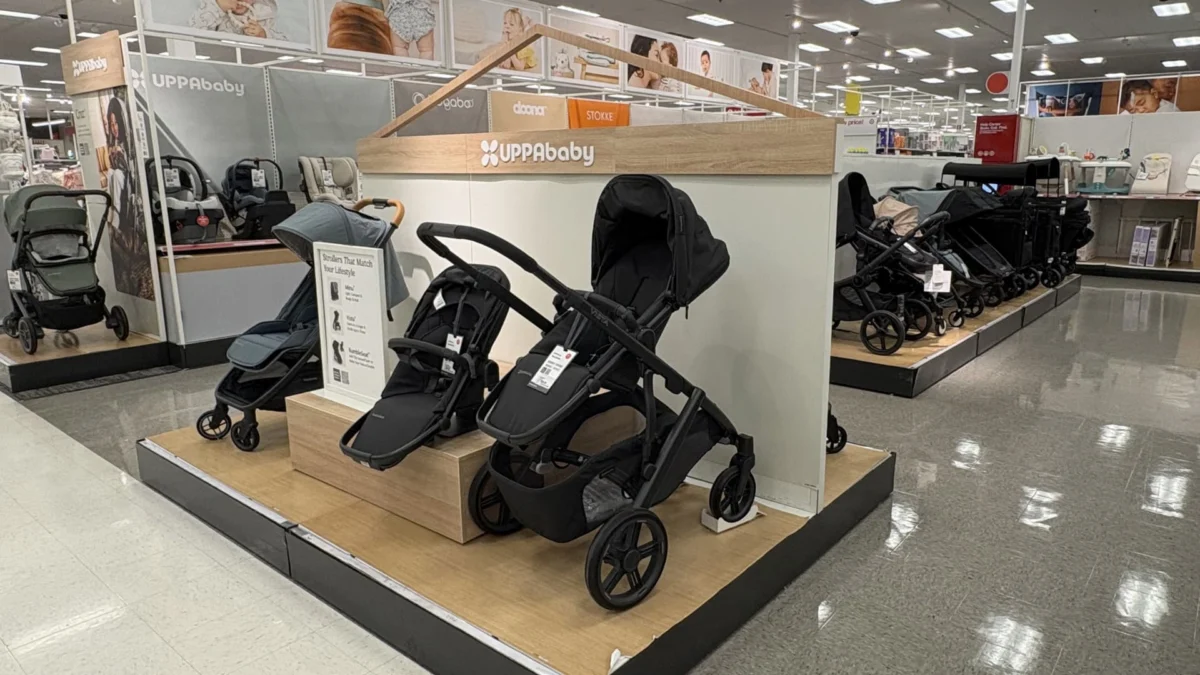
Target is making a significant strategic pivot, focusing its efforts on revitalizing its baby product offerings to recapture the attention of busy families and win back customers who have gravitated towards competitors like Walmart and Amazon. This initiative involves the creation of "baby boutiques" within approximately 200 of its stores, representing about 10% of its total store footprint. These curated spaces aim to provide a more engaging and premium shopping experience for essential baby items. Shoppers in these enhanced sections can now interact with products such as high-end strollers, car seats, and high chairs, moving beyond the typical cardboard packaging. The selection includes sought-after brands like UPPAbaby, Stokke, and Bugaboo, with some strollers priced around $1,000, signaling Target's intent to cater to a more discerning segment of the market.
Beyond the in-store enhancements, Target has also expanded its baby assortment by introducing nearly 2,000 new baby-related items, available both in these select stores and across its e-commerce platform. This comprehensive refresh of the baby department, described as its most substantial investment in the category in over a decade, is a key component of a broader strategy to reverse a three-year slump in sales. The company is under pressure to demonstrate renewed growth, especially as it prepares to report its first-quarter earnings under new CEO Michael Fiddelke on May 20th. Fiddelke has publicly committed to ending the company's sales decline, and the success of initiatives like the baby boutiques will be crucial in achieving this goal.
Target's Chief Merchandising Officer, Cara Sylvester, highlighted the strategic importance of families with young children, noting that those with children aged five and under spend twice as much as the average Target shopper. Furthermore, families with children across all age groups visit Target stores twice as frequently. This realization, stemming from a deep dive into the company's business following Fiddelke's appointment to lead the turnaround, has prompted Target to leverage its existing strengths and enhance its appeal to this vital demographic. "We see an incredible opportunity at Target to really deepen our relationships with busy families and become their first choice for even more of life's everyday needs," Sylvester stated, underscoring the company's ambition to become the preferred retailer for these consumers.
The strategy to win back busy families is multifaceted, encompassing improvements in product quality, an elevated in-store experience, and the expansion of convenient shopping options such as same-day pickup and delivery. Target has projected a return to annual sales growth this year, anticipating a roughly 2% increase in net sales year-over-year, with growth expected in every quarter. While the retailer has experienced a decline in customer traffic for the past four consecutive quarters, recent data from analytics firm Placer.ai suggests a potential uptick in store visits, offering a glimmer of optimism for its turnaround efforts.
Despite these efforts, Target faces considerable headwinds. The competitive landscape remains intense, with Walmart and Amazon posing significant challenges. Additionally, the retailer is navigating the potential impact of a boycott threat from a major teachers' union as the back-to-school season approaches. The broader economic climate, including the risk of rising gas prices, could also dampen consumer spending and potentially exacerbate the economic divide between higher and lower-income households. Simeon Gutman, a retail analyst at Morgan Stanley, pointed out that while Walmart has benefited from gains among wealthier consumers to offset losses from more budget-conscious shoppers, Target may not be in as strong a position to absorb such shifts. However, Gutman also expressed encouragement regarding Target's strategic adjustments to its stores and merchandise, believing these changes will stimulate customer traffic.
The decision to invest heavily in the baby category, despite a national decline in birth rates – U.S. births have fallen from a peak of 4.32 million in 2007 to an estimated 3.61 million in 2025 – is a calculated move. Sylvester explained that even with fewer births, the shopping habits of new parents necessitate a strategic approach. As parents become time-constrained, they tend to consolidate their shopping to fewer retailers. By capturing these customers early, Target aims to secure not only sales of baby essentials like diapers and wipes but also to increase purchases of groceries and apparel. The baby department is seen as a critical entry point for building long-term customer loyalty, as first-time parents represent a high lifetime value across all of Target's product categories.
In the U.S. baby sector, Target holds the third-largest market share, trailing behind Walmart and Amazon. According to market researcher Numerator, in the 12 months ending February, Walmart led with 27% of the market, followed by Amazon with 24.4%, and Target with 17.6%. This data, which includes baby gear, diapers, formula, and baby food but excludes apparel, shows Target has seen its share decrease from 18.6% over the past two years, while Walmart's share has grown from 25.4%. Amazon's share has remained relatively stable. While Target has not disclosed the exact investment in its baby boutique initiative, the company announced a significant increase in capital expenditures, allocating approximately $5 billion for the current fiscal year, an increase of over $1 billion from the previous year. These funds are earmarked for store openings and renovations, including the expansion of the baby boutique concept to more locations, though a specific timeline has not yet been established.
Target has openly acknowledged losing some of its customer loyalty, particularly among families. At an investor presentation in March, Sylvester candidly stated, "Our performance over the last few years has not met expectations. And that is on us. We lost the clarity and the discipline that make Target a place loved by busy families." While the precise impact of families on overall store and website traffic decline is not fully quantified, Morgan Stanley's Gutman views the baby category as intrinsically linked to Target's overall success. He described it as an "on-ramp to greater sales and then to multiple years of higher wallet share," asserting that Target has a strong justification and obligation to excel in this area.
The new "baby boutiques" are designed to offer a more curated and less overwhelming shopping experience compared to the traditional baby aisles, which some observers have described as "stale" and "a bit commoditized." Target has introduced premium brands such as UPPAbaby, Stokke, Bugaboo, and Doona, alongside expanding its own popular Cloud Island brand, which features clothing, bibs, and crib sheets. A key feature of these boutiques is the ability for customers to physically interact with larger items like strollers – pushing, folding, and lifting them – an experience that has become increasingly rare due to the closure of specialized baby retailers like Buybuy Baby and Babies R Us. Although Babies R Us has reappeared in some Kohl's stores as a pop-up, the physical retail experience for these large items is diminishing.
In addition to the enhanced product displays and brand selection, Target is piloting a baby concierge service through Tot Squad. This service offers shoppers complimentary guidance, either in person at the boutiques or online, to assist with product comparisons and the creation of baby registries. This move aims to simplify the decision-making process for parents, who often face a bewildering array of choices. The rise of social media has led to the proliferation of new baby brands, contributing to consumer confusion and fatigue, as noted by Nate Gunn, co-founder and CEO of WildBird, a baby carrier brand that recently debuted at Target. Gunn, a father of three, observed that parents are often overwhelmed by the sheer volume of products they need to purchase within a short timeframe.
WildBird's entry into Target stores marks its first significant expansion into brick-and-mortar retail, facilitated by the growing influence of social media platforms. Gunn believes that Target's revamped baby section has the potential to resonate with parents who enjoy a more leisurely shopping experience, perhaps combining it with a visit to the in-store Starbucks. He expressed a desire for Target to further differentiate itself from competitors like Walmart, suggesting that while Walmart focuses on price, Target should emphasize a more accessible yet premium experience. This approach aligns with Target's brand identity and its efforts to attract shoppers seeking a balance of quality, convenience, and a pleasant shopping environment. The success of these baby boutiques could set a precedent for future category revamps across the retailer.


