Graduates from the United States' merchant marine academies are entering a job market characterized by significant demand and exceptionally high starting salaries, driven by a critical shortage of licensed mariners. This scarcity is particularly acute within the Military Sealift Command (MSC), which plays a vital role in sustaining U.S. Navy operations globally.
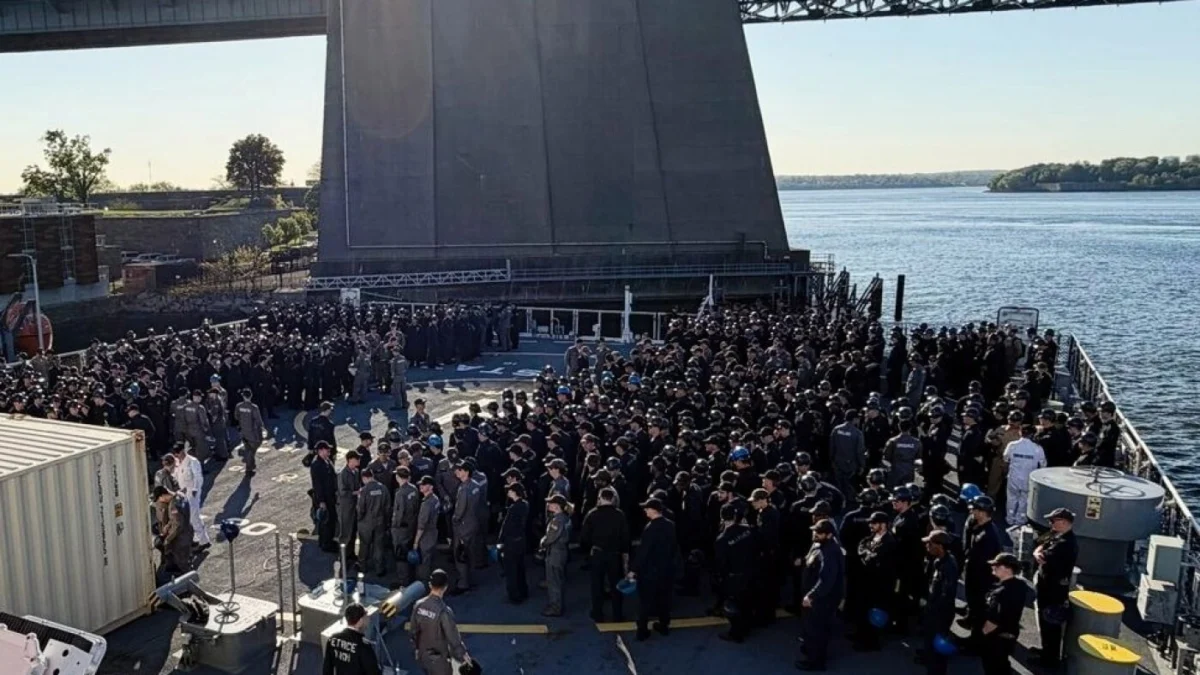
SUNY Maritime College, one of six state-run maritime academies, operates with a quasi-military structure. Cadets adhere to strict schedules, wear uniforms, and undergo a rigorous curriculum that combines traditional engineering and seamanship studies with the U.S. Coast Guard-required licensing courses. A key component of their training involves accumulating 360 days of sea time through three summer sea terms, a prerequisite for obtaining their professional licenses.
Upon graduation, these cadets are highly sought after, with entry-level officer positions commanding starting salaries well in excess of $100,000. The maritime industry encompasses a wide array of opportunities, including work on cargo ships, oil tankers, and in government service, particularly with the Military Sealift Command. The demand is so substantial that industry groups estimate approximately 8,000 open positions across the U.S. maritime sector.
The Military Sealift Command alone faces a deficit of over 5,000 licensed mariners. This shortfall poses a direct threat to naval readiness, as MSC vessels are responsible for delivering essential supplies such as fuel, food, and ammunition to Navy ships operating worldwide. Without sufficient MSC support, some Navy vessels in strategic regions like the Persian Gulf could face depletion of provisions within a mere five days.
Admiral John Okon, President of SUNY Maritime College and a retired U.S. Navy Admiral, emphasized the indispensable role of the merchant marine in national defense. He stated that the Navy's global reach is fundamentally dependent on the logistical supply chain provided by the merchant marine. The college's new training vessel, the Empire State VII, is designed specifically for cadet education, functioning as a "school on water" to better prepare students for these critical roles.
The urgency of the situation has prompted the Military Sealift Command to offer substantial incentives. For a three-year contract, signing bonuses can reach up to $54,000, with starting salaries potentially exceeding $170,000. These positions, however, often involve extended periods at sea, sometimes lasting for months, and may require operating in or near conflict zones, as evidenced by recent social media footage of missile activity in the Persian Gulf.
Graduating senior Finn Mahan acknowledged the financial appeal of these roles, especially for those seeking to serve their country in a civilian capacity while addressing a critical national need. He also pointed out the inherent risks, noting that the strategic importance of these supply ships makes them high-value targets for adversaries who understand their crucial role in supporting active-duty Navy vessels.
In response to the growing mariner shortage, the Trump administration introduced the Maritime Action Plan in February. This initiative aims to expand the pool of licensed mariners to meet current and future demands. Admiral Okon highlighted the broad economic impact of the maritime industry, reminding people that nearly every consumer good, whether purchased in a store or delivered by online retailers, has likely been transported by merchant mariners.
Maxwell Cappella, a 2025 graduate of SUNY Maritime, recently completed a four-month tour as a third assistant engineer on a federally contracted vessel, though not directly with MSC. He and his five-person team were responsible for the ship's engine room and all mechanical systems, describing their role as the "heart of the ship." Cappella opted for a position that offered shorter deployments, consistent internet access, and other benefits, rather than the higher signing bonuses associated with MSC.
Cappella elaborated on the financial advantages of working at sea, noting the absence of typical living expenses such as commuting costs, food preparation, and rent. The demanding nature of the work is consistent across different types of vessels, typically involving 12-hour shifts, seven days a week, with no breaks for holidays. This schedule is maintained regardless of the ship's specific mission or destination.
The Empire State VII is scheduled to embark on its summer cruise, carrying hundreds of cadets who will log essential sea time towards their Coast Guard licenses. This experience will bring them closer to making critical career decisions about the type of mariner they aspire to become and the operational environments in which they are willing to serve, navigating the complex landscape of high rewards and significant responsibilities in the modern maritime industry.
The rigorous training and demanding work schedule are designed to produce highly competent professionals capable of meeting the challenges of global shipping and defense logistics. The current market conditions, characterized by a significant shortage of experienced mariners, ensure that these graduates are entering a field with substantial career growth potential and immediate financial rewards, albeit with the understanding of the demanding nature of life at sea and the potential risks involved in supporting military operations.


