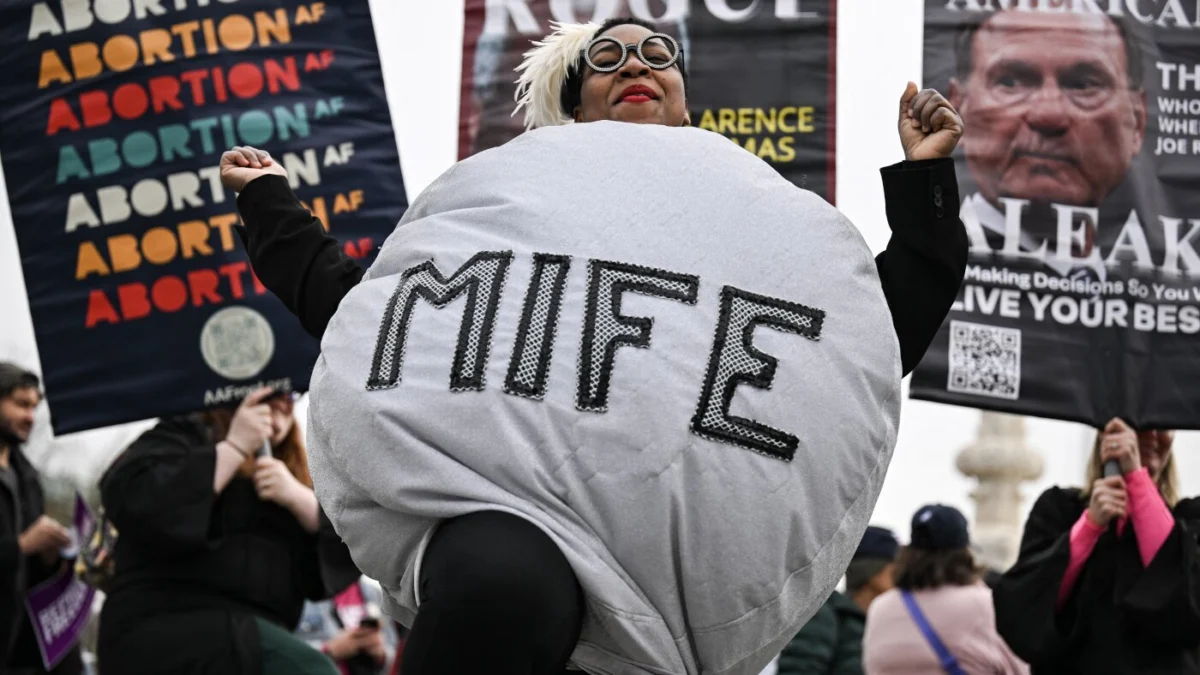
The Supreme Court has granted a one-week reprieve, temporarily halting significant changes to how the abortion pill mifepristone can be accessed. Justice Samuel Alito issued an order on Monday that preserves the current nationwide access to the drug, which is used in the majority of medication abortions performed in the United States. This intervention effectively restores the ability for patients to obtain mifepristone through telehealth services and via mail for at least the next seven days.
The temporary hold comes in response to a ruling by a federal appeals court on Friday. That court had mandated that the Food and Drug Administration (FDA) revert to earlier regulations requiring that mifepristone be prescribed and dispensed only in person. The appeals court's decision, issued by the 5th Circuit Court of Appeals, was intended to take immediate effect across the country, thereby prohibiting the use of telehealth and mail delivery for the medication.
The legal challenge that led to this situation was initiated by the state of Louisiana. The core of Louisiana's argument against the FDA centered on the agency's decision several years prior to remove the requirement for an in-person consultation for patients seeking mifepristone. Louisiana contended that allowing telemedicine access to mifepristone undermines the state's stringent laws that severely restrict or effectively ban abortions.
Telemedicine abortion has seen a notable increase in prevalence in the nearly four years since the Supreme Court's decision to overturn Roe v. Wade. This method has become a significant factor in the overall rise in the number of abortions nationwide, even in states with bans. National estimates indicate that in 2020, approximately 620,000 abortions were reported. By 2025, this figure had risen to about 1.1 million abortions involving a clinician, according to data from the Guttmacher Institute, a research organization that supports abortion rights.
Medication abortions, which utilize mifepristone in conjunction with another drug, misoprostol, have become increasingly common. By 2022, these medication abortions accounted for nearly two-thirds of all abortions performed in the U.S., as reported by the Guttmacher Institute. Furthermore, data from KFF, a nonpartisan health policy research organization, suggests that by the end of 2024, roughly one in every four abortions was provided through telehealth services.
The FDA has consistently maintained that mifepristone is a safe medication, having been used by over 7 million patients in the U.S. since its initial approval in 2000. When used with misoprostol, a drug also employed for treating ulcers and hemorrhage, mifepristone is approved for terminating pregnancies up to 10 weeks of gestation.
The 5th Circuit Court of Appeals' order, authored by Judge Stuart Kyle Duncan, a Trump appointee, was a 19-page document. Judge Duncan asserted that the availability of mifepristone via telemedicine "injures Louisiana by undermining its laws protecting unborn human life and also by causing it to spend Medicaid funds on emergency care for women harmed by mifepristone." He further stated that both of these alleged injuries are irreparable.
In his ruling, Judge Duncan directed the FDA to reinstate the regulations that were in place in 2022. These regulations mandated that mifepristone must be prescribed and administered in person. The appeals court's order did not specify any geographical limitations or a phased implementation, meaning it was intended to be immediately applicable nationwide.
Following the 5th Circuit's decision, the two primary manufacturers of mifepristone, Danco Laboratories and GenBioPro, promptly sought emergency relief directly from the Supreme Court. Justice Alito, who handles such emergency requests originating from the 5th Circuit, granted the temporary stay on Monday morning.
Justice Alito's order effectively blocks the appeals court's decision from taking effect until next Monday, May 11, at 5 p.m. Additionally, he has requested that all parties involved in the lawsuit brought by Louisiana submit their legal briefs by Thursday, May 7, at 5 p.m. This action provides a crucial one-week window during which current access to mifepristone remains unchanged, pending further legal review.