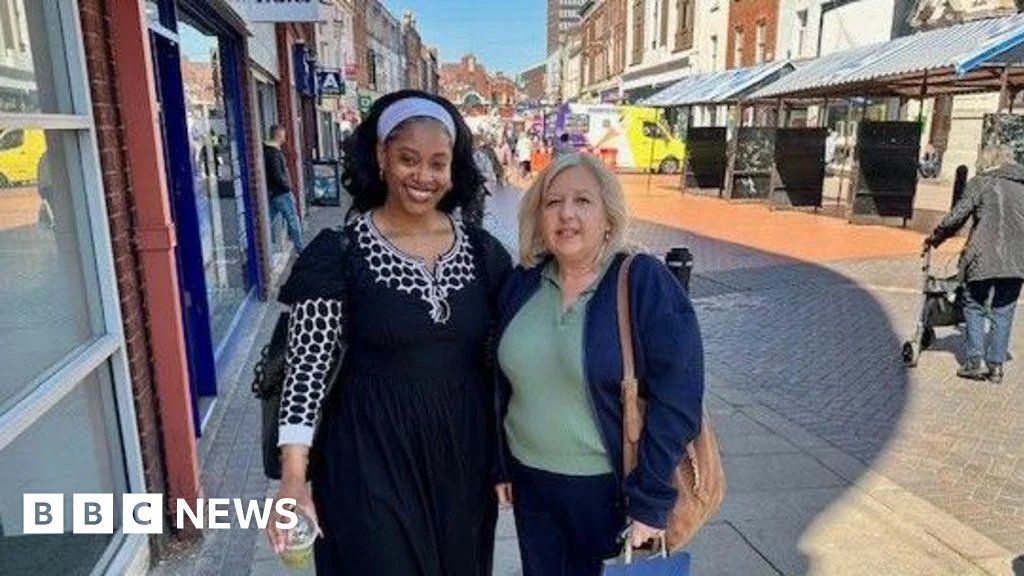
In towns across England, the visible decline of High Streets is increasingly becoming a focal point for voters, fueling a sense of neglect and potentially influencing outcomes in the upcoming local elections. Residents in places like Walsall, West Midlands, express deep disappointment with the current state of their town centres, a sentiment echoed by many across the nation. Debbie Tapper, a lifelong resident of Walsall, lamented the loss of a once-bustling market that stretched the length of the High Street, now replaced by shuttered storefronts, vape shops, and barbers. "I am proud to be from Walsall," she stated, "But I'm not proud of the way the country is at the moment." This sentiment captures a broader frustration with economic shifts that have hollowed out traditional retail hubs.
The challenges facing High Streets are multifaceted, stemming from a combination of online shopping, the dominance of out-of-town retail parks, and wider societal and economic shifts, according to the BBC. These forces have collectively led to a proliferation of empty units in once-vibrant town centres. Shoppers Sharday Hodges and Carmel Yates in Walsall highlighted the impact of high rents and parking charges as significant barriers for both businesses and consumers. "We used to have such a rich market history and it's such a shame," said Sharday, noting the stark absence of stalls that once characterized the area. Carmel added that the town feels "really run down" with "a lot of deprivation" and a "lack of jobs," which she believes has a knock-on effect on people's ability to spend.
Polling data suggests that the condition of local High Streets serves as a critical barometer for public perception of community well-being and political effectiveness. Luke Tryl, UK director of polling company More in Common, observed that "the public judge their local area and community by the state of the High Street." He elaborated that signs of neglect are interpreted as indicators of wider decline, contributing to a "wider malaise" that makes residents feel their communities are "neglected or forgotten." This perception of decline, even if seemingly cosmetic, can significantly erode a community's sense of pride and optimism.
Efforts to revitalize town centres are underway, involving both central government initiatives and local regeneration projects. Historic England, for instance, reportedly ran a four-year program aimed at repurposing derelict and underused buildings into community spaces like cinemas and market halls, and supporting cultural events. In Walsall, a substantial £1.5 billion regeneration project is planned. However, for many residents, the pace of these solutions is too slow. Sharday Hodges expressed this impatience, stating, "The council has come up with their 2040 plan and that's amazing, but if I've got to wait until I'm 41 for Walsall to be great again that's not good enough."
The issue of town centre decline is not confined to specific regions but is particularly acute in areas with entrenched deprivation. Research by the Centre for Cities think tank reportedly found a strong correlation between the performance of town centres and the health of local economies. The think tank found that while only one in twelve High Street units were empty in London and Cambridge, this figure rose to nearly one in five in Bradford. Ant Breach, the think tank's director of policy and research, noted that High Streets in and around London and the greater South East are generally performing better. "In places where people have less money to save or spend, the local High Street has suffered," he said, underscoring the role of disposable income in supporting local retail.
Breach further characterized High Streets as highly visible indicators of an area's economic vitality. He emphasized that when High Streets are struggling, voters expect tangible interventions that go beyond superficial improvements. This sentiment highlights a demand for substantive policy responses to address the root causes of decline, rather than just cosmetic fixes. The performance of local economies directly impacts the viability of businesses on the High Street, creating a feedback loop where economic hardship leads to retail decline, which in turn can further depress local economic activity.
Politicians in Westminster are increasingly acknowledging the significance of High Street issues as a voter concern. Communities Secretary Steve Reed stated that the condition of town centres is a key factor in how people assess the effectiveness of politics. "Fixing High Streets is critical to showing people that politics is back on their side," he asserted. Reed described the current state of many High Streets—boarded-up shops, fly-tipping, and graffiti-covered metal grills—as a visible manifestation of loss and anger, suggesting that the future looks worse rather than better for many communities. He stressed the urgency of reversing this trend.
In response, the government has announced several measures. These include a £301 million fund dedicated to revitalizing High Streets, a wider £5.8 billion "Pride in Place" scheme to support local area improvements, and new powers for councils to regulate betting shops and bring empty properties back into use. Additionally, plans are reportedly in motion to bolster trading standards' capacity to combat illicit businesses. However, the complexity of the problem, compounded by cash-strapped councils, pressured public services, sclerotic economic growth, and regional inequalities, means there are no simple solutions.
Political parties are presenting distinct approaches to tackling the High Street crisis. The Conservative Party, which previously championed a "levelling up" agenda, is now focusing on tax cuts, including a pledge to scrap business rates for retail, hospitality, and leisure businesses up to an annual limit of £110,000. They also plan to cut electricity bills for businesses and hire 10,000 police officers to tackle crime. Conservative Party chair Kevin Hollinrake emphasized the need to "make it as easy as possible for businesses to be in business" and linked the closure of shops, rising crime, and the proliferation of vape stores to a perception of local areas "going to hell in a handcart." He stated that a raft of policies are needed to deal with these issues.
The Liberal Democrats are proposing a temporary reduction in VAT for pubs, cafes, and local attractions, alongside measures to lower business energy bills, encourage residential development above shops, improve public transport, and review parking charges. Business spokesperson Sarah Olney called for a return to "proper community policing" and increased support for small businesses to invest in security measures like CCTV, aiming to restore a sense of safety and pride. The party believes these steps are crucial for the genuine turnaround of town centres.
The issue of declining High Streets is also a significant concern for voters who feel disillusioned with mainstream politics. More in Common polling from last June reportedly suggested that the sense of neglect associated with declining High Streets is particularly pronounced among Reform UK voters. A Reform UK spokesman criticized "sky-high business rates and parking charges imposed by local authorities that don't understand business," arguing that these are crippling the High Street. The party reportedly plans to abolish business rates for pubs to boost footfall, with further policy announcements expected.
The Green Party, through leader Zack Polanski, has outlined a three-step plan that includes advocating for affordable leases for local businesses, granting authorities powers to repurpose long-term empty shops for public use, and establishing citizens' assemblies. Polanski stated that Green Party councillors would prioritize community interests over corporate property rights and utilize local authority powers to address derelict properties. This approach emphasizes community-led regeneration and public benefit.
While various solutions are being proposed by different political parties, the underlying challenge of declining High Streets remains a persistent issue. Successes have been achieved in some areas, but many town centres continue to exhibit signs of decay. The upcoming local elections present a critical juncture, as politicians who overlook the plight of the High Street risk alienating a significant portion of the electorate. The visible state of these commercial hubs serves as a potent symbol of broader economic and social conditions, and voters' perceptions of these conditions will likely weigh heavily in their electoral decisions.


