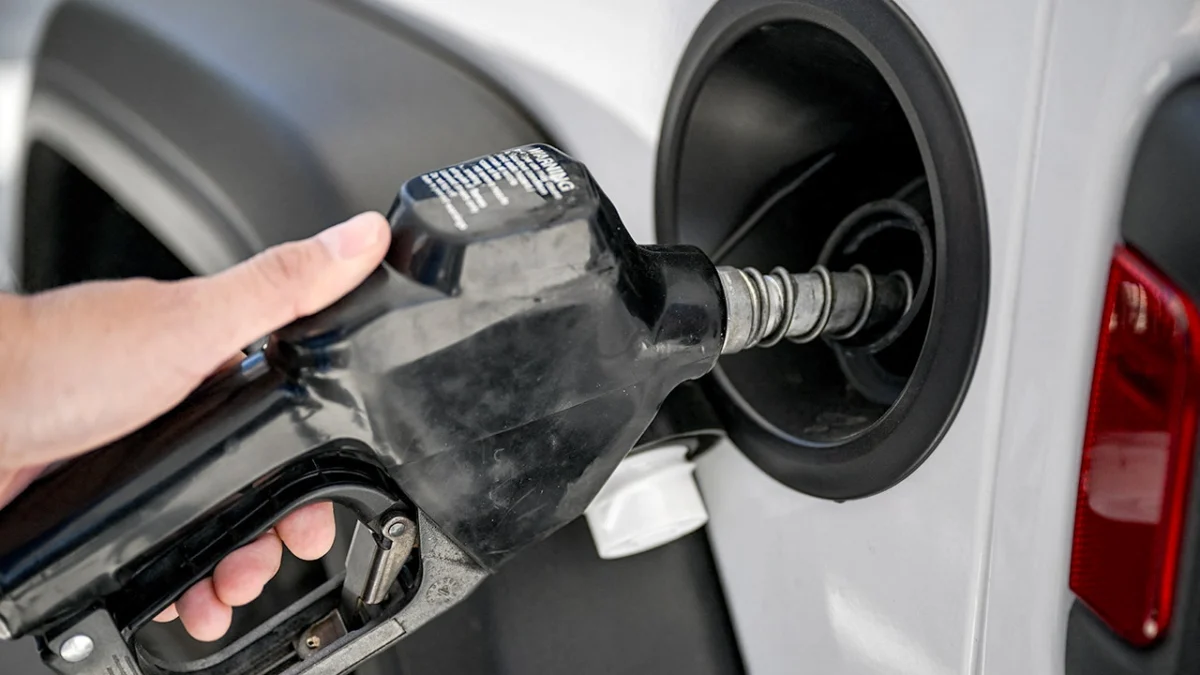
The national average price for a gallon of regular gasoline has climbed to $4.229 as of Wednesday, marking the highest point reached so far during the ongoing period of heightened tensions between the United States and Iran. This current average represents a significant increase compared to the $3.161 national average reported by AAA one year ago. However, it remains below the all-time high of $5.016 per gallon, which was recorded in June 2022 during the Biden administration.
White House spokeswoman Taylor Rogers stated in a release to Fox News Digital that "The President brought oil and gas prices down to multi-year lows at record speed, and as traffic in the Strait of Hormuz normalizes, these energy prices will plummet once again." She added, "President Trump has always been clear that these are short-term, temporary disruptions."
Fuel prices were observed at a Brooklyn gas station on April 28, 2026, in New York City. The situation highlights the broader impact of global events on domestic energy costs, with consumers facing increased expenses for everyday necessities.
An official from the Trump campaign informed Fox News Digital that the former president met with several oil executives on Tuesday. During this meeting, discussions reportedly focused on the United States' strong performance relative to other nations and the effectiveness of current policies. Specific initiatives mentioned included the Jones Act and the Defense Production Act (DPA), which are designed to bolster domestic industries and national security.
President Trump issued a warning via a Truth Social post early Wednesday morning, stating, "Iran can’t get their act together. They don’t know how to sign a nonnuclear deal. They better get smart soon!" The post was accompanied by a graphic depicting him in sunglasses with explosions in the background, bearing the text "NO MORE MR. NICE GUY!"
The U.S. military has maintained a blockade against Iranian ports for over two weeks. According to an interview published by Axios on Wednesday, Trump commented on the effectiveness of this strategy, reportedly saying, "The blockade is somewhat more effective than the bombing. They are choking like a stuffed pig. And it is going to be worse for them. They can't have a nuclear weapon."
In the same Axios interview, Trump elaborated on his stance regarding the blockade and potential negotiations with Iran. He indicated that Iran desires a resolution and wishes for the blockade to be lifted. However, Trump expressed his unwillingness to remove the blockade, stating, "I don't want to [lift the blockade], because I don't want them to have a nuclear weapon." This position underscores his administration's focus on preventing Iran from acquiring nuclear capabilities.
This ongoing geopolitical situation continues to influence global energy markets, contributing to the volatility in oil prices and, consequently, gasoline costs for consumers. The interplay between international conflict, energy supply, and economic policy remains a critical factor for market watchers and policymakers alike.
The trucking and moving industries are feeling the pinch of escalating diesel prices, according to Spero Georgedakis, CEO and founder of Good Greek Moving and Storage. He discussed the impact of rising fuel costs on truckers, moving companies, and the growing strain on small businesses during an appearance on 'Mornings with Maria.' The increased operational expenses directly affect the profitability and sustainability of businesses reliant on transportation.
Consumer discretionary spending may also be impacted as higher fuel costs reduce disposable income. Experts note that the consumer discretionary sector has experienced a "little more hit or miss" performance, suggesting that consumers are becoming more selective with their spending due to economic pressures. This can have ripple effects across various retail and service industries.
The broader economic implications of sustained high energy prices include potential inflationary pressures. While the Federal Reserve has been working to manage inflation, external factors like geopolitical conflicts and supply chain disruptions can complicate these efforts. The resilience of the economy is being tested as it navigates these complex challenges, with energy costs serving as a significant variable.


