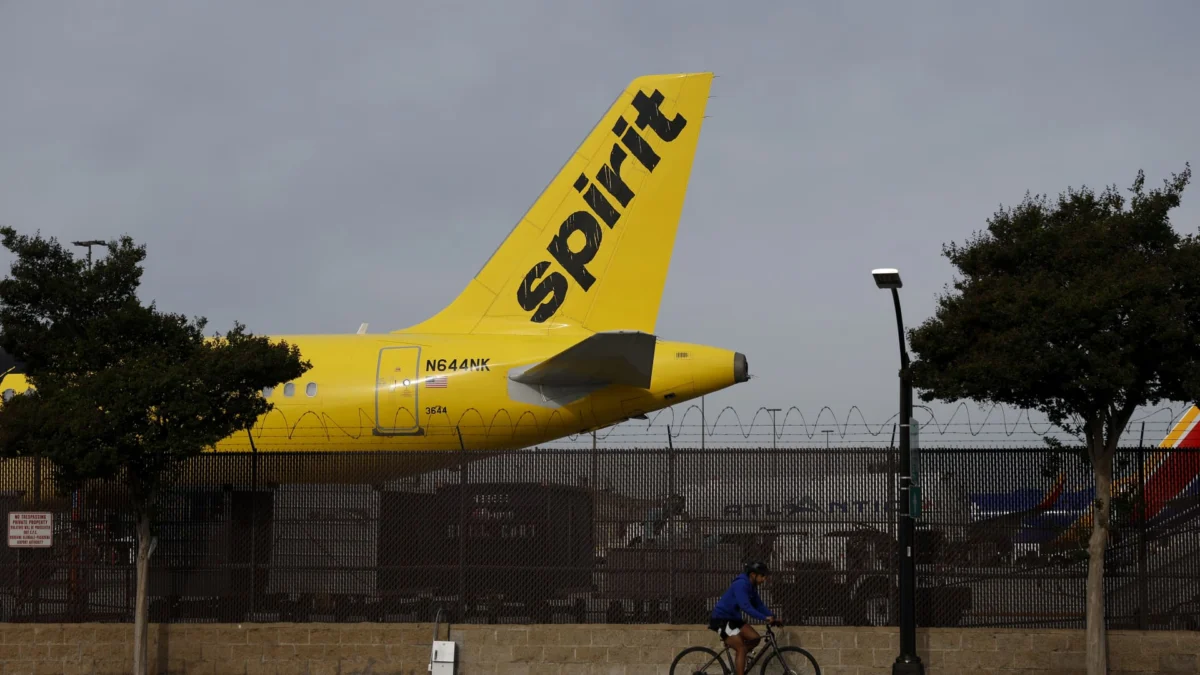
Spirit Airlines ceased operations over the weekend, with its Chief Executive Officer, Dave Davis, stating that the company “just ran out of time.” The airline, once a dominant force in the U.S. low-cost carrier market, was undergoing its second bankruptcy proceeding in less than a year and ultimately failed to secure the necessary financial support to continue flying. Davis remains with Spirit to manage the airline's dissolution, a process that will involve approximately 130 other employees.
Spirit Airlines had faced a prolonged period of challenges, exacerbated by larger, well-capitalized airlines that adopted its cost-effective business model. The carrier was also hampered by unsuccessful merger attempts, escalating operational costs, and, more recently, a sharp increase in jet fuel prices attributed to geopolitical tensions surrounding the war in Iran. Ultimately, the most significant obstacle proved to be time itself.
“We just kind of ran out of runway,” CEO Dave Davis explained in an interview with CNBC on Monday. Spirit had initially aimed to emerge from its second bankruptcy filing, which occurred less than a year after its first, by mid-2026. According to Davis, he and his team were optimistic about their exit strategy in late March, just four days before the U.S. and Israel launched attacks on Iran. This optimism, however, was predicated on fuel prices stabilizing in April. Instead, they surged.
“Late March, early April, it became clear that it was going to be tough for us to get through,” Davis stated, noting that crude oil prices had surpassed $100 a barrel. This price point significantly impacted the airline's ability to operate profitably and execute its recovery plan. The escalating fuel costs created an insurmountable financial hurdle, pushing the company towards its eventual shutdown.
In a last-ditch effort to prevent the airline's collapse, Davis and other Spirit executives engaged with the Trump administration to explore the possibility of a government bailout. “We got connected with some various folks in government, including [Commerce] Secretary [Howard] Lutnick, through some contacts,” Davis recounted. “These guys … particularly Commerce, very eager to help.” The administration had been developing a proposal that included a $500 million loan, which could have resulted in the U.S. government acquiring up to a 90% stake in the carrier.
However, the proposed bailout faced significant opposition from the airline's bondholders, who presented a counter-proposal. “Our bondholders also worked very hard to try to get something done,” Davis said. Despite these efforts, the gap between the government's terms and the bondholders' demands remained substantial. By Thursday, it was evident that a consensus could not be reached. “I think we just ran out of time,” Davis reiterated, highlighting the critical lack of time to finalize any agreement.
The cessation of Spirit Airlines' operations resulted in the loss of jobs for approximately 17,000 individuals, encompassing both direct employees and those in indirectly related roles. Competitors, who had been observing Spirit's difficulties for an extended period, quickly moved to fill the void left by the airline's disappearance. Within hours of the shutdown announcement, other carriers began arranging to accommodate ticketed Spirit passengers and to expand their own flight schedules to capture the market share previously held by Spirit's distinctive yellow aircraft.
Spirit Airlines had appointed Dave Davis, a seasoned airline executive and former Chief Financial Officer at Sun Country, as its CEO in April 2025. This appointment occurred roughly a month after the company successfully navigated its first bankruptcy. Critics at the time suggested that Spirit had not implemented sufficiently drastic changes during that initial restructuring, such as divesting more assets to reduce costs. The airline filed for Chapter 11 bankruptcy protection once again in August of the following year, grappling with many of the same underlying issues. Despite efforts to cut flights, retire some of its Airbus fleet, and furlough crew members to conserve cash, these measures proved insufficient.
Davis brings a wealth of experience to his role, having previously held positions at Northwest Airlines, which later merged with Delta Air Lines in 2008, and at US Airways, which combined with American Airlines in 2013. The current U.S. airline landscape is dominated by a few major players, with United Airlines and Southwest Airlines, alongside American and Delta, controlling roughly 80% of the domestic capacity following a significant wave of industry consolidation. Davis anticipates further consolidation, suggesting it is a necessary development for the lower end of the industry.
He also expressed his belief that Spirit Airlines would not be in its current predicament if its proposed acquisition by JetBlue Airways had not been blocked by a federal judge two years prior. The U.S. Department of Justice had challenged the merger on antitrust grounds, leading to its termination. This failed merger represented a significant missed opportunity for Spirit to integrate with a larger entity and potentially avoid its financial struggles.
Historically, low-fare airlines like Spirit posed a considerable challenge to established legacy carriers by entering markets with exceptionally low fares. “There was no better exemplar of that than Spirit,” Davis remarked. However, the competitive landscape shifted as major airlines began to emulate aspects of the low-cost model, introducing basic economy fares and various ancillary fees. This strategy eroded the competitive advantage of carriers like Spirit, which, despite being profitable in the 2010s, had not achieved profitability since 2019.
“Everybody saw the low-cost airlines just taking massive share,” Davis observed, contrasting the past with the present. He further noted that larger airlines benefit from extensive credit card loyalty programs. These programs generate substantial revenue from banks based on customer spending, providing a crucial financial cushion that enables them to withstand economic shocks, such as periods of high fuel prices. This revenue stream was a significant advantage that Spirit lacked.
In the final days of Spirit's operations, Davis found himself commuting between Washington D.C. and the company's headquarters in Dania Beach, Florida, in a persistent effort to broker a deal. Some employees, including pilots, did not receive definitive information about the airline's final flights until they were nearing their destinations on Friday night or early Saturday morning. "You can't announce ahead of time that you're going to shut down," Davis explained. "What happens is vendors stop working. Fuelers stop fueling. Some crew members probably don't come in. So then you've got airplanes and people and passengers scattered all over the place in foreign countries. It needs to be done in a very orderly way, and it needs to be done all at once."
Davis confirmed he will remain with Spirit to oversee the orderly closure of the airline. Leased aircraft will be returned to their lessors, while owned planes will be sold. Airport gates managed by Spirit will revert to airport authorities and are expected to be reallocated to other airlines. Approximately 130 employees will continue their employment to manage these closing activities. When asked about his future in the aviation industry, Davis expressed his enduring passion: "I just love airplanes, and I like the industry, so I'll probably never leave it, although sometimes it's very trying and taxing on a person."


