The United States economy demonstrated resilience in the first quarter of the year, with growth rebounding from a sluggish fourth quarter. The Bureau of Economic Analysis (BEA) released its advance estimate, indicating that the economy expanded at an annualized rate of 2% during the period spanning January, February, and March. This figure, however, fell below the 2.3% growth anticipated by economists surveyed by LSEG.
This latest GDP reading follows a year where the U.S. economy grew at an approximate rate of 2.1% in 2025. The latter half of the previous year saw more robust expansion, with the third quarter registering 4.4% annualized growth, followed by a more modest 0.5% in the fourth quarter. The BEA's report highlighted several key drivers behind the first-quarter uptick.
Primary contributors to the increase in Gross Domestic Product (GDP) during the first quarter included investment, exports, consumer spending, and government spending. Notably, imports also saw an increase over the same period. A significant portion of the investment activity was concentrated in equipment, particularly computers and related technologies, fueled by the ongoing buildout of artificial intelligence (AI) infrastructure. Investment also flowed into intellectual property products, such as software, and into inventories held by both retail and wholesale trade firms.
However, these gains were partially offset by a decline in investment within residential and nonresidential structures. The BEA's data indicated that the rise in government spending was largely attributable to an increase in federal employee compensation. This boost followed a period of decline in the fourth quarter, which was impacted by a government shutdown that resulted in federal workers missing paychecks.
Consumer spending also played a crucial role in the first quarter's economic performance. The growth in consumer expenditures was primarily driven by the services sector, with healthcare emerging as a leading component. This included spending on hospital services, nursing home care, and outpatient medical services. The BEA reported that real final sales to private domestic purchasers, a measure combining consumer spending and gross private fixed investment, saw a 2.5% increase in the first quarter. This represents an acceleration from the more moderate 1.8% rise observed in the fourth quarter of the previous year.
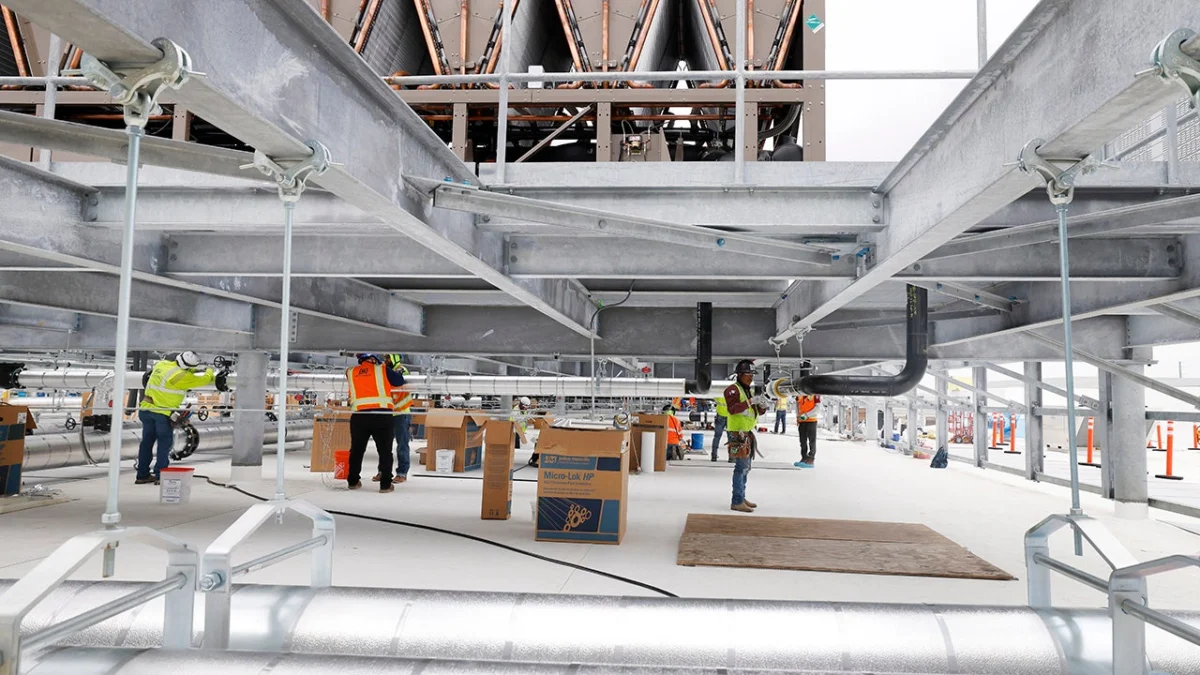
Investment in AI data centers has been identified as a significant factor contributing to the overall GDP growth. This trend underscores the growing impact of technological advancements on the broader economic landscape. The demand for computing power and infrastructure to support AI development and deployment is creating new avenues for capital expenditure and economic activity.
Michael Pearce, chief U.S. economist at Oxford Economics, commented on the economic landscape, stating that "the core of the economy remained solid in Q1, driven by the AI buildout and the tax cuts beginning to feed through." He anticipates that these factors will continue to propel growth throughout the remainder of the year. However, Pearce also noted that the recent jump in energy prices is likely to temper what would otherwise have been a stronger economic performance.
Pearce further elaborated that some of the strength observed in consumer spending during March could be attributed to a rebound from poor weather conditions experienced earlier in the year. He suggested that fiscal stimulus measures are currently more than counteracting the drag imposed by higher energy prices. Nevertheless, this balance is expected to shift in the coming months, particularly as gasoline prices continue their upward trend.
Gregory Daco, chief economist at EY-Parthenon, offered his perspective on the economic outlook. He acknowledged that while AI investment holds the promise of reinforcing organic productivity growth in the long term, its immediate impact through increased capital expenditures, infrastructure development, and energy demand could contribute to inflationary pressures. Daco pointed out that private sector demand exhibited stronger momentum in the first quarter compared to the fourth quarter of 2025.
However, Daco expressed concern about the underlying economic foundation, describing it as an "uncomfortable balance." He noted that the headline figures for growth, while appearing positive, mask underlying fragilities. According to Daco, the strength of the economy is concentrated in a few key areas: affluent consumers, significant AI investment, and gains in asset prices. These factors, he argued, create an uneven economic landscape where apparent gains obscure deeper vulnerabilities within the broader economy.
The BEA's report also touched upon the impact of external factors, such as the unsettled conflict with Iran, which has contributed to soaring gas prices reaching their highest points so far. This situation adds another layer of complexity to the economic outlook, potentially influencing both consumer behavior and business investment decisions moving forward.
The interplay between technological investment, consumer spending patterns, government fiscal actions, and global commodity prices presents a multifaceted economic picture. While certain sectors and drivers of growth appear robust, underlying fragilities and external pressures warrant continued observation as the economy navigates the remainder of the year.


