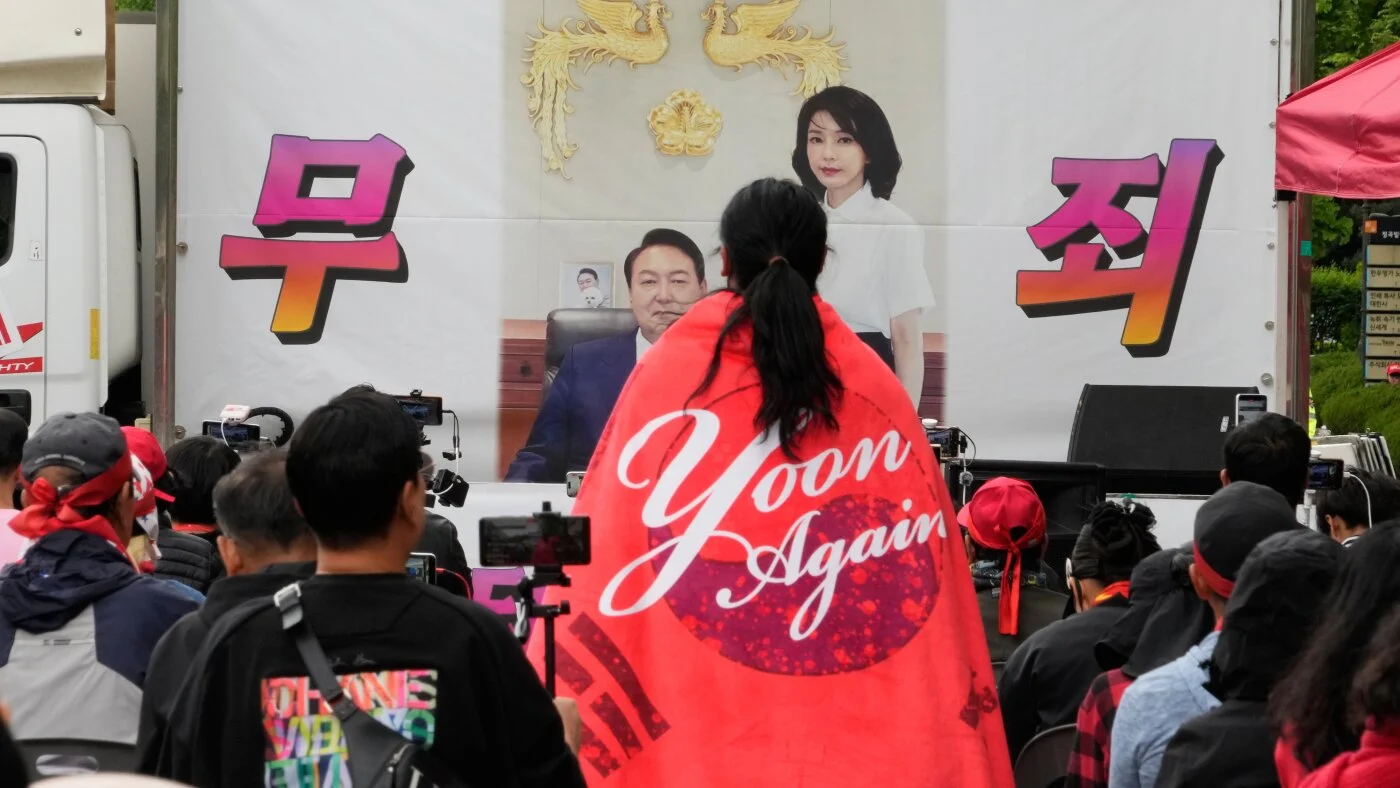
A South Korean appeals court has extended the prison sentence of Kim Keon Hee, the wife of ousted President Yoon Suk Yeol, to four years for corruption. In January, Kim was sentenced to 20 months in prison for accepting gifts from the Unification Church, which sought political favors from the government. However, she was acquitted of involvement in a stock price manipulation scheme at the time.
Both parties appealed the decision, and on Tuesday, the Seoul High Court convicted her of receiving another Chanel bag from the church and on the price manipulation charge. The court stated that as the first lady, Kim represented the country alongside her husband and had a significant influence on him, but failed to meet public expectations for her integrity. The court also said she exploited her high-profile status to receive gifts from the Unification Church.
Kim's lawyers have announced that they will appeal the ruling to the Supreme Court. The independent counsel's team had requested a 15-year term for Kim. Her defense team has argued that the investigation was politically driven.
Kim has been in jail since August, when the Seoul Central District Court approved a warrant for her arrest, citing the chance she might destroy evidence. The case against Kim is part of a larger scandal surrounding her husband, who was sentenced to life in prison for rebellion in February. Yoon's downfall began when he imposed martial law in December 2024, sending troops and police officers to the National Assembly.
He claimed he aimed to eliminate 'anti-state forces' and 'shameless North Korea sympathizers.' The martial law lasted six hours before it was unanimously voted down by the assembly. Yoon has defended his actions, calling it a desperate attempt to draw public support for his fight against the liberal opposition Democratic Party.
The Seoul district court found Yoon guilty of rebellion for mobilizing military and police forces in an illegal attempt to seize the assembly, arrest political opponents, and establish unchecked power for an indefinite period. Yoon faces a slew of criminal trials related to his martial law debacle and other scandals. Investigators say Kim was not involved in Yoon's martial law enforcement.
The couple's fall from grace has been swift, with Yoon's approval rating plummeting after the imposition of martial law. Kim's scandals have also hurt her husband's reputation, providing ammunition for his political rivals. The Unification Church, which is at the center of the corruption charges against Kim, has been accused of seeking political favors from the government.
The church's involvement in the case has raised questions about its influence on South Korean politics. The Seoul High Court's decision to extend Kim's prison sentence is seen as a significant blow to the former first lady and her husband, who are facing multiple corruption charges. The case is expected to continue, with Kim's lawyers appealing the decision to the Supreme Court.
The outcome of the case will be closely watched, as it has significant implications for South Korean politics and the rule of law in the country. The extension of Kim's prison sentence is also seen as a reflection of the country's commitment to holding public officials accountable for their actions. The case has sparked widespread debate about the role of the first lady in South Korean politics and the need for greater transparency and accountability in government.
As the case continues, it is likely that more details will emerge about the corruption charges against Kim and her husband, and the implications of the case for South Korean politics will become clearer. The Seoul High Court's decision is a significant step towards ensuring that those in power are held accountable for their actions, and it is expected to have a lasting impact on the country's political landscape. The case against Kim and her husband is a reminder that corruption and abuse of power will not be tolerated in South Korea, and that the rule of law will be upheld.
The outcome of the case will be closely watched, both in South Korea and around the world, as it has significant implications for the country's democracy and its commitment to transparency and accountability.