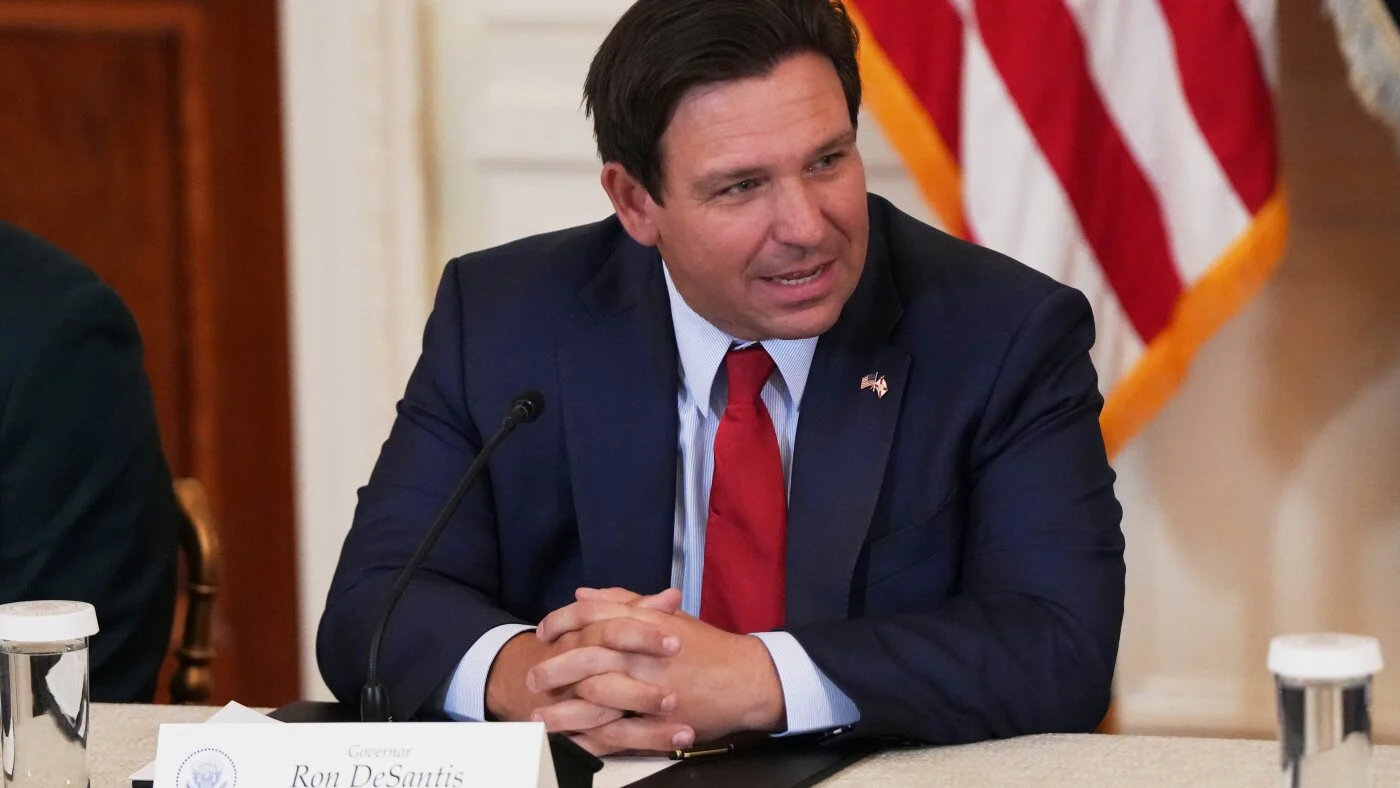
Florida Governor Ron DeSantis has proposed a new voting map that could help Republicans win four additional seats in the U.S. House this November.
The governor’s office released the map on Monday, showing 24 Republican-leaning and four Democratic-leaning districts. Currently, the state is represented by 20 Republicans and seven Democrats, with one other seat becoming vacant recently following a Democratic lawmaker’s resignation. DeSantis has called lawmakers to a special legislative session starting Tuesday to consider the new map.
The governor told Fox News that the new map makes good on his promise to conduct mid-decade redistricting and more fairly represents the makeup of Florida today. However, the effort in Florida could face court challenges and political headwinds, especially after Democrats flipped two Republican-held legislative seats in the state earlier this year. Reshaping districts could spread out Republican votes, making some safe Republican seats more competitive.
Nikki Fried, chair of the Florida Democratic Party, has called the redistricting effort ‘unconstitutional gerrymandering,’ and some Democrats say it could end up benefiting their candidates in the end. But Evan Power, chair of the Republican Party of Florida, is an advocate for a new map, saying that compact districts will lead to more Republicans being elected in the state. The special session has already been delayed once, with DeSantis originally calling for lawmakers to meet on April 20, but then delaying the session by a week.
Redistricting is one issue on the governor’s agenda, along with easing school vaccine requirements and applying guardrails to some uses of artificial intelligence products. The path toward redistricting in Florida is difficult, as the state outlaws political gerrymandering, or redrawing lines for partisan gain. The governor has suggested that the state could be ‘forced’ to redraw districts because of racial preferences in the current map in favor of minority communities.
But that would only come from a U.S. Supreme Court ruling on the federal Voting Rights Act, and that ruling hasn’t come yet.
The party in the White House usually loses House seats in the midterm, and President Trump’s agenda could be at stake if Democrats take control. Usually, states redistrict at the start of each decade after the census shows how many U.S.
House seats each state should have. But President Trump set off a mid-decade redistricting race to secure more seats by pushing Republican-led states to redraw their maps before the midterm elections. He got Texas Republicans to give their party an advantage in five additional seats, and California Democrats responded by helping Democrats win five more seats in their state.
Other states have followed, and when Virginia voters approved redistricting in the commonwealth on Tuesday, Democrats had caught up with and possibly even surpassed Trump’s GOP push. The Florida redistricting effort is part of this larger national trend, with DeSantis and other Republican governors seeking to gain an advantage in the midterm elections. The outcome of the special session in Florida will be closely watched, as it could have significant implications for the balance of power in the U.
S. House. DeSantis and his allies are pushing for a quick approval of the new map, but Democrats and other opponents are likely to resist, arguing that the map is unfair and designed to benefit Republicans.
The battle over redistricting in Florida is just one example of the intense partisan fighting that is taking place across the country, as both parties seek to gain an advantage in the upcoming elections. With the midterm elections just months away, the stakes are high, and the outcome of the redistricting effort in Florida could have a significant impact on the national political landscape. The governor’s proposal has sparked a heated debate, with some arguing that it is a necessary step to ensure fair representation, while others see it as a blatant attempt to manipulate the electoral map for partisan gain.
As the special session gets underway, lawmakers still have to determine how they will respond to DeSantis’ proposal and what the ultimate outcome will be. One thing is certain, however: the redistricting effort in Florida will be closely watched, and its impact will be felt far beyond the state’s borders.