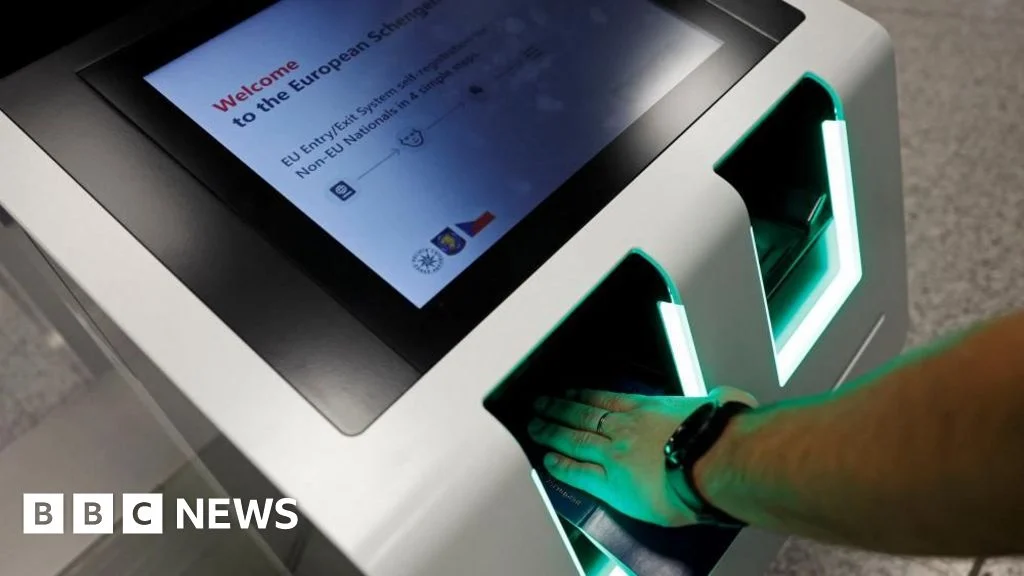
Portugal and Italy have confirmed they will not be suspending the European Union's new digital border checks for British nationals, according to the European Commission. This clarification comes amid reports that suggested the two southern European countries might follow Greece's lead in effectively pausing biometric screenings for UK citizens. Such a move by Greece was reportedly aimed at preventing significant travel disruptions during the peak summer holiday season. However, these reports have not been officially confirmed by the Portuguese or Italian authorities.
The implementation of the EU's Entry-Exit System (EES) has already led to considerable queues at several European airports. Concerns are mounting that these delays could intensify as the summer travel period approaches, potentially impacting millions of holidaymakers.
The EES mandates biometric data collection, including fingerprinting and facial scanning, for most short-term visitors entering the Schengen free travel zone from outside the EU and European Economic Area. This system was initially slated for full operational status in October of the previous year, with a target date of April 10 for complete implementation.
Despite the European Commission's assertion that the EES has largely functioned smoothly, numerous travelers, particularly from the UK, have reported experiencing extensive delays at border crossings. In some instances, these delays have caused passengers to miss their flights.
For example, over 100 individuals missed their EasyJet flight from Milan's Linate airport to Manchester last month. EasyJet described the passport queues as "unacceptable." Similarly, Ryanair confirmed that other passengers bound for Manchester from Milan Bergamo airport also failed to make their flights due to issues with passport control.
These operational challenges have contributed to a de facto suspension of EES biometric checks on British citizens at Greek border points. This situation arose even as Athens claimed to have "successfully started the full operation of the Entry-Exit System."
The European Commission stated it is actively engaged with Greece to "clarify the situation and recall the existing rules." The Commission emphasized that while the rules permit the suspension of checks for brief periods at specific border crossings under exceptional circumstances, they do not authorize "blanket exemptions for nationals of specific third countries and for an extended period of time."
Regarding Portugal and Italy, the Commission indicated it is "in contact with Portugal and Italy, as with all Member States, on the implementation of the EES." A spokesperson confirmed that "The Portuguese and Italian authorities confirmed that they do not intend to exempt any nationality."
These developments concerning the EU's border system occur as airlines globally are contending with soaring jet fuel costs and persistent concerns about fuel supplies leading into the busy summer travel months. In response, airlines have reduced their flight schedules, cutting approximately 13,000 flights worldwide for May, representing about 1% of the total flights planned for that period.
Despite these challenges, holidaymakers have been advised against altering their travel plans. Authorities have assured the public that there is no current fuel shortage in the UK and that contingency plans are in place to manage potential supply issues.


