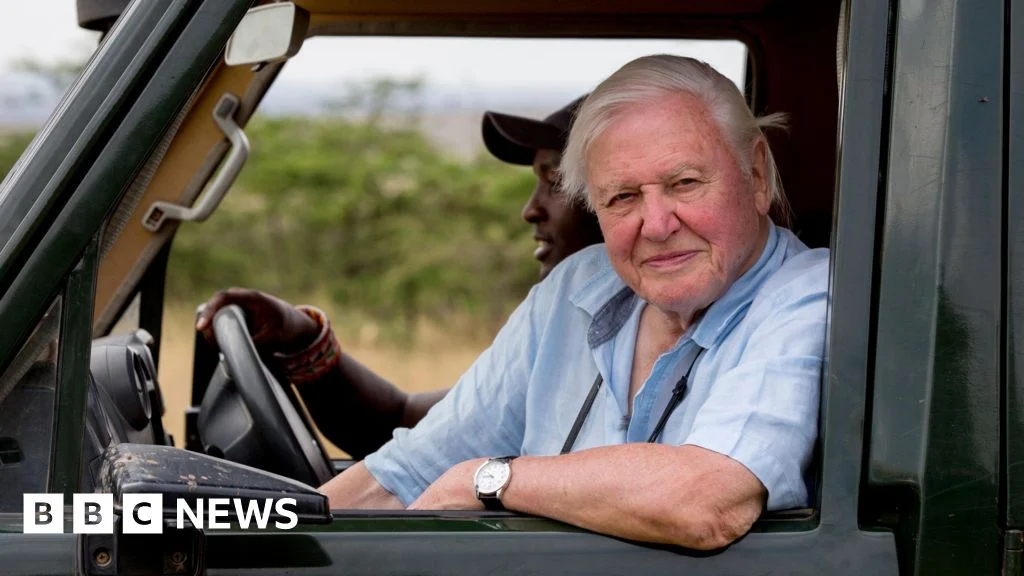
Sir David Attenborough, the celebrated naturalist, is credited with a significant, yet often overlooked, achievement: the establishment of a thriving wildlife film industry centered in Bristol, England. This industry now employs thousands and generates millions of pounds, with Bristol reportedly producing approximately 80% of the world's high-quality natural history television. Lucie Muir, CEO of the Wildscreen Awards and Festival, described Bristol as the "beating heart of the wildlife film industry." Keith Scholey, a long-time director who worked extensively with Attenborough, stated that without the naturalist, the industry in Bristol "would be a shadow of what it is." Scholey first encountered Attenborough in 1981 as a zoology graduate from Bristol University aspiring to break into television. He went on to direct landmark series such as Planet Earth and The Private Life of Plants before co-founding Silverback Films in 2012 with Alastair Fothergill, another veteran producer closely associated with Attenborough. Scholey emphasized Attenborough's pivotal role, noting, "He made it famous, he made it internationally valuable." He further added that all those who subsequently built careers in natural history within the city benefited from Attenborough's "genius."
The Wildscreen Festival, often referred to as the "Oscars of Wildlife," convenes the global industry in Bristol every two years. Muir highlighted Bristol's status, saying, "Bristol is seen as the kind of 'Green Hollywood'." She elaborated that a vast majority of natural history productions for major broadcasters and streaming platforms like National Geographic, BBC, Disney, Apple, and Netflix are produced in Bristol. Remarkably, Bristol filmmakers did not need to travel to Hollywood to secure international sales for their programs. Scholey observed that "the big players coming to us," including Netflix, Apple TV, and National Geographic, was a direct result of Bristol's reputation as a "centre of excellence." He further noted the development of a "concentration of talent in Bristol that is quite unique."
Attenborough's initial impact was not as a presenter but from a behind-the-scenes role. While serving as controller of BBC2, he conceptualized ambitious, landmark programming. He later transitioned from management to become a presenter, collaborating with the BBC's Natural History Unit (NHU) based in Bristol. This collaboration led to the creation of the seminal series Life on Earth, which was filmed globally and captivated audiences, drawing 15 million viewers in the UK and an estimated 500 million worldwide. Scholey described the series as "extraordinary," recalling how Attenborough would film in diverse locations like South America and Australia, showcasing previously unseen aspects of the natural world, including underwater life, bats, and reptiles. Scholey credited Attenborough with being "the first person to make international wildlife popular."
The groundbreaking Life on Earth series also revolutionized the funding landscape for natural history documentaries. A co-production agreement with Warner Brothers introduced American investment into the genre. Prior to this series, the NHU primarily focused on filming British wildlife with limited budgets. Attenborough's vision was global, necessitating substantial financial backing. "That was the first time money from America had been invested in a natural history series," Scholey recounted, adding, "And we never looked back."
Filmed across more than 100 locations, Life on Earth incurred a budget exceeding £1 million, a significant sum for 1979. Its successful sale to over 100 territories solidified the potential for wildlife films to become global blockbusters. This success paved the way for broadcasters such as National Geographic, and subsequently platforms like Netflix, Apple, and Disney, to seek out Bristol's expertise. Scholey explained the inherent cost of wildlife filmmaking, stating, "Filming wildlife is expensive. You have to go all over the world." He acknowledged the critical role of international finance in the industry's growth, remarking, "International finance has been a huge part of it – but wow, we've had quite a ride!"
Attenborough also played a crucial role in driving technical innovation within the industry. For Life on Earth, his team employed cutting-edge techniques, such as filming bats in a wind tunnel. The use of state-of-the-art film stock delivered sharper, more vibrant color images to audiences. Bristol's Natural History Unit gained renown for its adoption and often invention of the latest camera technologies. Muir noted Sir David's enthusiasm for new technology, stating he "loves new camera kit, he's always pushed everyone to make the best, newest discoveries possible." Attenborough holds the unique distinction of being the only individual to have won BAFTA awards across multiple formats, including black-and-white, color, HD, 3D, and 4K.
Over more than five decades of high-quality filmmaking, Bristol has cultivated a comprehensive production ecosystem. This ecosystem encompasses all stages of production, from filming and editing to sound design and specialized post-production services. Scholey elaborated on the depth of expertise available in Bristol, noting, "We have people who can colour-grade a natural history film better than anywhere else in the world, people who can track-lay wildlife sound, edit animal sequences, they don't exist anywhere else in the world."
Despite never having resided in Bristol, Attenborough's influence on the city's creative landscape is profound. The city is now home to approximately 15 wildlife production companies, in addition to the BBC NHU, collectively employing around 1,000 individuals. The University of the West of England estimates the sector's economic contribution to be around £100 million, representing roughly one-third of Bristol's overall television industry value.
When Keith Scholey was interviewed for the position of running the BBC's NHU in 1998, a key question posed to him was: 'How will you replace David Attenborough?' Nearly three decades later, this question still resonates. Scholey pointed out that while the NHU has successfully developed numerous other wildlife presenters, Attenborough himself is "a one-off, you'll never replicate him." For Lucie Muir, Attenborough's enduring legacy is evident "within the people making the films, the conservationists, the scientists; he's inspired so many people." She concluded with a warm sentiment, "There's a bit of David in all of us."


