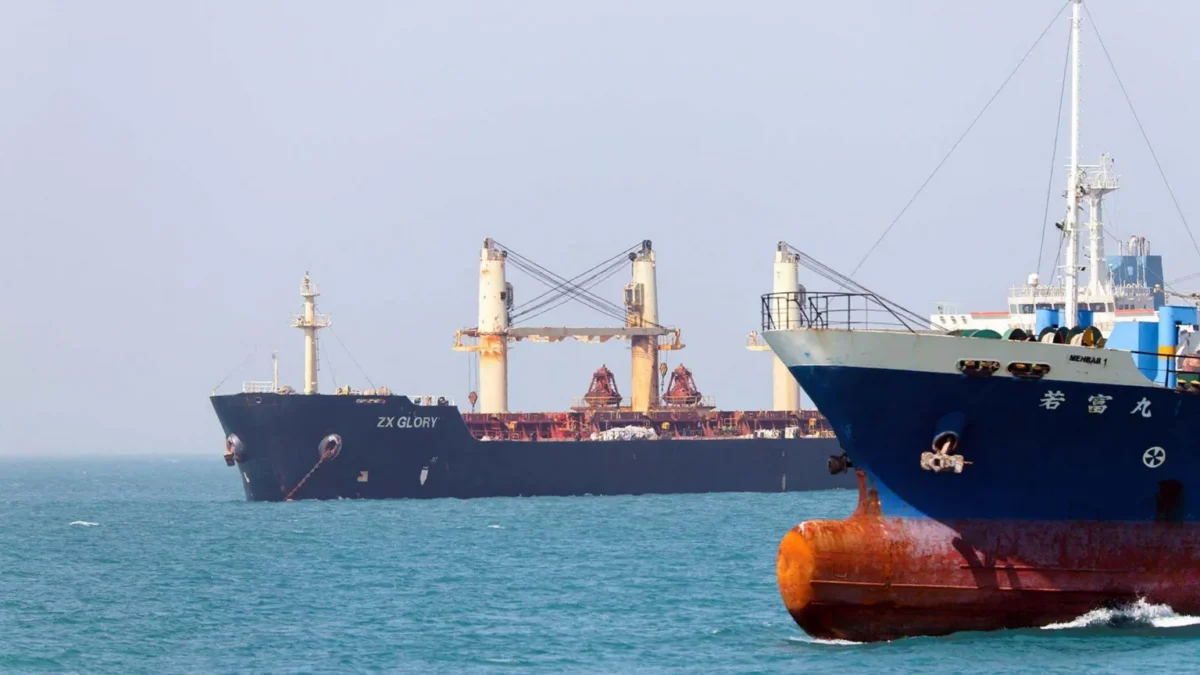
The United States and Iran have agreed a framework deal aimed at ending hostilities on a longer horizon, a development that sent ripples through global energy markets. While the accord signals a route toward reopened traffic through the Strait of Hormuz, industry voices caution that full normalcy in shipping and oil flows will take time, and the wider economic impact of the conflict is likely to persist for months.
Before the war, roughly one-fifth of the world’s oil and LNG traffic moved through the Strait of Hormuz. The current disruption has tightened near-term supply and pushed Brent crude higher, though markets had begun to reassess the timeline for normalization after the framework emerged. Brent crude traded near the day’s session low around $83.55 a barrel, with US-traded crude near $80.74, moves reflecting questions about how quickly production, refining, and insurance arrangements can return to prior levels even if ships can pass more freely again.
Industry voices have stressed that restoring full normalcy will not be instantaneous. Analysts have noted that even with a potential reopening, tankers must be rerouted to standard corridors, facilities must come back to full capacity, and the cost and availability of insurance for Gulf voyages will influence decisions. In May, some observers described a cautious outlook for shipping into the Gulf until there is greater clarity about the durability of any truce.
The broader energy outlook remains mixed. While oil prices eased from recent highs, a return to pre-war price levels is not yet guaranteed, with ongoing production startup frictions and other structural factors potentially delaying a rapid rebalancing. In the longer run, policymakers and energy producers are expected to pursue greater energy security and diversification of supply, including expanded storage and cross-regional pipelines, to mitigate future shocks.
In the financial sphere, markets had previously priced in more aggressive near-term rate moves. Analysts noted shifts in expectations, with some framing a path that could influence hiring and investment momentum if energy costs become more predictable.
The geopolitical disruption has already influenced a range of sectors beyond energy. The fertilizer and agriculture complex faces pressure from higher input costs, while aviation fuel dynamics continue to evolve as jet fuel prices adjust to the developing landscape. In the interim, global oil and gas markets will likely remain sensitive to headlines about shipping routes, policy moves, and the durability of any ceasefire.
Observers say the market will monitor concrete timelines and mechanics of restoring traffic, including insurance norms and capacity constraints. While the announcement marks a potential step toward resumed flows through the Strait of Hormuz, the path to full normalization remains uncertain and subject to ongoing geopolitical risk.
The crisis has weighed on global economies. Before the war, central banks were expected to ease policy as inflation cooled, but those expectations have shifted amid the conflict and higher energy costs. Analysts cite the possibility of a slower return to pre-war levels for energy prices and the need for energy-security measures and diversified supply.
As producers look to reduce reliance on Gulf supplies, there is attention on capacity expansion and diversified storage. The UAE’s efforts to bypass the Strait via pipelines and expand storage facilities are seen as part of a broader trend toward energy resilience and regional diversification.
Market watchers will be watching for how quickly shipping lines resume operations through Gulf routes, how insurers price risk, and how energy markets price in the evolving geopolitical risk premium as the situation develops.


