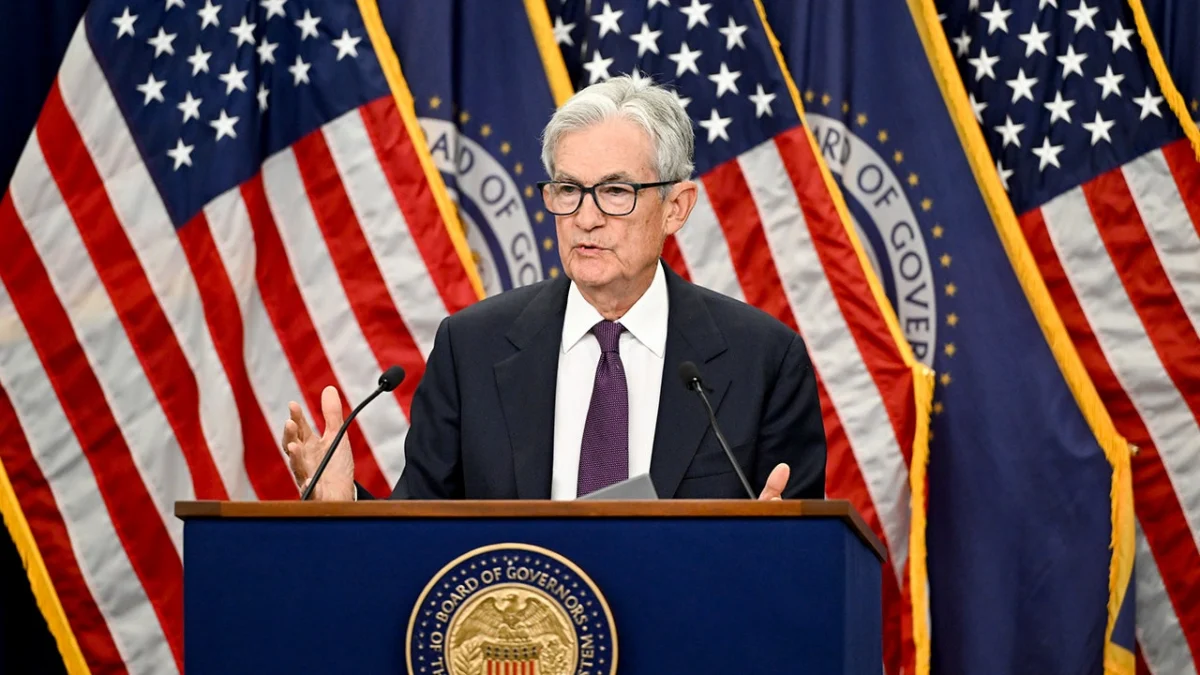
Federal Reserve Chair Jerome Powell announced Wednesday that he will continue to serve as a member of the Fed's Board of Governors following the conclusion of his term as chairman. However, Powell emphasized that he has no intention of acting as a "shadow Fed chair" and will respect the authority of his successor.
Powell's remarks came during his final press conference as Fed chair, held after the Federal Open Market Committee (FOMC) voted to maintain interest rates at their current range of 3.5% to 3.75%. This decision to hold rates steady occurred on the same day the Senate Banking Committee advanced the nomination of former Fed Governor Kevin Warsh to succeed Powell as the central bank's leader.
Powell stated his intention to remain on the Board of Governors for an "undetermined period of time." When questioned about his role as a governor and the potential for undue influence, he was unequivocal. "That's just something I would never do, the shadow chair thing. I don't know what the exact specifics of it will be, but I'm going back to being a governor. I respect the role of chair," Powell asserted. He drew upon his own experience as a governor for six years, noting his close working relationships with former Chairs Janet Yellen and Ben Bernanke. "I had a pretty front row seat, particularly with Chair Yellen, to whom I was close. When I worked with Chairman Bernanke for two years, I was brand new at that time. So I got a sense of what it was, and I had real sympathy for how hard it is to get that group to consensus," he explained.
Powell further elaborated on the dynamics of the Fed's leadership, stating, "I always felt like I don't want to add that unnecessarily, and that means trying to support the chair or the direction the chair wants to go. And if you can't, you can't. I think that's the way it's always worked there because the chair only has one vote plus the ability to develop consensus." He pledged to be a "very constructive participant in that process, really out of respect for the office of the chair."
In his opening remarks, Powell indicated a desire to "keep a low profile as a governor." He reiterated the singular nature of the Fed's top position: "There's only ever one chair of the Federal Reserve Board. When Kevin Warsh is confirmed and sworn in, he will be that chair. Once sworn in as board chair, his new colleagues will elect him to chair the FOMC as well."
Powell's decision to continue serving on the Board of Governors was influenced by a Justice Department investigation initiated by the Trump administration. This probe, launched in January, involved subpoenas issued to the Fed as part of a criminal inquiry into allegations that Powell had misled Congress regarding a significant renovation project at the Fed's Washington D.C. headquarters. Powell had characterized the investigation as politically motivated, and the courts had previously quashed the DOJ subpoenas, deeming them a "pretext" to exert pressure on him to either lower interest rates or resign.
On Friday, U.S. District Attorney Jeanine Pirro announced that the Department of Justice would be dropping its investigation, deferring the matter to the Fed's Inspector General, Michael Horowitz. Pirro stated that she would not hesitate to "restart a criminal investigation should the facts warrant doing so." The DOJ communicated to Powell and the Fed over the weekend that the investigation would only be reopened if the Inspector General submits a criminal referral. This development allowed for the advancement of Warsh's nomination in the Senate, following the lifting of a hold by a Republican senator who had expressed concerns about the Fed's independence.
Powell articulated his deep-seated concerns regarding the series of legal challenges targeting the Federal Reserve. "My concern is really about the series of legal attacks on the Fed, which threaten our ability to conduct monetary policy without political factors," he stated. He described these actions by the administration as "unprecedented in our 113-year history, and there are ongoing threats of additional such actions." Powell underscored the critical importance of the Fed's independent operation, asserting, "The Fed's ability to operate independently is so important for our economy, for the people that we serve, that they can depend, over time, on a central bank that operates that way free of political influence. It's part of the absolute foundation of this amazing economy that we have. It's just one of the many reasons why the U.S. economy is the envy of the world."
During the press conference, Powell directly addressed whether his decision to remain on the Fed's Board of Governors was a political maneuver intended to influence the board's future actions. He explained that the ongoing legal inquiry compelled him to stay on until its conclusion, emphasizing his lack of intent to interfere with the Fed's operations once Warsh assumes the chairmanship. "I'm literally staying because of the actions that have been taken. I had long planned to be retiring. And you know, the things that have happened, really in the last three months, left me no choice but to stay until I see them through, at least that long," Powell elaborated. "In addition, I don't see how this will interfere. My intention is not to interfere."
Jerome Powell's current term as a member of the Federal Reserve's Board of Governors extends until January 31, 2028. He did not specify whether he would serve the entirety of this term, but he reiterated his commitment to departing once the investigation is "well and truly over with finality and transparency, and I'm waiting for that, and I will leave when I think it's appropriate to do so."
Powell's situation is not without precedent. Marriner Eccles, after concluding his tenure as Fed chair from 1934 to 1948, continued to serve as a member of the Fed's Board of Governors until 1951. Eccles is notably honored with one of the buildings at the Federal Reserve's Washington D.C. headquarters bearing his name, highlighting a historical parallel for a former chair remaining on the board.
Powell's commitment to maintaining the Federal Reserve's independence from political pressure is a central theme in his recent statements. The legal challenges, though now deferred to the Inspector General, have underscored for Powell the fragility of the institution's autonomy. His decision to stay on the board, therefore, is framed not as an attempt to exert personal influence, but as a necessary measure to ensure the integrity of the Fed's processes during a period of external scrutiny. This stance aims to reassure markets and the public that the central bank will continue to operate based on economic data and sound monetary policy principles, free from undue political interference, a cornerstone of the stability and prosperity of the U.S. economy.
The Federal Reserve's role in managing inflation and promoting maximum employment is intrinsically linked to its perceived independence. Any erosion of this independence, whether through direct political pressure or the perception thereof, could undermine market confidence and complicate the Fed's ability to effectively steer the economy. Powell's continued presence on the board, coupled with his explicit commitment to a low profile and respect for the incoming chair, is intended to mitigate these risks. His experience and understanding of the Fed's internal workings, while serving constructively, are meant to support the institution's mission without overshadowing the new leadership.
The FOMC's decision to hold interest rates steady reflects a cautious approach to monetary policy, balancing the need to combat inflation with the risks of stifling economic growth. Powell's final press conference as chair provided insights into the committee's deliberations and the economic outlook. While the specific details of future rate decisions will fall to the new chair, Powell's continued participation on the board ensures a degree of continuity and institutional knowledge during a critical juncture for the U.S. economy. His emphasis on consensus-building and support for the chair's agenda signals a commitment to a collaborative and effective Federal Reserve system.


