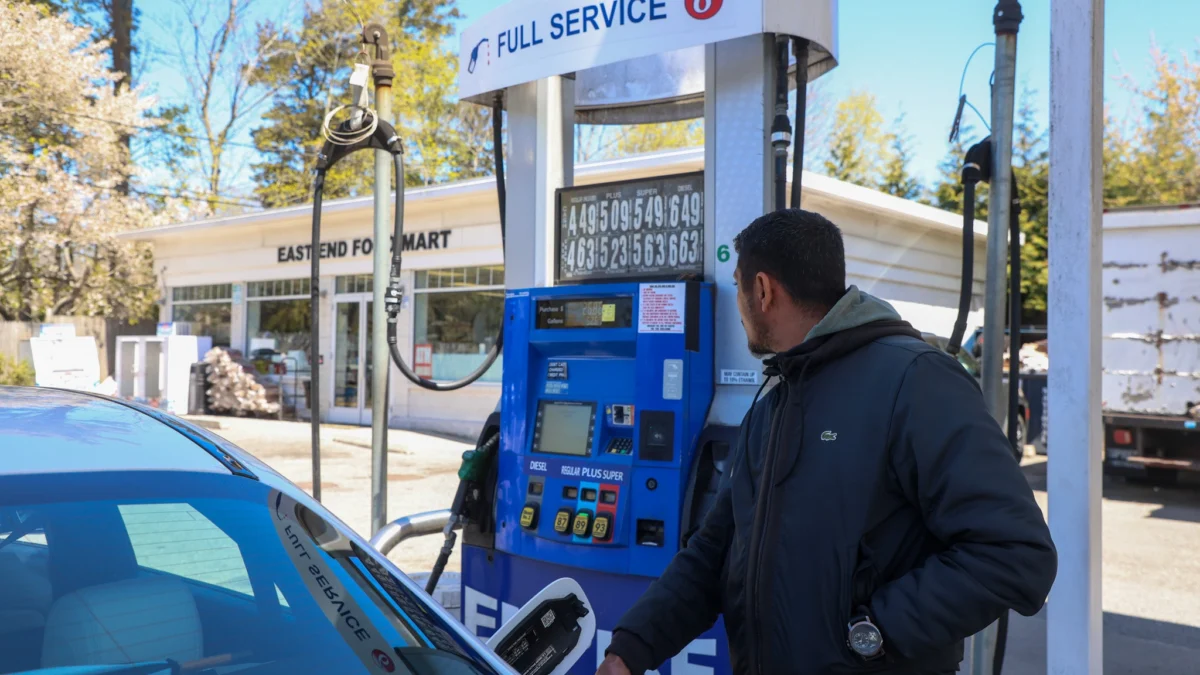
The national average price for a gallon of regular gasoline has surged past the $4.50 mark, with ongoing tensions between the United States and Iran continuing to pressure fuel costs for American drivers. As of Wednesday, the American Automobile Association (AAA) reported the national average at $4.536, an increase of more than five cents from Tuesday's average of $4.483. The highest recorded national average for regular gas was $5.016 on June 14, 2022, during the presidency of Joe Biden, according to gasprices.aaa.com.
California continues to experience the highest gasoline prices in the country. The AAA average for regular gasoline in the Golden State stood at a substantial $6.16 on Wednesday, far exceeding the averages in other states. This stark difference highlights regional disparities in fuel costs.
In contrast, states like Oklahoma, Mississippi, and Louisiana are currently experiencing prices just under the $4 per gallon threshold, with AAA averages reported at $3.962, $3.97, and $3.993, respectively. However, several other states are already seeing prices exceed $5 per gallon for regular fuel. These include Alaska at $5.188, Nevada at $5.233, Oregon at $5.332, Hawaii at $5.657, and Washington at $5.747, indicating a broad impact of market pressures across different regions of the United States.
The current surge in gas prices is occurring against a backdrop of significant geopolitical events, particularly concerning Iran. The U.S. has maintained a blockade against Iran for more than three weeks, a measure intended to exert leverage and bring the conflict to an end. White House spokeswoman Taylor Rogers stated in a statement provided to Fox News Digital that "President Trump remains committed to fully unleashing American energy dominance, lowering costs, and putting more money back in the pockets of hardworking American families. As the President continues to exert maximum leverage over Iran with the ongoing successful blockade to bring this conflict to an end, we will see global energy markets stabilize and gas prices plummet back to the multi-year lows Americans enjoyed prior to the start of Operation Epic Fury."
President Donald Trump announced via a Truth Social post on Tuesday evening that "Project Freedom," described as "The Movement of Ships through the Strait of Hormuz," would be temporarily paused. This decision was made following requests from Pakistan and other countries, and in light of the "tremendous Military Success" achieved during the campaign against Iran. Trump indicated that significant progress has been made toward a "Complete and Final Agreement" with Iranian representatives. He stated that while the blockade will remain in full force and effect, the pause in ship movements through the Strait of Hormuz is intended "to see whether or not the Agreement can be finalized and signed."
This development in the Strait of Hormuz, a critical chokepoint for global oil transportation, has direct implications for energy markets. Any disruption or perceived threat to the flow of oil through this waterway can lead to immediate price volatility. The Chevron CEO has previously noted that economies "are going to have to slow" if the Strait of Hormuz closure disrupts oil supply, underscoring the fragility of global energy security when such vital transit routes are threatened.
AAA data also shows a notable weekly increase in national average gas prices, with a jump of approximately 33 cents in the past week alone. This rapid escalation suggests that market conditions are highly sensitive to current events and supply-side uncertainties.
California's specific situation is further complicated by state policies that have reportedly reduced domestic oil production and increased reliance on foreign energy sources. Rock Zierman, CEO of the California Independent Petroleum Association, warned that these policies are contributing to higher gas prices within the state and exacerbating its dependence on imported oil. Zierman joined ‘Varney & Co.’ to discuss these issues, stating that state policies are "slashing in-state oil production, driving up gas prices and increasing California’s reliance on foreign energy sources."
The pause in Project Freedom aims to facilitate diplomatic progress, and the market's reaction will be closely watched. Investors and analysts will be assessing the likelihood of a finalized agreement with Iran and its potential to stabilize global energy markets. The interplay between geopolitical strategy, energy policy, and consumer prices remains a central focus for economic observers and policymakers alike.


