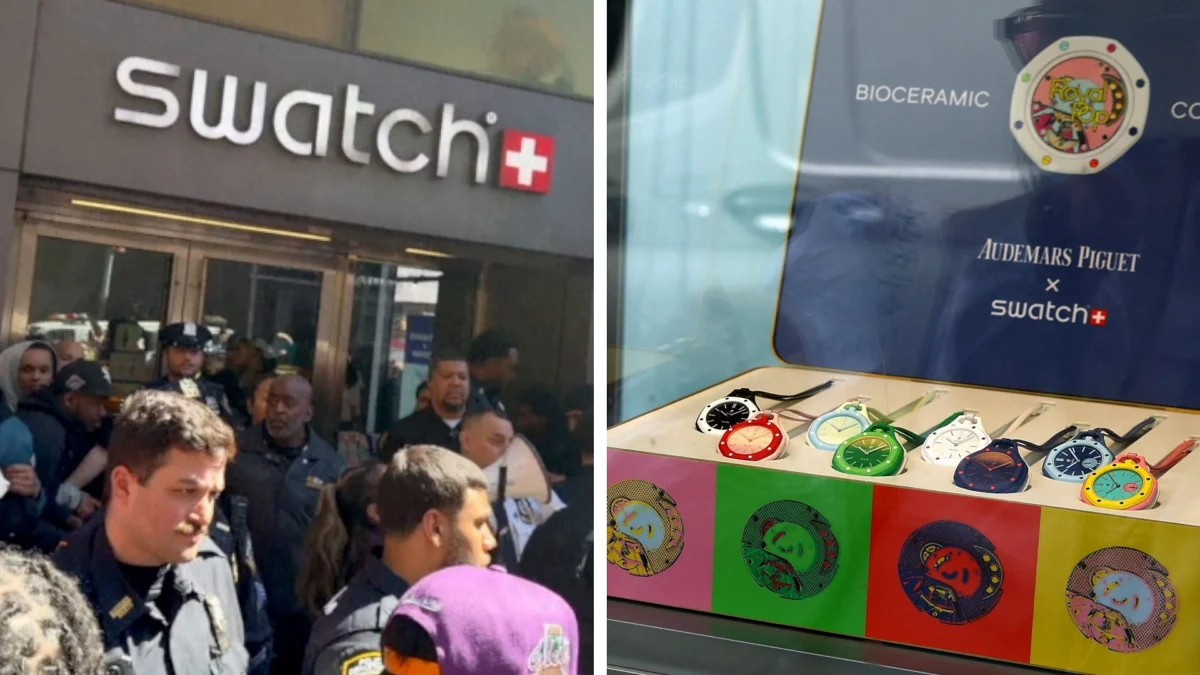
Massive crowds descended upon Swatch stores globally for the release of a new collaborative pocket watch, leading to chaotic scenes, store closures, and significant police presence in several countries. The highly anticipated timepiece, a joint venture with Audemars Piguet, prompted an overwhelming response from eager consumers, with some locations forced to shut their doors due to safety concerns.
Authorities were compelled to intervene in the UK, France, and Switzerland to manage the large gatherings of shoppers. The demand for the new Royal Pop model, priced at £335, quickly outstripped supply, driving immediate resale activity on online platforms. Reports indicate that some of these watches have been listed for prices as high as £16,000.
One individual shared his experience with the BBC, detailing how he purchased a watch for its retail price of £335 and subsequently resold it for "just over £1,000." This stark difference highlights the immense speculative interest and the rapid escalation of prices in the secondary market for this particular Swatch release.
The frenzy surrounding the Swatch launch underscores a broader trend in the luxury and collectible watch market, where limited editions and collaborations can generate intense consumer desire and significant aftermarket value. The brand's strategy of partnering with high-end manufacturers like Audemars Piguet appears to be a potent formula for generating buzz and driving sales, albeit with the unintended consequence of creating public order challenges.
While the exact details of the collaboration and the specific design elements of the Royal Pop model are not elaborated upon in the source, the reaction suggests a successful marketing campaign that tapped into the collector's market. The involvement of Audemars Piguet, a brand renowned for its own luxury timepieces, likely added a layer of prestige and desirability to the Swatch offering.
The scenes outside the stores, described as 'chaotic,' point to a significant logistical challenge for retailers dealing with such high-demand product launches. The need for police intervention suggests that crowd control measures were insufficient to manage the sheer volume of people attempting to purchase the watch.
This event also brings to light the dual nature of such product releases: a celebration of craftsmanship and brand collaboration for enthusiasts, and a lucrative opportunity for resellers and flippers. The substantial markup on the secondary market indicates that a portion of the demand is driven not by end-users but by individuals seeking to profit from the scarcity and desirability of the product.
Swatch has a history of leveraging collaborations and limited editions to create excitement, often drawing inspiration from art, design, and other brands. The success of the Royal Pop, despite the operational difficulties it caused, suggests that this strategy continues to resonate with consumers and the market. The brand's ability to generate such a fervent response, even leading to store closures and police involvement, is a testament to its enduring appeal and marketing prowess in the competitive watch industry.
The incident serves as a case study in managing high-demand product launches, balancing brand excitement with public safety, and understanding the dynamics of the secondary market for collectible goods. The significant resale values observed suggest that the perceived value of the watch far exceeds its retail price, driven by a combination of brand prestige, limited availability, and collector speculation.


