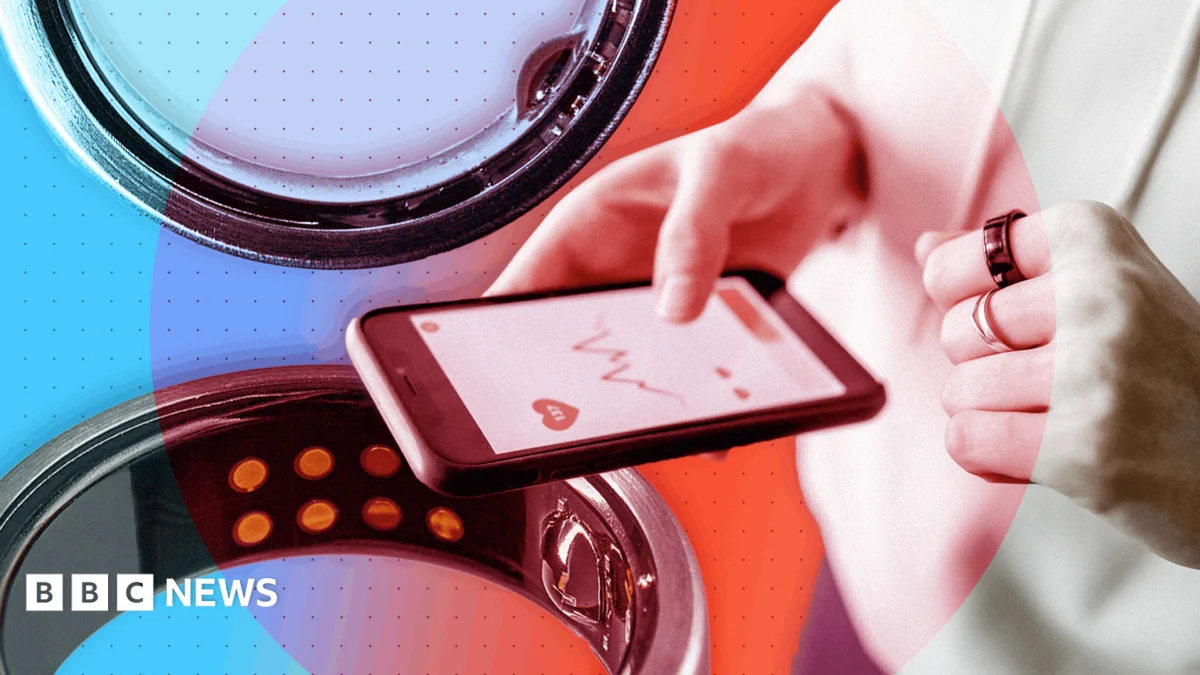
Ravika, a 34-year-old solicitor from the West Midlands, was celebrating her birthday on holiday with her husband when an unusual alert appeared on her fitness tracker. Her Oura ring flagged that her health score was poor, with her heart rate rising, her body temperature elevated and her heart rate variability (HRV) dropping. Yet Ravika felt completely fine. When the stats hadn’t improved a week later, she did some online digging and found a community of women who said their trackers were giving them signs that they were pregnant, based on the data the devices had collected. It was another week before Ravika received a positive pregnancy test.
Image source, Ravika But following some cramping and a notification on her phone telling her that her body appeared to be under significant strain, she went to the doctor and was told she’d need to return 10 days later for further testing to determine whether the pregnancy was healthy. The wait was agonising—and led to Ravika anxiously checking her fitness tracker stats, waking up at 4am every night to refresh her app and see if her stats remained low or if her temperature stayed elevated. The stats, she said, became an “obsession” and she described the period as feeling like a life-or-death situation.
For many women, the first sign that they might be pregnant is a period that doesn’t arrive when expected. With the exception of some tests that claim to detect a pregnancy early, most aren’t able to spot the hormonal changes until the first day of a missed period. Ravika is one of hundreds of women online reporting signs earlier than this through data from their fitness trackers.
Fitness trackers—including smart rings, smart watches and chest-mounted devices—have surged in popularity in the UK. According to YouGov research, 36% of British adults in January 2026 owned and used a fitness tracker, nearly double the share in July 2019. Finnish‑US company Oura has the highest sales in the smart ring market, which also includes India-based Ultrahuman and Hong Kong-based RingConn.
Beyond basic tracking, one of the key signals cited is body temperature: in early pregnancy, body temperature typically stays high, while it drops just before a period would begin. If a fitness tracker can measure temperature, it can pick up on this early symptom. In Ravika’s case, she also read posts from women who said their Oura ring had predicted not only pregnancy but miscarriages as well, via the ring’s “major signs” notification.
Sofia, 32, had been among those who reported such experiences. She said she lost two pregnancies, both spotted in the data from her Oura ring, before becoming pregnant again with her now five-month-old son. The first pregnancy involved checking the app every morning; she recalled waking up to see the temperature line rising or, on a morning, dropping, which she took as a warning that something was off. She later described waking up at four or five in the morning to check whether her temperature had dipped.
Rising anxiety about these signals has prompted medical professionals to weigh in. Dr Stuart Lavery, a consultant in reproductive medicine at University College Hospital London, said people are understandably using this technology to gain a greater understanding and to pick up things early because pregnancy can profoundly affect daily life. But he cautioned that more data and research are needed to ensure reliability, warning that otherwise anxiety levels could skyrocket. He noted that wearable data can aid in tracking but should come with a health warning about accuracy.
Oura’s clinical director of women’s health, Dr Chris Curry, emphasized that pregnancy can be uncertain even with biometric tracking. She advised users to consider taking breaks from the app if overwhelmed, while the ring continues to collect data for insights. Ravika, who miscarried, reflected that wearable data has shaped her approach to conception and suggested she might pause wearing the ring during future attempts if she senses pregnancy again.
BBC News frames this trend as part of a broader shift toward data-driven wellness and pregnancy anticipation, illustrating how consumer devices intersect with personal health decisions. The experiences shared by Ravika and others highlight both the potential and the limits of wearables as early indicators, and they raise questions about how clinicians should integrate consumer data into care pathways while managing patients’ expectations and anxiety.


