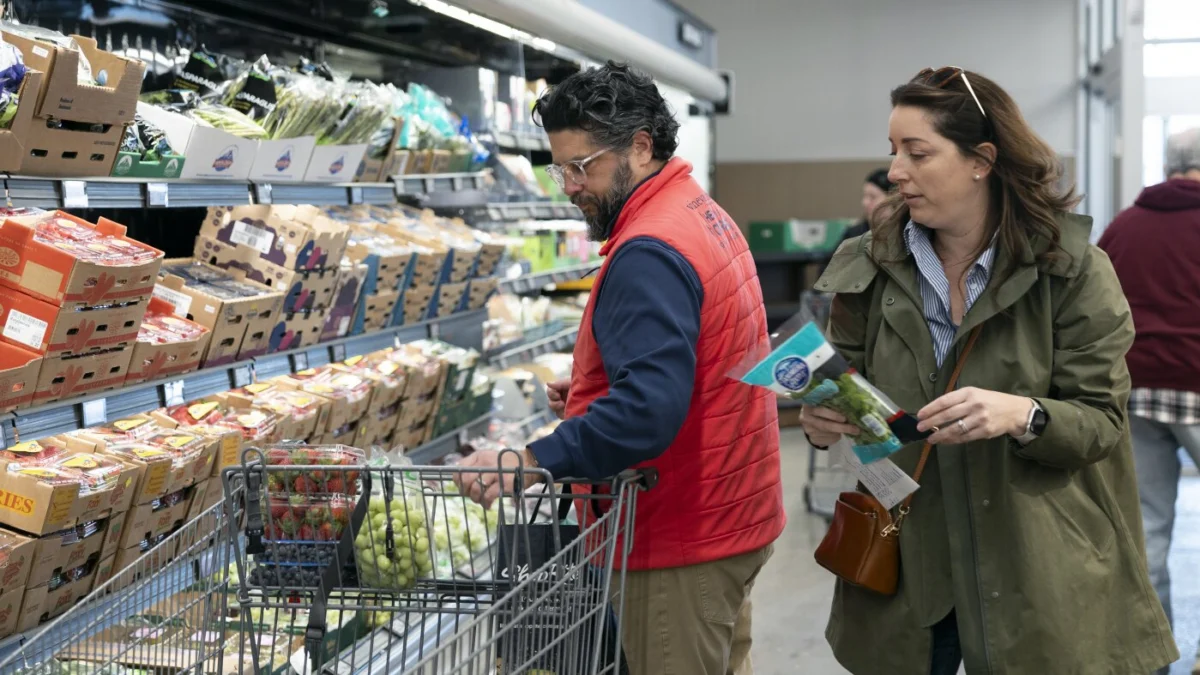
Many consumers are shifting their grocery habits, prioritizing affordability and value as economic pressures mount. This trend has led to a significant surge in popularity for discount grocery chains and warehouse clubs, with shoppers increasingly opting for these budget-friendly alternatives over traditional supermarkets. The pursuit of good deals has become a primary driver for household food purchasing decisions.
Rachel Negro-Henderson, a healthcare administrator from Audubon, New Jersey, began shopping at Aldi during the COVID-19 pandemic when her husband experienced a loss of income. Initially, she encountered some discomfort, with acquaintances seemingly hesitant to acknowledge their presence at the discount store, as if it were a sign of misfortune. However, this perception has evolved considerably over the past few years. Negro-Henderson now frequently encounters people she knows at Aldi, who openly share that they are there to save money and find that the products are comparable to those at more expensive retailers.
A confluence of economic factors has made it increasingly challenging for households to afford meals. Food insecurity saw a substantial rise during the COVID-19 pandemic, and grocery prices have experienced sharp increases in recent years. Compounding these issues are persistent inflation, the potential impact of tariffs, and corporate strategies such as shrinkflation—where product sizes are reduced while prices remain the same—and the implementation of electronic shelf labels, which allow retailers to dynamically adjust prices based on demand.
"Consumers are just to a point where [they're saying], 'Give us a break,'" stated Phil Lempert, a grocery industry analyst. "This is food. You don't screw around with our food." This sentiment reflects a growing frustration among shoppers who feel that the cost of essential food items has become unmanageable. As a result, many individuals and families facing financial strain are re-evaluating their shopping routines, seeking out stores that offer more accessible price points.
The rise of discount grocers is also being amplified on social media platforms. Online creators are regularly sharing their positive experiences and favorite finds from stores like Aldi and Costco. These influencers often showcase meals prepared entirely with ingredients purchased from these budget-friendly retailers, further normalizing and promoting discount grocery shopping to a wider audience, particularly among younger demographics like Gen Z and millennials.
Lempert further explained that discount grocers have actively worked to enhance their food and beverage selections, shedding any previous negative associations with lower quality. This strategic improvement has helped attract a new wave of consumers who are mindful of their spending. These discounters have successfully cultivated an image of offering good value without significant compromise on product quality, appealing to a broad spectrum of shoppers.
Discount grocery stores typically operate with a model designed for maximum efficiency and cost savings. According to Lempert, these stores are often smaller than conventional supermarkets, carrying a more curated selection of products. They also tend to have leaner staffing models and streamlined operational processes. For instance, Aldi employees often place products directly on shelves from their shipping boxes, foregoing the time-consuming task of unpacking individual items, which contributes to faster stocking and reduced labor costs. The store environments are generally more utilitarian, lacking the elaborate service departments and extensive signage found in larger, full-service supermarkets.
European chains such as Aldi and Lidl have significantly expanded their footprint in the United States. Aldi, in particular, has reported substantial growth, noting that it welcomed 17 million new U.S. customers in the past year and inaugurated nearly 200 new stores. The company has ambitious plans to open an additional 180 stores nationwide this year. In contrast, the discount chain Grocery Outlet announced plans to close 36 stores, citing that its previous expansion had been too rapid.
Warehouse clubs, including Costco and Sam's Club (a division of Walmart), have also become popular destinations for groceries. These clubs leverage their immense purchasing power to offer goods at competitive prices, making them attractive options for larger households. Costco's well-known value propositions, such as its $1.50 hot dog and soda combo and its $4.99 rotisserie chicken, exemplify this strategy. Costco reported a notable increase in net sales, reaching $28.41 billion for its March "retail month," an 11.3% rise compared to the same period last year. Sam's Club has set an objective to more than double its profits within the next eight to ten years, indicating strong confidence in its discount model.
Recent data from Consumer Reports provides concrete evidence supporting the cost savings offered by discount grocers. In a comparison of a standard basket of goods across numerous retailers, with Walmart serving as the baseline, Aldi and Lidl were found to be over 8% cheaper. BJ's Wholesale Club offered prices 21% lower than Walmart, while Costco's prices were 21.4% less expensive. Only a few other retailers, namely WinCo and H-E-B, were found to be cheaper than Walmart.
Furthermore, consumers are showing an increasing preference for store-brand products. Data from the Private Label Manufacturers Association indicates that sales of private label items grew at a rate nearly three times faster than national brand products over the past year. This shift suggests that shoppers are finding the quality of store brands to be increasingly satisfactory, allowing them to reduce costs without feeling they are making significant sacrifices.
While discount grocery stores offer substantial savings, they do come with certain limitations. A common drawback is the narrower selection of products compared to traditional supermarkets. Rachel Negro-Henderson, despite being a dedicated Aldi shopper, acknowledges that she cannot always find every item on her shopping list at the store. She often supplements her Aldi purchases with trips to other local establishments, such as a deli or butcher, for specific items like lunch meats, which she prefers to buy from specialized sources. However, she emphasizes that making these additional trips is a minor inconvenience compared to the overall savings achieved.
Negro-Henderson and her husband, Rich Henderson, were initially drawn to Aldi by its competitive pricing, its commitment to offering GMO-free store-brand products, and the company's stated sustainability initiatives. As they continued to shop at Aldi, they began trying more of its products. Henderson noted that they discovered the quality was often on par with national brands, meaning they were primarily sacrificing brand recognition rather than product quality. The company's website indicates that over 90% of Aldi's product offerings are private label.
Budget grocery shopping often leads to budget cooking, and social media has become a hub for individuals sharing recipes and techniques for preparing affordable meals. Kiki Rough, a content creator, gains popularity by posting videos on Instagram, TikTok, and Facebook that feature recipes from the Depression era, wartime, and other periods of economic hardship. Her recent creations include a "meatloaf" made from beans and a French toast casserole prepared without eggs, demonstrating resourceful cooking methods.
Rough's inspiration stems from her personal experiences with food insecurity. She aims to equip others with knowledge on how to maximize their grocery budgets and utilize available ingredients effectively. She has observed a wide range of individuals, from entry-level employees to corporate executives, struggling with rising food costs. Rough advises a "mindset shift," encouraging people to overcome any shame associated with their financial situations and food access. She stresses that in the current challenging economic climate, it is important not to feel embarrassed about one's circumstances.
Industry analyst Phil Lempert anticipates that frugal grocery shopping habits will persist, with a continued emphasis on lower prices. A December survey by market research firm AlixPartners revealed that a majority of respondents planned to maintain or increase their food spending in the coming year but would actively seek cheaper groceries and avoid impulse purchases. Lempert also highlighted that shoppers are increasingly utilizing shopping lists and comparing prices online to avoid feeling overcharged for food. He further observed that younger generations, such as Gen Z and millennials, tend to be less concerned with the amenities and "bells and whistles" of traditional supermarkets compared to older generations like baby boomers and their parents.
"We're never going to go back to shopping the old way," Lempert concluded, suggesting a permanent shift in consumer behavior towards more value-oriented grocery shopping. This enduring change reflects a fundamental reevaluation of consumer priorities in response to sustained economic challenges and a growing appreciation for the value offered by discount retailers.


