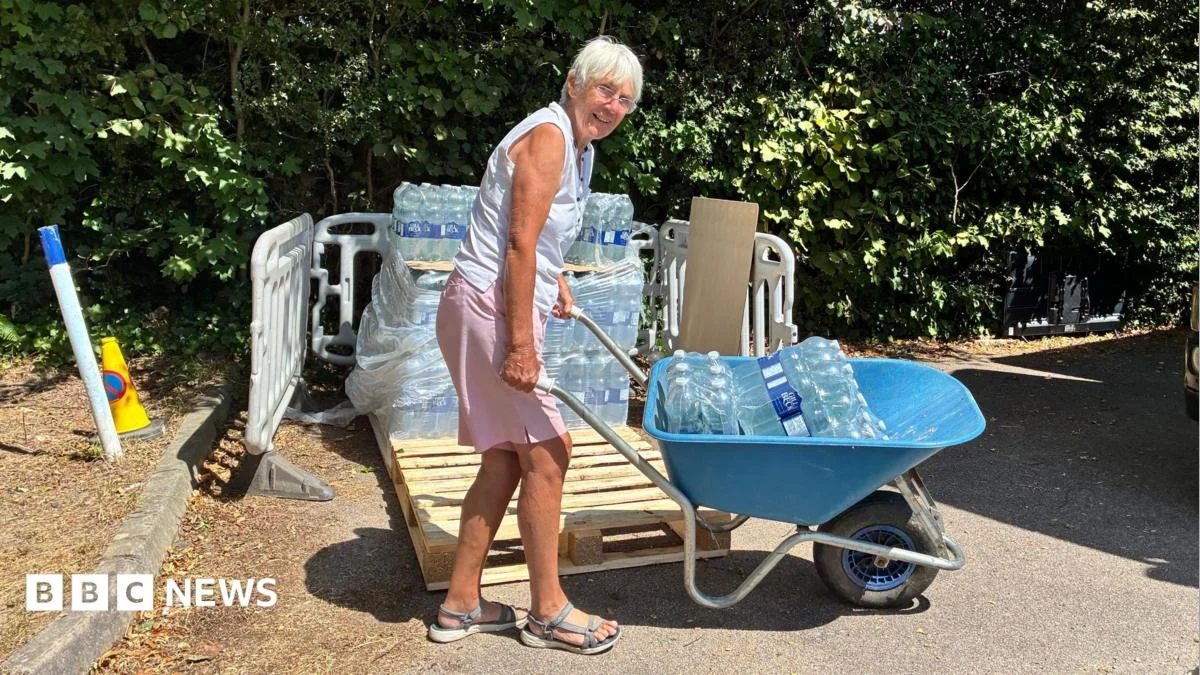
Thousands of households and businesses in Kent faced a second day of water supply disruption on Sunday, amid ongoing outages at the Tunbridge Wells water treatment works. South East Water (SEW) said up to 7,000 properties were affected by low pressure, no water, or intermittent supply after a temporary instrument fault at the site. The firm, already under heavy scrutiny for a string of failures in recent months, apologized and said two bottled-water stations would remain open for a second day to support those affected.
Residents described the situation with frustration. Lance Miles, a Tunbridge Wells resident registered disabled, told the BBC, “Yet again we are without water. We don’t have a choice if we want a supplier.” SEW reiterated that the stations would run until 20:00 BST and noted that tanks must be replenished to restore a stable, continuous flow, especially in higher ground areas where storage levels were low.
SEW said the water treatment works were “now stable” as of Sunday, with staff continuing to deliver bottled water to priority customers. Bottled-water stations were located at a Tesco Superstore on Pembury Road, Tunbridge Wells Rugby Club, and later at the Odeon cinema car park in Knights Way. The rugby club station briefly closed for restocking but has since reopened and remains open through the early evening.
The company has previously warned that supplies would not return until Sunday evening at the earliest, though outages have often lasted longer than anticipated. SEW’s incident manager, Steven Benton, explained that the disruption’s low storage and high demand limited pumping capacity to some areas, and emphasized the need to allow tanks to replenish to maintain a stable supply.
The weekend also saw SEW’s ongoing financial stress become more explicit. Investigations by industry regulator Ofwat led to a commitment to spend around £30.5 million on improvements, and SEW warned in its annual report that it would need fresh financing to stay afloat after taking a £55 million hit from winter outages. The company said it was in discussions with lenders about a new loan facility for its roughly 2.3 million customers in the southeast.
The turmoil at SEW has intensified scrutiny since November, when about 24,000 customers in the Tunbridge Wells area lost water supply or pressure. Weeks later, around 30,000 households across Kent and Sussex faced days of disruption, a saga bosses attributed to freezing conditions and Storm Goretti. Following earlier failures, SEW’s chair departed and the chief executive was set to leave as part of changes in leadership.
As the situation unfolds, local residents and businesses are left weighing the impact on everyday life and operations, with water safety advice – including boil-water guidance after the outage – continuing to shape consumer behavior across the region.


