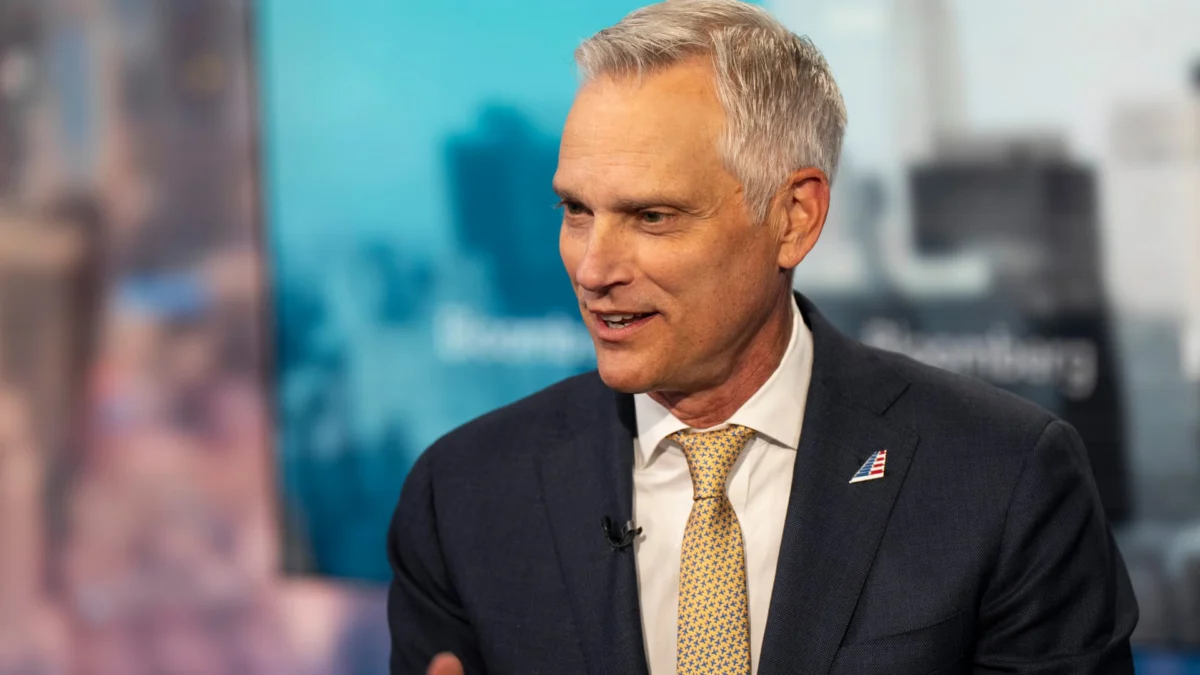
FORT WORTH, Texas — American Airlines Group Inc. chief executive Robert Isom outlined a multi-pronged strategy to close a profit gap that has grown versus United and Delta, highlighting a mix of premium offerings, cabin refreshes, larger lounges, and a fresh wide-body aircraft order. In a CNBC interview and accompanying company briefing, Isom said the plan centers on converting more high-spending customers, expanding loyalty program value, and investing in premium cabins and services to lift unit revenue while maintaining efficient operations.
The airline is forecast to increase earnings this year, on an adjusted basis, by close to 80% from 2025, according to analyst estimates. Isom stressed that the progress will depend on clear communication to customers about enhancements and on delivering a differentiated experience that can command higher fares. He noted that American and its roughly 139,000 employees must translate the upgrades into observable improvements for travelers as soon as possible.
American is flying about 6,500 flights per day this year, according to Cirium data, which places it ahead of many peers in scale, yet its profit gap has widened relative to United and Delta. United last year reported about $3 billion more in profit than American, while Delta led with a roughly $5 billion advantage. Isom’s remarks come as the carrier works to close that gap through a combination of product upgrades and network optimization while the industry contends with higher fuel costs that have pressured margins.
In the CNBC interview, Isom said the long-range plan is designed to “make up the margin gap,” though he did not specify a timetable. He added that the company’s leadership remains focused on premium experiences as a primary driver of growth. The top executives at American have also previewed new initiatives including bigger, more luxurious lounges, a broader wide-body aircraft order, and interior refreshes for additional long-haul jets to attract big spenders.
Analysts project American to earn 64 cents a share this year on an adjusted basis, about 80% higher than last year. An updated forecast is expected with the second-quarter results release. Wall Street remains optimistic, with some estimates suggesting American could quadruple adjusted earnings by 2027 to around $2.58 a share.
To support premium demand, American is accelerating cabin refurbishments across its fleet and taking deliveries of airplanes with enhanced interiors and more premium seating. The airline has explored seatback screens revival on select aircraft and recently joined the cohort of carriers adding satellite Wi-Fi via SpaceX Starlink. Isom also indicated that cabin refresh work would extend to the Boeing 787-8 Dreamliner fleet in the near term.
The earning potential for premium seating is illustrated by the differential in long-haul premier cabins: a lie-flat business-class seat on some routes can yield close to $10,000 in revenue, compared with much lower amounts for standard economy seating. This reinforces American’s push to monetize premium space as a cornerstone of its strategy to close the profit gap with rivals that have long pursued higher-yield routes and services.
Labor relations and service levels remain a balance for management. The carrier’s flight attendants’ union cautioned about potential service impacts as premium cabins expand; management has signaled a smaller crew footprint on some newer configurations to support the enhanced experience. Analysts and professors of management note that turning around brand perception and delivering higher service levels will require observable, lasting improvements to customer satisfaction.
In parallel with product upgrades, American is pursuing a material network and hub transformation. The Dallas/Fort Worth hub, American’s largest, is undergoing a $12 billion makeover, including new gates in Terminal C and plans for further expansion. A flagship Admirals Club lounge is planned at Terminal C, covering about 37,000 square feet, as part of a broader strategy to attract premium travelers who contribute disproportionately to profitability. At the same time, plans for a flagship lounge and other premium amenities surface at other hubs, including new premium lounge concepts and check-in experiences in multiple terminals.
American’s fleet modernization is another pillar of the plan. The carrier is building a portfolio of new wide-body aircraft to improve long-haul product and attract travelers who are willing to pay more for comfort. The fleet also benefits from a mix of younger aircraft and ongoing retrofits of older wide-bodies. The company has a relatively young fleet among the big U.S. carriers, aided by a large order book placed roughly 15 years ago for Boeing and Airbus narrow-bodies, which supports capacity and cost discipline.
Isom’s leadership is also prioritizing anti-friction measures in operations. The airline has been working with its COO on scheduling and maintenance forecasting, including the use of artificial intelligence to better predict issues and reduce unplanned downtime. On-time performance remains a target, with Cirium data showing room for improvement as American seeks to spread out peak operating banks and avoid congestion at major hubs.
The executive team also emphasized loyalty program growth as a central engine of premium demand. The carrier’s Chief Commercial Officer, Nat Pieper, has underscored that continuing to grow the loyalty base and expanding high-end revenue will be critical to narrowing the profitability gap. The goal is to convert more customers into higher-yield segments through pricing discipline, targeted marketing, and the premium product mix that has proven effective across the industry, including other major carriers.
Isom, a mechanical engineer by training who has led American since March 2022, has faced a long road to reverse pandemic-era damage and debt. The airline’s debt load remains a constraint though it has improved from a pandemic-era peak. Management’s balance-sheet improvement remains a major priority as profitability goals depend in part on sustainable leverage and cost controls.
Despite the challenges, American’s leadership maintains that a combination of premium experiences, network expansion, loyalty growth, and fleet modernization will yield higher yields and closer align with peers’ profitability. The company plans to continue refining its premium strategy and improving cost structures as it positions itself to compete more aggressively for higher-spending travelers while maintaining a robust domestic and international network.


