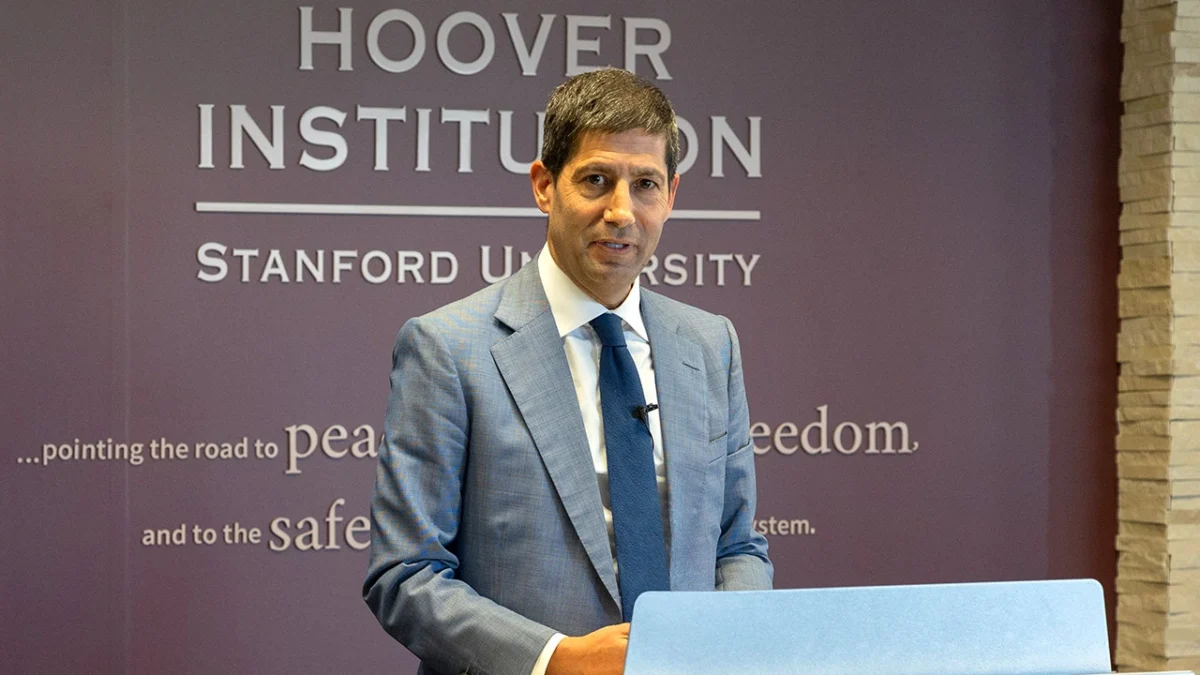
Kevin Warsh, a former governor of the U.S. Federal Reserve, is stepping into a prominent role as President Donald Trump's nominee to lead the central bank, facing a critical confirmation hearing before lawmakers. This nomination signals a potential shift in the Federal Reserve's direction, with Warsh set to succeed Jerome Powell, whose term as chairman concludes in May. The announcement by Trump in January ended months of speculation regarding the future leadership of one of the world's most influential financial institutions.
Trump expressed strong confidence in Warsh, stating on Truth Social that he had known him for a long time and had no doubt he would be a "GREAT Fed Chairman, maybe the best." He further described Warsh as "central casting" and someone who would "never let you down," offering congratulations on the nomination.
Warsh's background includes a bachelor's degree in public policy from Stanford University and a law degree from Harvard University. Notably, like Jerome Powell, Warsh does not possess a formal degree in economics. Powell, the current Fed chair, holds a bachelor's degree in politics from Princeton University and a law degree from Georgetown University. This shared characteristic suggests a potential alignment in their foundational approaches to economic policy, despite differing career paths.
Before entering public service, Warsh gained experience in the private sector at Morgan Stanley. His career in Republican policy circles was solidified when he joined President George W. Bush's administration in 2002. His tenure at the Fed began when President Bush nominated him to the Board of Governors in 2006, making him the youngest Fed governor in history at the age of 35. This early appointment underscored his perceived potential and influence within the financial regulatory landscape.
Since departing the Federal Reserve in 2011, Warsh has maintained an active presence in economic discourse and policy circles. He has served as a Shepard Family Distinguished Visiting Fellow in Economics at the Hoover Institution and a visiting scholar at Stanford's Graduate School of Business. His involvement extends to corporate governance, as he sits on the board of UPS, and advisory roles with organizations such as the Group of Thirty and the Congressional Budget Office's Panel of Economic Advisers. These positions highlight his continued engagement with economic research, policy analysis, and corporate strategy.
Warsh's name has surfaced in consideration for high-profile economic positions within the Trump administration previously. In 2017, he was a contender to replace Janet Yellen as Fed chair, though the position ultimately went to Jerome Powell. More recently, in the fall, he was reportedly considered for the role of Treasury secretary before Scott Bessent was nominated. These past considerations indicate a sustained interest from the administration in Warsh's expertise and perspective on economic matters.
Perhaps most significantly, Warsh emerged as a notable critic of Federal Reserve Chair Jerome Powell's policies during his tenure. He has called for substantial reforms to the Fed's policy-making framework, arguing that its economic models are outdated and lack transparency. Warsh has also expressed concerns about the expansion of the Fed's balance sheet. Despite developing a reputation as an inflation hawk during his time on the Board of Governors, Warsh indicated in the fall that he believed the Fed had room to lower borrowing costs, suggesting a nuanced view on monetary policy timing.
In an interview with Fox News' "Special Report" in October, Warsh stated, "Prices can be lower, but it’s going to require regime change at the Fed." While he has aligned with President Trump's calls for lower interest rates, Warsh has been less explicit about the specific monetary policy path he would pursue if confirmed. Senators on the Banking Committee are expected to probe these views deeply during his confirmation hearing, seeking clarity on his precise policy intentions.
Warsh's stance on trade policy also presents an interesting dimension, particularly as the Federal Reserve navigates the economic implications of tariffs. Once a critic of protectionist trade measures, Warsh stated last summer that tariffs would not lead to persistent inflation. This perspective comes at a time when inflation has remained above the Fed's 2% target, hovering closer to 3%, and policymakers anticipate a gradual return to target levels in 2026, assuming no further tariff impositions. The interplay between trade policy, inflation, and labor market dynamics complicates the outlook for interest rate adjustments.
Despite the complexities of the current economic environment, including elevated inflation and a cooling labor market, Warsh's past actions at the Federal Reserve suggest a potentially hawkish inclination. During the 2008 housing crisis, he was critical of the central bank's strategy of continuing to purchase Treasury bonds while maintaining low interest rates, even as the job market showed signs of weakness. This historical stance contrasts with any notion that he would adopt a purely dovish approach to monetary policy.
Warsh's established connections to Wall Street, which are reportedly still robust, provided him with a crucial role as the Fed's primary liaison to the banking sector during the 2008 financial crisis. This experience in managing relationships between the central bank and the financial industry could be a significant factor in his approach to monetary policy and financial stability if confirmed as Fed chair. His ability to bridge the gap between regulatory oversight and the practical realities of the financial markets will likely be a key area of focus for policymakers and market participants alike.


