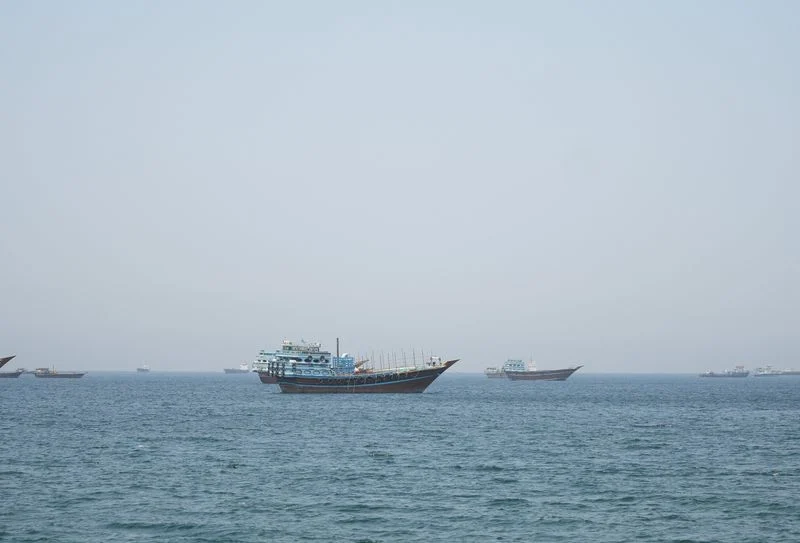
The trading arm of Vietnam's state oil company, Petrovietnam Oil Corporation (PVOIL), has formally requested that the U.S. Navy permit a crude oil tanker, carrying Iraqi oil, to proceed through a blockade in the Middle East Gulf. The vessel is crucial for supplying a Vietnamese refinery with essential feedstock, according to a letter submitted by PVOIL on Tuesday, May 13, 2026.
The U.S. military has reportedly intensified its shipping blockade against Iran, extending it to include cargoes classified as contraband. However, the U.S. military has stated that other oil exports originating from the Gulf are permitted to transit the region. The Maltese-flagged supertanker, Agio Fanourios I, which is carrying approximately 2 million barrels of crude oil, initially departed the Strait of Hormuz on May 10. Ship tracking data from MarineTraffic indicates the vessel was sailing in the Gulf of Oman before executing a U-turn on May 11, a move that coincided with a statement from the U.S. military's Central Command.
The command responded to a Reuters inquiry by stating that "U.S. forces redirected the vessel as part of ongoing enforcement of the blockade against Iran." It remained unclear from the statement whether the U.S. Navy would ultimately allow the tanker to continue its journey to Vietnam as PVOIL has requested. The vessel had previously navigated the Strait of Hormuz on Sunday, May 11, utilizing Iran's designated shipping route for tankers, as reported by Iran's semi-official Tasnim news agency.
The ongoing conflict between the U.S. and Iran has led to the closure of the Strait of Hormuz, a critical chokepoint for global energy transit. This closure has resulted in hundreds of ships being stranded and has significantly disrupted global energy supplies, impacting the waterway through which an estimated 20% of the world's energy supplies pass.
In the letter dated May 12, 2026, and addressed to U.S. military and diplomatic missions, PVOIL Vice President Hoang Dinh Tung emphasized the critical nature of the cargo. "This cargo is of extreme importance to Nghi Son Refinery (NSRP), to the Socialist Republic of Vietnam and to the Vietnamese people," Tung stated. He further elaborated on the dire situation at the refinery, noting, "NSRP’s feedstock inventories are critically low; any further delay risks halting refinery throughput, with cascading consequences for millions of Vietnamese consumers, businesses, public services and industries."
PVOIL provided a definitive confirmation regarding the tanker's cargo. The company "unequivocally" stated that the vessel had loaded Iraqi Basra crude, which was sold by Iraq's state oil company, the State Oil Marketing Organization (SOMO). This loading operation took place between April 17 and April 20, 2026. The company's appeal highlights the delicate balance of international shipping, energy security, and geopolitical tensions in a vital global trade route.
The situation underscores the challenges faced by international energy markets when geopolitical conflicts disrupt key transit points. The Strait of Hormuz, a narrow waterway between Iran and Oman, is one of the most important oil transit points globally. Its closure or disruption can have immediate and far-reaching effects on oil prices and supply chains worldwide. Vietnam's reliance on imported crude oil for its refineries, such as the Nghi Son Refinery, makes it particularly vulnerable to such disruptions.
The Nghi Son Refinery, a significant industrial facility in Vietnam, processes a substantial amount of crude oil to meet the country's energy demands. A prolonged halt in its operations due to a lack of feedstock could lead to shortages, impacting not only industrial output but also the availability and price of fuel for consumers and businesses across Vietnam. The potential cascading consequences mentioned by PVOIL highlight the interconnectedness of global energy markets and national economies.
The U.S. military's stated objective of enforcing a blockade against Iran, while a sovereign action, directly impacts third-party commercial shipping. The U.S. Central Command's confirmation of redirecting the vessel indicates a deliberate action taken as part of its enforcement operations. The ambiguity surrounding whether the U.S. Navy will ultimately permit the tanker to proceed to Vietnam leaves the situation unresolved and adds to the uncertainty for PVOIL and the Vietnamese economy.
This incident is occurring against a backdrop of heightened tensions in the Middle East, exacerbated by the U.S.-Israeli conflict with Iran. The closure of the Strait of Hormuz, even if temporary, sends ripples through global markets. The disruption affects not only the physical flow of oil but also market sentiment, potentially leading to price volatility. Traders and analysts closely monitor such events for their impact on energy prices and broader economic stability.
Petrovietnam Oil Corporation (PVOIL) is a key player in Vietnam's energy sector, responsible for the trading and distribution of oil products. Its appeal to the U.S. Navy demonstrates the significant challenges faced by state-owned enterprises in navigating complex international relations and ensuring the security of critical energy supplies. The company's proactive communication and detailed explanation of the cargo's importance aim to persuade the U.S. authorities to grant an exception.
The Iraqi Basra crude loaded onto the Agio Fanourios I was sourced from the State Oil Marketing Organization (SOMO), indicating a legitimate commercial transaction. PVOIL's explicit confirmation of the sale and loading dates serves to validate the legitimacy of the cargo and its intended destination. This detail is crucial in seeking a resolution, as it differentiates the shipment from any potentially illicit or contraband cargo that might be targeted by the blockade.
The incident involving the Agio Fanourios I serves as a stark reminder of the fragility of global energy supply chains and the potential for geopolitical events to have immediate economic consequences. The Strait of Hormuz is a critical artery for global oil trade, and any sustained disruption there can lead to significant price spikes and supply shortages.
As of the latest reports, the U.S. Navy's stance on allowing the tanker to proceed remains uncertain. The situation highlights the complexities of international maritime law, national security interests, and the global demand for energy. The resolution of this particular case could set a precedent for how similar situations are handled in the future, impacting shipping companies, oil producers, and importing nations alike.
The Vietnamese government and its state-owned enterprises are keenly aware of the risks associated with relying on sea lanes that can be subject to geopolitical instability. The appeal made by PVOIL is not just about a single tanker but about ensuring the consistent flow of energy resources necessary for Vietnam's economic development and stability. The company's efforts reflect a broader strategy to safeguard national energy interests in a volatile global environment.
The specific dates of the loading, April 17 to April 20, 2026, are important as they establish the timeline of the commercial transaction before the vessel was redirected. This precise information is critical for PVOIL to demonstrate that the cargo was legitimately acquired and intended for a civilian refinery, distinct from any military or sanctioned activities that might be the target of U.S. enforcement actions.
The U.S. military's Central Command has acknowledged the redirection of the vessel, framing it within the context of enforcing sanctions or blockades against Iran. The specifics of these enforcement actions and their impact on legitimate commercial traffic remain a point of concern for international trade. The response from the U.S. military did not provide a clear indication of a resolution for the Agio Fanourios I, leaving its fate and the supply of crude oil to Vietnam in suspense.
This event is occurring amidst a period of significant market volatility, as indicated by related news reports of Brent crude futures surging and Treasury yields rising due to broader market sell-offs. The interconnectedness of geopolitical events, energy markets, and financial markets is evident, with disruptions in one area quickly influencing others. The market's reaction to the U.S.-Iran impasse and its impact on the Strait of Hormuz is a key factor for investors and policymakers monitoring global economic conditions.


