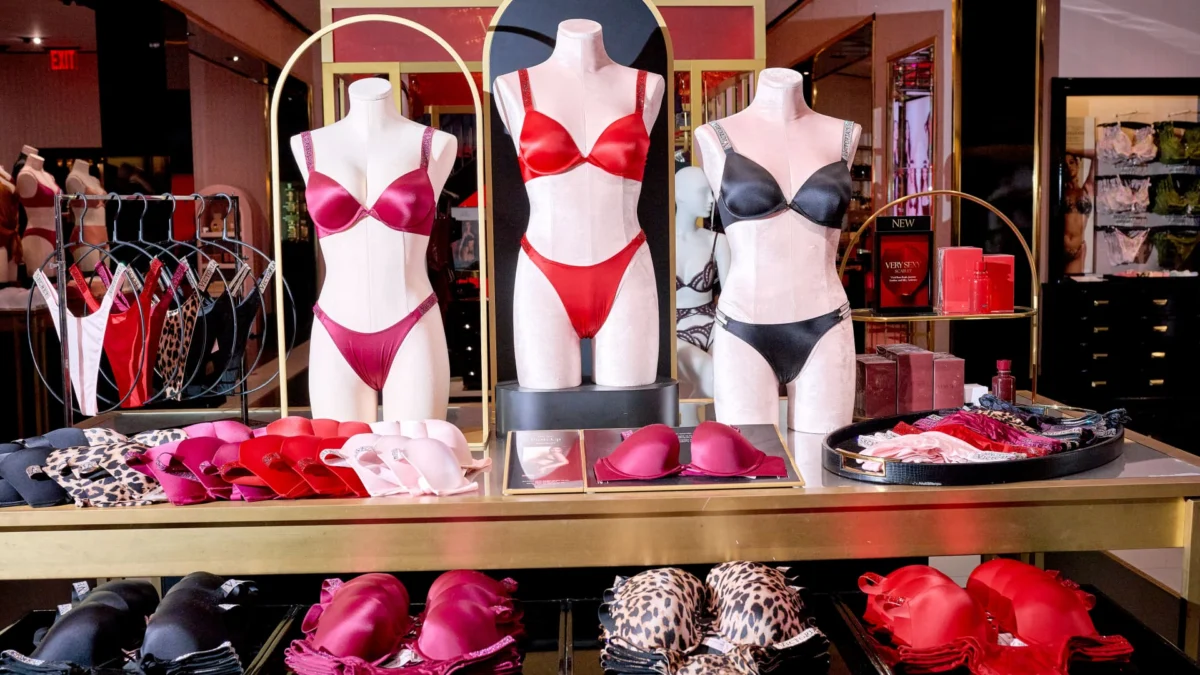
Victoria's Secret (VSXY) significantly surpassed Wall Street's expectations in its fiscal first quarter of 2026, reporting adjusted earnings per share that were double consensus estimates. The lingerie retailer subsequently raised its full-year guidance, attributing this positive shift to better-than-expected sales performance and reduced tariff costs.
CEO Hillary Super noted that her executive team has now been in place for approximately one year, and the strategic initiatives they have implemented are beginning to yield tangible results. This sentiment was echoed by the company's robust financial performance, which saw shares of Victoria's Secret surge by about 40% in premarket trading following the announcement.
Super highlighted a "very consistent, double-digit [sales] increases across Victoria's Secret, Pink, beauty channels, digital, stores and international, all very positive," in an interview with CNBC. She emphasized the critical role of "supercharging bras" as one of the most important initiatives, noting double-digit comparable sales growth in this category and underscoring the loyalty bras create as an anchor for the business.
The company achieved this sales growth with "significantly" fewer promotions and successfully gained market share during the quarter, particularly among shoppers aged 18 to 24. This indicates a strong product appeal rather than reliance on discounts.
Victoria's Secret finance chief Scott Sekella acknowledged that some customers utilized extra stimulus funds for shopping at its stores during the first quarter. However, he characterized this as a "normal amount," stating that sales trends have remained consistent into the current quarter, even after tax refunds have largely diminished for many consumers. This suggests a sustained demand beyond temporary economic boosts.
Sekella further explained that the company's decision to hike its outlook was driven by better-than-expected sales, which led to stronger leverage on fixed costs. Additionally, the revised outlook factored in lower tariff rates, following rulings that deemed many of President Donald Trump's sweeping duties illegal. Sekella stated, "All of this is predicated on the Q1 that we had, the momentum we see into Q2 and how we feel about our back half launches."
Victoria's Secret now projects full-year sales to range between $7.03 billion and $7.13 billion. This is an increase from its previous forecast of $6.85 billion to $6.95 billion and significantly exceeds LSEG's analyst estimates of $6.99 billion. The company also elevated its full-year guidance for adjusted operating income by over $100 million, now expecting it to fall between $550 million and $580 million, up from the prior range of $430 million to $460 million.
First Quarter Financial Highlights
For the fiscal first quarter, Victoria's Secret reported adjusted earnings per share of 60 cents, substantially outperforming the 30 cents expected by analysts surveyed by LSEG. Revenue reached $1.56 billion, surpassing the anticipated $1.52 billion. The company's reported net income for the three-month period ending May 2 was $47.7 million, or 56 cents per share, a significant improvement from a loss of $1.66 million, or 2 cents per share, in the same period a year prior. Excluding one-time restructuring costs, earnings per share stood at 60 cents.
Sales increased to $1.56 billion, marking approximately a 15% rise from $1.35 billion in the previous year. Comparable sales, encompassing both store and e-commerce revenue, grew by 13%, exceeding StreetAccount's expectations of 11.4%. These results represent a new milestone for the company, reflecting the effectiveness of its ongoing turnaround strategy.
Super, who has been with the retailer for nearly two years, noted that the executive team she assembled is celebrating its one-year anniversary, and the fruits of their labor are becoming evident. She elaborated, "Once you hit that year you start compounding your contributions, because you see the patterns, you see where things are going, and you're able to really, I think, have a multiplier effect in the work you do." She added that the company is still in the "early innings" of its transformation, with clear direction and emerging new opportunities.
Crucially, Super observed sales increases across all income cohorts during the quarter. The most significant growth was seen among consumers earning under $50,000 annually and those making over $200,000 annually. This trend suggests that the company's products are resonating with a broad customer base, driven by product appeal rather than solely by price or discounts.
Since assuming her role, Super has focused on re-establishing Victoria's Secret's core identity as a desirable lingerie brand that balances allure with comfort. Her efforts include expanding the beauty business, revitalizing the Pink brand, and strengthening the bra line, which serves as a foundational element for the entire company. The company's extensive store footprint in malls, previously a point of criticism, has now proven to be a competitive advantage, offering an engaging in-real-life experience for customers.


