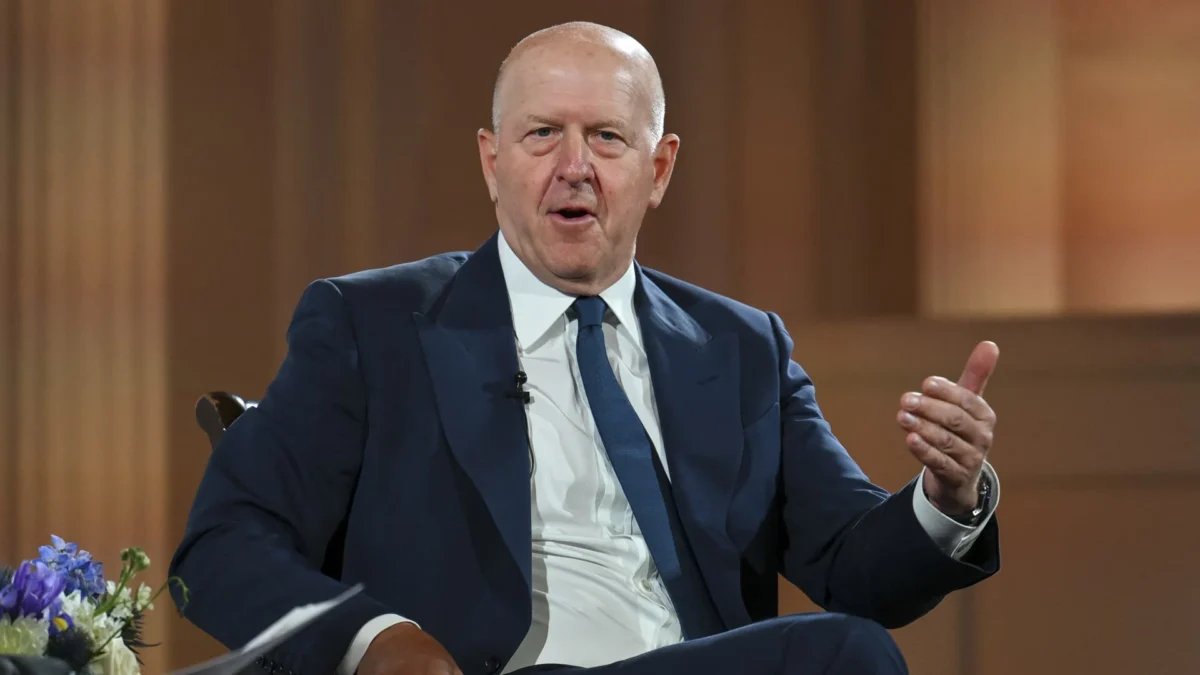
Goldman Sachs CEO David Solomon said Tuesday that investors have shifted decisively into a "greed" mode, as financial markets prepare for an unprecedented wave of fundraising from major artificial intelligence firms. "We are definitely in a moment where there's more greed than there is fear," Solomon told CNBC's Leslie Picker. He also said there is "plenty of liquidity" within the financial system to support the substantial capital requirements of these burgeoning companies.
Solomon's observations come as the market anticipates significant equity offerings, including potential initial public offerings (IPOs) from leading AI model providers OpenAI and Anthropic, as well as SpaceX, which notably includes Elon Musk's AI ventures. These prominent firms could go public at multi-trillion-dollar valuations, according to the source. Asked by CNBC's Leslie Picker whether markets could support a string of massive equity offerings from these upcoming IPOs, Solomon said that there is ample capital available for the deals. He further stated, "There's plenty of liquidity in the system if the world continues to remain as optimistic."
Despite potential concerns regarding market saturation from other companies seeking vast sums to fund essential infrastructure like advanced data centers, specialized chips, and broader technological infrastructure, Solomon, whose bank is playing a key role in several of these high-profile deals, downplayed any apprehension. Alphabet's recent robust stock performance following its announcement of an $80 billion equity raise was proof that markets are still receptive to AI, he said. "The stock is trading very well," Solomon noted, highlighting this as an encouraging and concrete data point for the successful execution of large-scale capital raises in the current environment.
He further emphasized that the prevailing robust conditions in both equity and debt markets are actively prompting companies to raise money while market conditions remain favorable, he said. Solomon offered strategic advice, stating, "When capital's available, if you're capital consumptive and it's available, take the capital." He acknowledged the truly unprecedented scale of the current fundraising activity but argued that record levels of wealth and liquidity across global markets provide ample support for this heightened activity.
Furthermore, Solomon said that the substantial financial gains generated by these rapidly expanding AI companies could foster a powerful, self-reinforcing economic cycle. This cycle would involve employees and investors recycling their profits into new ventures and contributing to tax revenues, thereby stimulating further innovation and broader economic activity. While acknowledging that greed can "turn into fear very quickly," Solomon tempered this by adding, "but that doesn't mean it will," implying that periods of market exuberance can persist for extended durations and that the current cycle might still be in its relatively early stages, offering continued opportunities.


