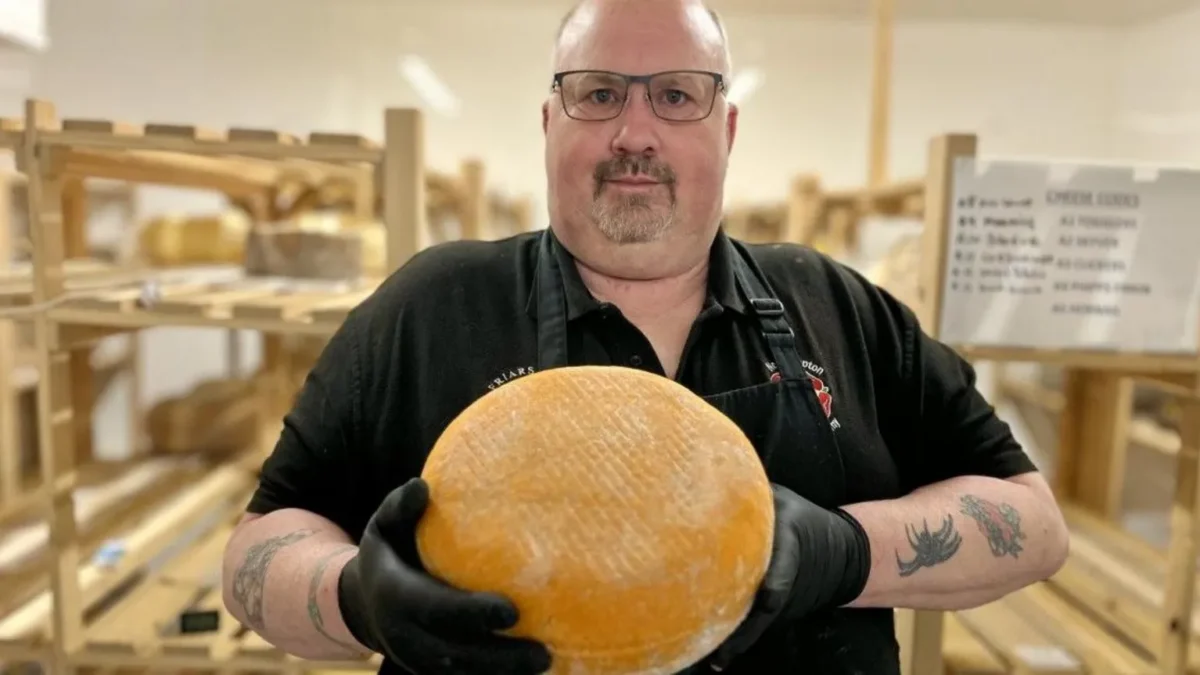
Traders and farmers in Northamptonshire are caught in a "vicious circle" of escalating costs, leading to a deepening cost-of-living crisis, according to local business owners. Steve Reid, proprietor of The Northampton Cheese Company and The Northampton Charcuterie Company, has reported significant price hikes for essential ingredients, with some costs more than doubling.
Reid, who operates from Northampton Market, described the current economic climate as exceptionally challenging. He highlighted specific examples, such as dried apricots, which have surged from £35 for a 12kg box just over a year ago to £100 per box. Similarly, sultanas have seen their price jump from £23 for a 10kg box to approximately £60, effectively doubling in cost.
These rising ingredient expenses force businesses like Reid's to consider price increases. However, he noted that this action exacerbates the cost-of-living crisis for consumers, making it harder to sell products and thus creating a difficult cycle. "If we have to increase our prices the cost-of-living crisis affects everybody and it's even more difficult to sell the products – so it's a very vicious circle," Reid stated.
Farmers are also facing immense pressure. Philip Weston, a farmer from Hartwell, Northamptonshire, warned of potential further protests if the government does not provide adequate support. He specifically pointed to the cost of fertiliser, stating, "If the cost of fertiliser doesn't come down we are seriously looking at drawing back on arable crop production."
Weston, who manages 300 acres (121 hectares) of farmland, has previously participated in demonstrations outside transport hubs and food depots to advocate for better agricultural sector support. He indicated his intention to join future protests to draw public attention to the sector's ongoing struggles.
He expressed disappointment with the government's decision not to withdraw the planned fertilizer tax, suggesting, "The Labour government did have an option to draw back on the planned fertilizer tax that they were proposing. They chose not too. Change needs to be brought about now."
Weston also emphasized the need to re-evaluate the value placed on domestically produced goods. He observed a significant influx of imported meat, noting that British producers struggle to compete with the lower production costs of imports. "We need to put a higher value on the produce that we actually have here in this country. We're seeing meat being imported into this country in huge numbers and we simply aren't competitive with their cost of productions, we can't cope with that," he explained.
The Bank of England has issued a warning that food prices could increase by as much as 7% by the end of the year, adding to the concerns of consumers.
Maria Agachi, a resident of Northampton who moved from Moldova five years ago, shared her observations on rising grocery prices. She recalled that a standard pack of salt cost around 30p when she first arrived, but now costs over £1. "Just the normal products we're buying from the shops is increasing," she said.
Despite the price hikes, Agachi mentioned that her personal spending hasn't drastically changed, as she prioritizes purchasing what she needs. However, she acknowledged the general trend of rising prices. "Everything seems to be going up, rocketing. I'm looking for the bargains basically, chicken seems to be a good bargain these days – so I eat more chicken than red meat these days, just looking after the pennies," she added.
A government spokesperson stated that the government is actively collaborating with agricultural stakeholders, including the National Farmers' Union (NFU), to ensure the sector receives necessary support. The government has implemented measures to enhance price transparency, encouraging the Agricultural and Horticulture Development Board to increase its reporting frequency on fertilizer prices, which is now published weekly.
Furthermore, the government has extended the 5p fuel duty cut until September, with red diesel benefiting from an 80% tax discount. This measure is estimated to save farmers approximately £300 million annually. The BBC Politics East program, featuring discussions on these issues, was scheduled to broadcast on Sunday, May 17, at 10:00 GMT on BBC One in the East of England, and would be available on BBC iPlayer.


