The United Kingdom is anticipating a significant surge in domestic tourism this summer, as geopolitical instability in the Middle East and escalating prices for international travel prompt many Britons to reconsider their holiday plans. Prime Minister Sir Keir Starmer has indicated that holiday destinations might shift this year, with the government advising against unnecessary travel to certain regions, particularly the UAE, due to the ongoing conflict in Iran. This advisory, coupled with increased flight and package deal costs to popular European destinations, is nudging consumers towards exploring the British Isles.
Online travel platforms are already reflecting this trend. Booking.com reported a 20% rise in searches for UK holidays during the May half-term compared to the previous year. Similarly, Airbnb noted a 15% increase in searches for UK stays over the May bank holidays. These figures suggest a growing preference for domestic travel, driven by a combination of external pressures and an increasing awareness of the diverse attractions available within the UK.
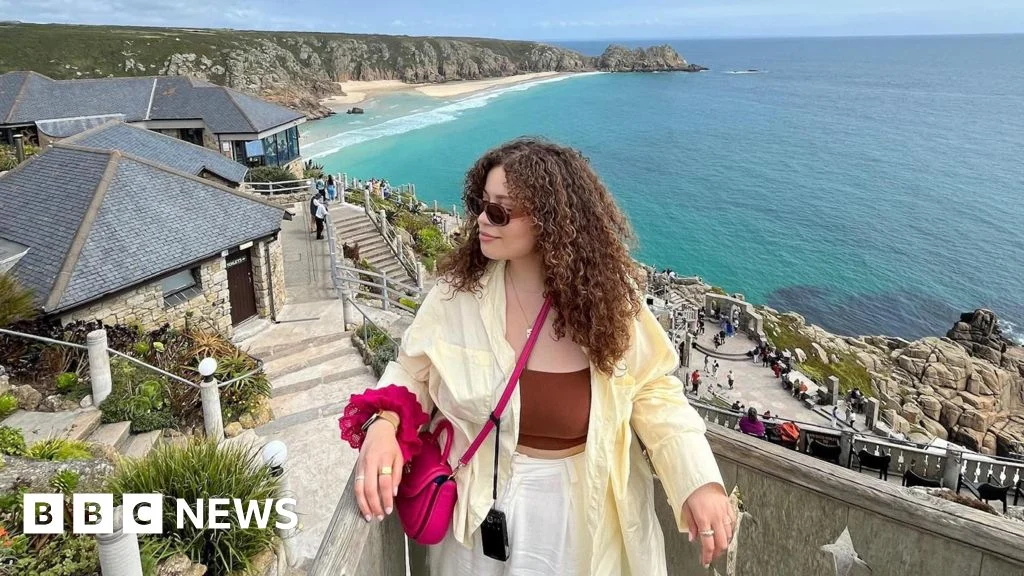
Travel and lifestyle influencer Eboni Dixon highlights that many UK coastal areas offer scenery comparable to international destinations. "We are literally surrounded by coastlines," Dixon stated, emphasizing the vast number of stunning beaches yet to be explored. Her own experiences, such as a recent wellness retreat on the Isle of Wight, where her photographs evoked comparisons to Croatia, underscore the aesthetic appeal of UK destinations. Dixon's social media channels are dedicated to showcasing these lesser-known "hidden gems."
Dixon's recommendations extend beyond coastal areas. She points to Alton in Hampshire for its picturesque lavender fields, and Hastings for its vineyard, historic castle, and the East and West Hill funicular railways. Folkestone in Kent is also emerging as a popular spot, with its harbour offering an ambiance that many find reminiscent of continental Europe. Dixon argues that the perception of a holiday being solely defined by international travel is outdated.
"When a lot of people think of a holiday immediately you think of going abroad and you have to get on a plane for it to be a holiday," Dixon explained. "For me, it doesn't really matter where in the world I am as long as there's interesting things on offer. If you like a holiday that's just lying on a beach and not really doing much, you might as well lie on a beach in the UK. If you go to Spain or whatever, you're surrounded by Brits anyway!" This perspective challenges the traditional notion that a truly relaxing or engaging holiday requires leaving the country.
For those considering the Isle of Wight, access is primarily by ferry. Wightlink operates services from Lymington to Yarmouth and from Portsmouth to Fishbourne for vehicles, and from Portsmouth to Ryde for foot passengers. Red Funnel offers routes from Southampton to both West and East Cowes. Additionally, Hovercraft services connect Southsea to Ryde, providing multiple options for reaching this popular island destination.
David Land, a resident of the North East of England, and his wife Barbara, exemplify the shift towards staycations. Originally planning a trip to the Maldives via Dubai, they opted for a refund and rebooked a holiday to Northumberland in June after the UK Foreign Office advised against non-essential travel to the UAE. David described Northumberland's coastline as "idyllic," noting that while the temperatures may not match tropical climes, appropriate clothing can mitigate this. Their itinerary includes coastal walks, visits to local pubs and restaurants, and historical exploration.
The Lands are seasoned staycationers, having previously explored Cornwall, North Wales, Norfolk, and the Peak District, alongside city breaks in Manchester, Leeds, and London. David contrasts UK holidays with those abroad, stating, "If you just want to lie on a sunbed and have a dip in the pool then you'd go to Spain, but if you want to keep a family entertained for a day there's a lot more [in the UK] than we give it credit for." He also mentioned that the cost of a week in Europe could be comparable to a UK break, suggesting that the economic calculus for holiday choices is becoming more nuanced.
Northumberland is accessible by car via the A1 from the south, A697 and A68 from the north, and A69 from the west. Rail travellers can utilize the East Coast Main Line (ECML), with stations at Morpeth, Alnmouth, and Berwick-upon-Tweed. Newcastle, the nearest major city, is served by Newcastle International Airport, located on the southern edge of the county.
Lizzy Stroud, who co-manages self-catering accommodation in converted train carriages near St Ives in Cornwall, notes that their location offers a unique car-free holiday experience. Situated beside the Great Western Railway main line at St Germans and Harvey of Hayle, guests can watch trains and use them for local transport. This car-free appeal has become more attractive as petrol and diesel prices have risen, partly influenced by the conflict in Iran. Stroud's area of Cornwall is described as "off the beaten tourist track," featuring beautiful, uncrowded beaches and attractive landscapes.
"There's no sense in thinking abroad when there's so much to see on your own doorstep," Stroud asserted. "There are lots of places offering really different and quirky places to stay, so a UK holiday can be really special." She and her husband typically holiday within 20 miles of their home in St Germans, near Looe, preferring shorter journeys, camping, or cycling. "People are completely missing a trick by going abroad. There are some great places to go in the UK where you'll say, 'Wow I didn't know this existed!'" she added.
Cornwall can be reached by car via routes such as the A303. Direct train services from London, Bristol, Manchester, Edinburgh, and Aberdeen connect to Penzance and Truro. Newquay Airport serves flights from various UK and Channel Islands locations, including Aberdeen, Belfast, Edinburgh, Glasgow, Guernsey, Humberside, London Gatwick, Manchester, and the Isles of Scilly.
Lexie McGaughey, a 20-year-old from Rugby, Warwickshire, recently opted for a glamping trip in Lincolnshire with her boyfriend, Evan, rather than travelling abroad. "We thought it would be easier to drive to a location rather than spending half the day travelling to a different country," she explained. Their three-night stay included visits to a spa and arcade, beach walks, swimming, and movie nights. McGaughey found the experience enjoyable, noting that the weather, while mixed, did not detract from the holiday as it wasn't weather-dependent.
However, McGaughey also observed that the costs of a UK holiday and an international trip felt comparable. She acknowledged that the expense of shopping, food, and fuel within the UK might make international travel a more economical choice for longer trips. For their short break, however, the convenience of a domestic destination outweighed the potential cost savings of going abroad. "With the price of shopping, food and fuel, maybe going abroad would've been cheaper," she admitted, "but since it was only three to four days it didn't make sense to go abroad."
Glamping, a portmanteau of "glamorous camping," has become a significant trend, officially recognized in the Oxford English Dictionary in 2016. It offers the traditional camping experience—sleeping outdoors, enjoying scenic views, and campfires—but with added comforts and amenities, blending the rustic appeal of camping with the conveniences of modern accommodation. This trend appeals to those seeking an outdoor experience without sacrificing comfort, further contributing to the diversity of staycation options available.


