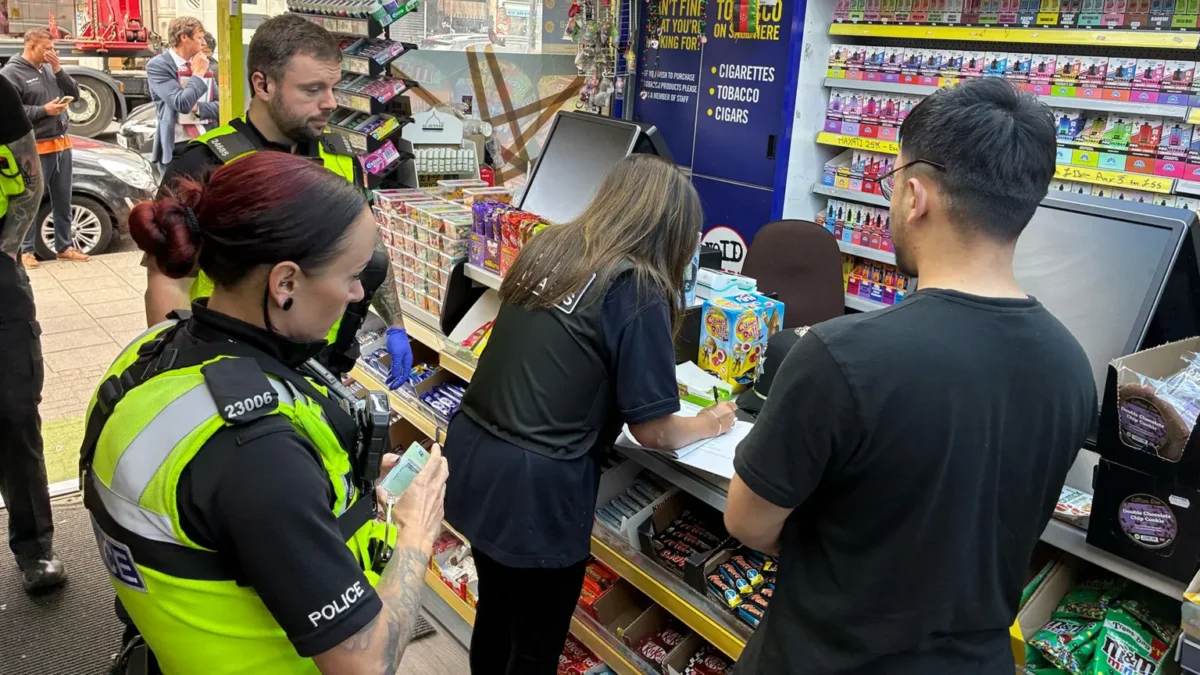
A major policy shift in England and Wales will allow authorities to shut illegal mini-marts, barbers and vape shops for up to 12 months, double the current maximum closure period. The plan, announced by Home Secretary Shabana Mahmood, follows extensive BBC News investigations into organized crime linked to high-street retail, including operations tied to illegal cigarettes, drugs and other illicit activity.
Under existing law, closure powers permit a temporary shutdown of shops for up to three months, with a possible six-month extension using anti-social behaviour legislation. The government says the extended power will give investigators more time to collect evidence, pursue prosecutions and identify proprietors, while limiting the ability of rogue operators to reopen and continue illegal activity.
Mahmood, praising the BBC’s reporting, argued that on many high streets, organized crime and immigration-related criminality have eroded trust in local communities and democratic institutions. She stressed that the government is not prepared to tolerate such activity and that the new framework aims to restore public confidence by enabling a more persistent enforcement approach.
Trading Standards officers have welcomed the move, noting that closure orders are a key enforcement tool. John Herriman, chief executive of the Chartered Trading Standards Institute (CTSI), said there is broad support within the profession for stronger measures to tackle “dodgy shops.” Other officers indicated that extended closures could deter illegal operators from relying on temporary reopenings and could prompt landlords to scrutinize tenants more closely.
Our reporting has tracked a wide range of abuse on London’s and the Midlands’ high streets, including sites with illegal cigarettes, counterfeit packs, and other criminal activity uncovered during raids conducted with the National Crime Agency (NCA). In one Birmingham area raid, an arrest followed the discovery of illegal goods and a makeshift weapon concealed under a counter. A shopworker described as an Afghan student admitted that selling illegal cigarettes was wrong, though he suggested the owner was the person to question.
The BBC’s coverage has also highlighted broader concerns about street-level crime, including reports of drugs being sold openly, and witnesses describing a troubling security situation. A police officer involved in the Birmingham area raid remarked on conditions that, in her view, represent a significant deterioration compared with other areas she has served in.
In a broader context, the BBC’s investigative work documented the involvement of criminal networks across the country, including money laundering and illegal working claims connected to retail sites. The Home Secretary noted that the government’s program of enforcement has included coordinated operations, and she emphasised that the system has to adapt to the scale of the problem.
As part of the response, the government announced a dedicated £30 million High Street organised crime unit, intended to deploy more police and Trading Standards resources, carry out tax and employment enforcement actions, and tighten controls on illegal working. Officials say the new powers are expected to be enacted into law by year-end, with provisions coming into force in early 2027. Authorities in Northern Ireland and Scotland are being briefed on the changes, given their distinct enforcement rules.
Questioned about the timing of the intervention, Mahmood said the measures represent a “game-changing national crackdown,” while acknowledging debates about whether action is timely enough. This policy shift underscores the government’s emphasis on restoring integrity on Britain’s high streets, with enforcement framed as a tool to deter criminal networks and improve consumer safety.


