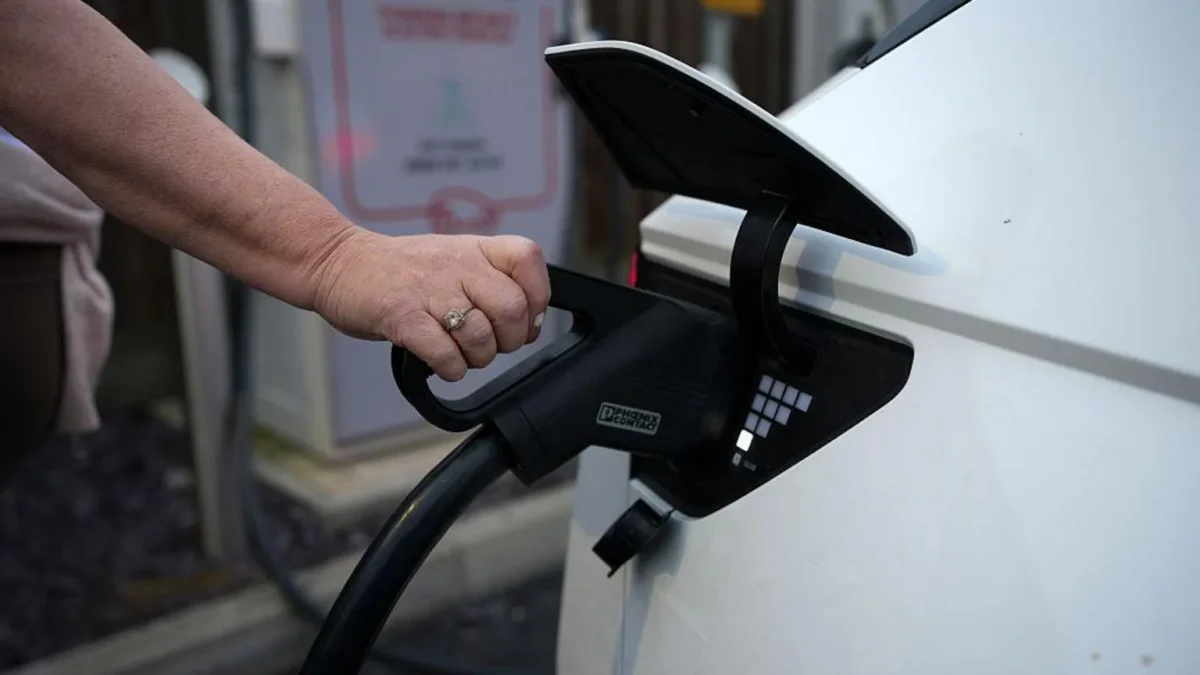
The UK government is preparing to soften its EV sales target for new cars, moving away from the current rule that requires 80% of new car registrations to be electric by 2030. Officials and industry stakeholders have faced a long-running push to ease the target due to concerns over costs and potential job impacts. The move comes as sustainability groups warn that weakening the target could threaten the nation’s longer-term electrification and climate objectives.
A government consultation will determine the new 2030 target, but participants say figures under consideration range from 50% to 70%. The policy framework around EVs has shifted markedly since its inception. A ban on new petrol and diesel car sales was first announced in 2020 under former prime minister Boris Johnson and later pushed back to 2035 by Prime Minister Rishi Sunak. Alongside this, Sunak introduced phased EV targets known as the Zero Emission Vehicles (ZEV) mandate, which require higher EV shares each year.
Under the ZEV mandate, the share of new car sales that must be EVs increases annually, with targets previously set at 28% for 2025 and 33% for 2026, culminating in 80% by 2030. Labour has pledged to restore the 2030 petrol and diesel ban if elected. Meanwhile, a separate review of the ZEV mandate had been expected early next year, but industry voices have urged a faster timeline. Downing Street is anticipated to meet with the UK car industry this week to discuss shifts in policy, a development first reported by the Sunday Times. Labour has accused the Conservative government of “moving goalposts on phase out dates.”
Carmakers that fail to meet the ZEV mandate can face a £15,000 per-car fine, while they also have the option to purchase credits from rivals who sold more EVs than required. It is not expected that this credit mechanism will be altered. The reform debate has been complicated by consumer hesitancy around EV range and the availability of charging points, factors cited by industry sources as contributing to slower EV adoption and affecting resale values.
Nevertheless, advocates say the mandate has been essential for mobilizing investment in charging infrastructure. James Alexander, chief executive of the UK Sustainable Investment and Finance Association (UKSIF), argues that weakening the mandate could slow the rollout of charging points and undermine investor confidence. He notes the mandate has given markets the confidence to commit substantial private capital to charging networks across the country. A More in Common poll conducted for UKSIF shows 74% of Britons want their council to maintain or increase support for EV charging point rollout.
Last year, electric cars accounted for 473,340 new registrations, a 23.4% market share, with overall UK new-car registrations totaling 2,020,373 in 2025—the third straight year of growth and the highest since before the pandemic. Of the roughly 9.8 million cars sold in the UK last year, about 7.8 million were second-hand and not included in the ZEV mandate. The debate over the 2030 target frames a critical question for an industry grappling with costs, policy shifts, and the pace of electrification.


