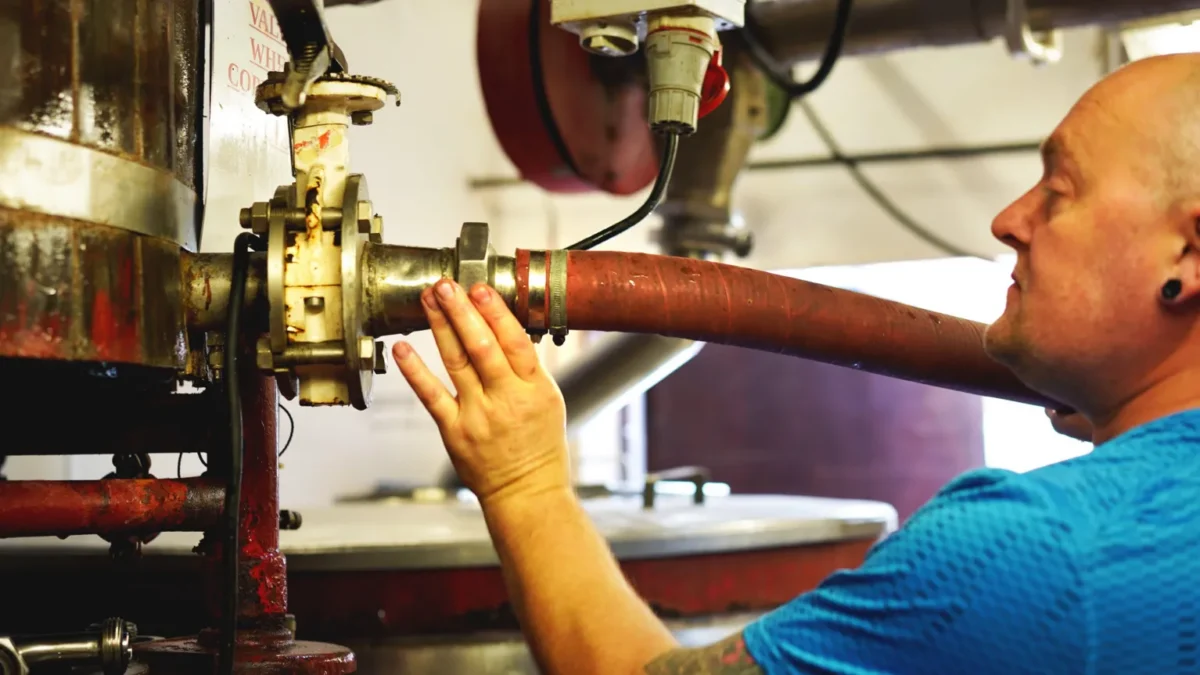
The once-thriving independent brewing sector in the United Kingdom is experiencing a significant downturn, with a growing number of businesses ceasing operations. Data from Companies House reveals a stark net loss of 150 brewing companies last year, as 320 businesses closed while only 170 new ones were established. This contraction has continued into the current year, with the total number of UK beer brewing companies falling to 2,320 as of April, a notable decrease from its peak of 2,594 in 2022. The broader beer industry estimates a severe impact on the hospitality sector, with approximately two pubs closing daily in the first quarter of 2026.
This downturn represents a sharp reversal from the rapid growth witnessed just a few years prior. In 2017 alone, 317 breweries were incorporated, a figure more than double the number that opened in the past year. England, which hosts the majority of the UK's beer-brewing enterprises, has seen its total number fall below 2,000 for the first time since 2018. Of the remaining 1,965 companies in England, 95 are currently undergoing administration, insolvency, or liquidation.
Al Wall, head brewer at Burton-upon-Trent's oldest and largest independent brewery, described the current landscape as a "shadow of its former self." Burton-upon-Trent, a town historically renowned for its beer production, once housed over 30 breweries at its peak and produced a quarter of all British beer. Today, according to Camra data, only eight breweries remain in the town.
Tim Webb, representing the Campaign for Real Ale (CAMRA), identified "access to market" as a primary and worsening challenge for breweries. "The big problem that breweries have got, and it is getting worse, is access to market," he said. He explained that large brewery companies often control the draught lines in pubs, creating substantial barriers for smaller, independent producers. Furthermore, smaller breweries struggle to secure shelf space in supermarkets due to intense price competition from larger rivals. While acknowledging that the lingering effects of the Covid-19 pandemic contribute to some closures, Webb also pointed to evolving consumer habits as a significant factor. "Some closures are due to the lingering impacts of Covid, but consumer habits are also key," he stated.
James Clarke, whose family has operated Oxfordshire's Hook Norton brewery for five generations, has observed profound changes in consumption patterns, attitudes, and lifestyles over his 30 years in the industry. "Back in the early nineties, we brewed three beers, a mild, a bitter and Old Hooky," Clarke recalled, noting that UK beer consumption was approximately double the current volume. Hook Norton is now brewing half the amount of beer it was 15 years ago, but has adapted by expanding its product range. Clarke believes there is a "small renaissance in the traditional styles of beer," alongside growth in heritage and craft beers, and even experimental varieties. "The part of the beer market that's holding up or growing is the interesting part," Webb added. "What is slowly but surely contracting, and has been for decades now, is the bright, shiny, frothy top, see-through lager market," he observed.
To navigate these evolving market conditions, breweries like Hook Norton have prioritized diversification. Clarke highlighted their early adoption of a visitor centre and a microbrewery within the main brewery as crucial strategies for engaging consumers directly. "We were probably the first with a visitor centre of any scale and we were one of the first with a microbrewery within the main brewery," Clarke said. Andy Slee, chief executive of the Society of Independent Brewers and Associates (Siba), echoed this sentiment, stating that many of its members are diversifying by opening taprooms to sell beer directly to consumers. "In order to survive, you just can't stay doing what you were doing before," Slee advised.
Despite the overall market contraction, Slee noted that "demand for independent beer is relatively strong." However, breweries are burdened by what Siba describes as a "suffocating level of taxation," and the organization advocates for a tax reduction on draught beer served in pubs. "When a brewery or a pub dies, something in that community dies," Slee said. "A place to meet, a place of employment, a place that pays local tax."
London was the sole English region to avoid a net loss of brewing companies last year. In contrast, the West Midlands, historically a significant brewing heartland, saw nine new companies established but 21 dissolved, resulting in a net loss of 12. Back in Burton, Al Wall and Emma Cole, brewery manager at Burton Bridge and Heritage Brewing Company, are actively working to preserve their heritage and serve as "bastions of independence," hoping their continued operation will inspire others and ensure beer's legacy in the town.
Cole highlighted the critical role of their taproom sales, stating, "There's so many pubs we just cannot sell to at all." She also pointed out the difficulty in passing on rising costs, from business rates to "astronomical" fuel prices, from the source text, to consumers who do not expect beer prices to increase significantly.
While some areas face significant contraction, pockets of growth and acceptance for independent businesses exist. Sheffield and Bristol are noted for their welcoming culture towards independent breweries. George Brook, co-founder of Sheffield's Triple Point Brewery, expressed his appreciation for these cities' acceptance of independents. "One of the reasons why I love this city, and also Bristol, both are so much more accepting of independents than anywhere else I have been or lived," he said. "The culture of drinking local beer is one of the things that makes Sheffield great." Despite Triple Point Brewery growing annually, Brook acknowledged the constant pressure: "We just accept that it's going to be harder next year to make the same amount of money as we did the year before." He stressed the importance of their taproom, noting that its closure would create a "serious pickle" for the business.
There may be a glimmer of hope for the sector. The government has recently reviewed the beer market to "determine barriers preventing small breweries from accessing pubs" and launched a £4.3 billion business rates support package. "We know the vital role independent breweries and pubs play in local communities, supporting jobs and growth across the UK," a government spokesperson affirmed.


