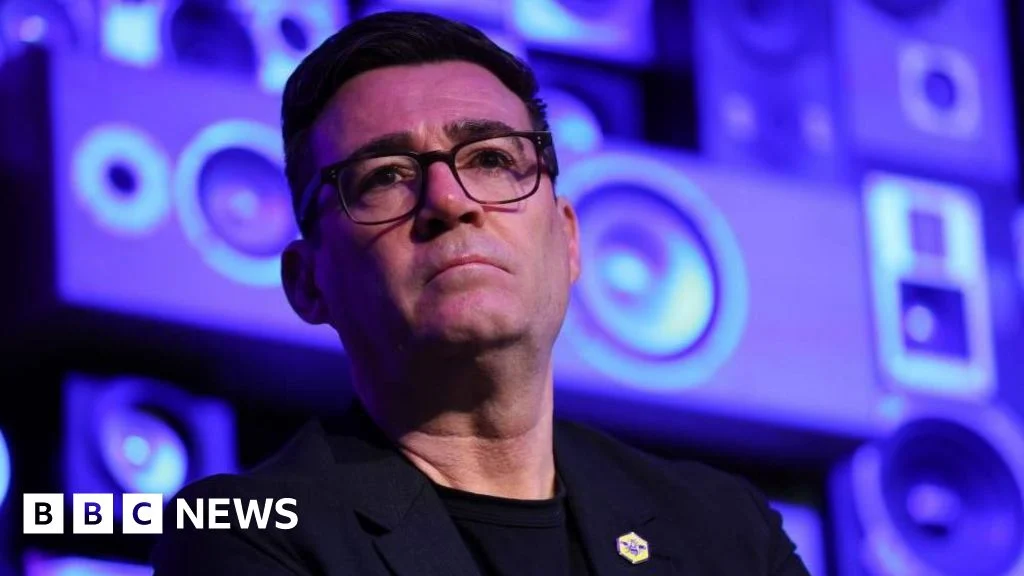
The United Kingdom is experiencing a significant increase in its borrowing costs, with the 10-year government bond yield reaching an 18-year high, while the national currency, the pound, has seen a notable decline. These market movements are largely attributed to the ongoing political drama surrounding the Labour leadership, particularly the decision by Andy Burnham, the Mayor of Greater Manchester, to contend for a parliamentary seat. This development has ignited concerns among market participants regarding potential increases in government borrowing under a Burnham-led administration.
The 10-year gilt yield, which represents the interest rate the UK government pays for a decade-long loan, surpassed 5.17% at one point on Friday. This marks the highest level observed since 2008, a period of considerable financial turmoil. Concurrently, the pound depreciated by 0.3% against the US dollar, settling around $1.336. The currency experienced a sharp fall late on Thursday following the initial announcement of Burnham's intentions.
Kathleen Brooks, research director at XTB, highlighted that the pound's decline this week has reached 1.5%. She noted that Burnham appears to be perceived as the least market-friendly candidate among those vying for leadership, contrasting this with the less pronounced negative impact on the pound following Wes Streeting's resignation. Over the past week, the 10-year gilt yields have breached the levels last seen in 2008 on three separate occasions, including the new peak achieved on Friday.
Longer-term borrowing costs have also escalated, reaching a new 28-year high. The yield on 30-year gilts climbed to a peak of 5.84% by early Friday afternoon. These rising borrowing costs are not isolated to the UK; governments across Europe also saw their borrowing costs increase on Friday. This broader trend is partly fueled by persistent worries about how the ongoing conflict in Iran could potentially drive up inflation, exacerbated by a surge in energy prices.
The price of Brent crude, the global oil benchmark, surged past $109 a barrel on Friday morning, a significant increase from its level of $105.72 on Thursday. Although it eased to below $108 in the afternoon, the volatility in energy markets adds another layer of concern for investors.
Analysts suggest that investors are apprehensive about the possibility of a Burnham-led government implementing policies that could lead to increased public borrowing in the UK, which already carries a substantial debt burden. This sentiment is echoed by comments made by Burnham himself in an interview with the New Statesman last year, where he stated that the government needed to "get beyond this thing of being in hock to the bond markets."
AJ Bell investment director Russ Mould commented that while there is no certainty that Burnham will secure a parliamentary seat or pursue the leadership, his past remarks have demonstrably contributed to pushing UK borrowing costs higher and causing the pound to weaken. Mould further elaborated that a leadership contest involving Burnham is likely to be more prolonged and contentious, thereby extending and intensifying the uncertainty surrounding the UK's political landscape.
Brooks identified two primary factors influencing the pound and government borrowing costs: the potential for a shift towards a more left-leaning government and the prevailing uncertainty stemming from the current leadership turmoil. She expressed concern that "Overall, UK politics is a mess, there are already signs that foreign buyers are ditching the gilt market. If there is a major rout in the pound and/or gilts in the coming days, prospective candidates may need to assess whether now was a wise time to make a move against the PM."
Mohit Kumar, an economist at Jefferies, shared similar sentiments with Reuters, stating, "Market's fear is that Burnham would be more left leaning, and we could see further increase in deficits." This fear of increased fiscal deficits under a potential Burnham administration is a key driver of the current market reaction.
UK stock markets also experienced a downturn on Friday. The benchmark FTSE 100 index closed down by 1.7%, a decline that, while significant, was broadly in line with the performance of other European markets, which saw similar levels of decrease.
Andy Burnham, the current Mayor of Greater Manchester, has confirmed his intention to seek a parliamentary seat. This move comes after MP Josh Simons announced he would step down to allow Burnham, a potential leadership hopeful, to run for the constituency. In a statement released on Thursday evening, Burnham expressed his commitment to transforming the Labour party, vowing to "make politics work properly for people."
However, Burnham's ambition to reach the top political position is far from assured. He must first be selected as the candidate for the Makerfield constituency by the local party. Following this, he would need to win the ensuing by-election, a contest that is anticipated to be closely fought, potentially against candidates from Reform UK.
The market's reaction underscores the sensitivity of financial markets to political developments, particularly those that signal potential shifts in fiscal policy and economic management. The interplay between political aspirations and economic stability remains a critical factor for investors assessing the UK's financial outlook.


