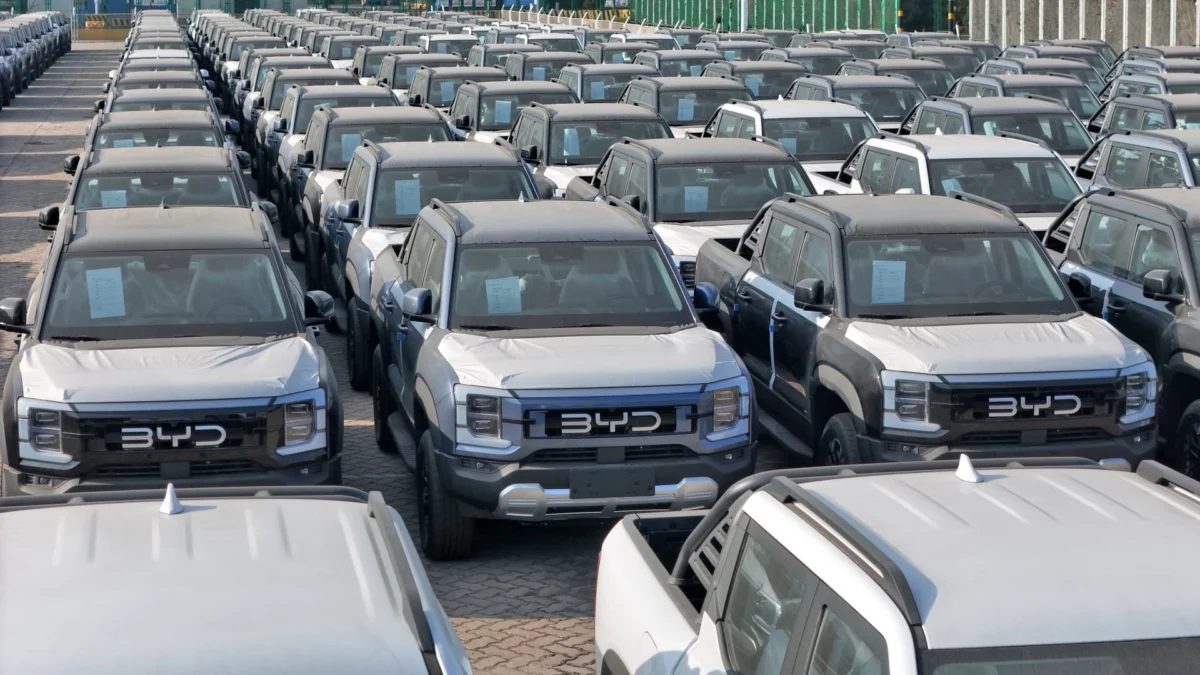
Canada is preparing to welcome Chinese-made electric vehicles (EVs) into its market, a move that has sparked considerable enthusiasm among the nation's auto dealers. The Canadian government has established a framework allowing for the annual import of 49,000 Chinese EVs for retail sales. These vehicles will benefit from a preferential tariff rate of 6.1%, a significant reduction from the 100% tariff typically applied to other vehicle exports from China to Canada. This policy shift is anticipated to introduce new competition and broaden the choices available to Canadian consumers in the burgeoning EV sector.
Michael MacGillivray, who manages ten dealerships across Nova Scotia and New Brunswick, views the impending arrival of Chinese EVs as a potentially transformative development. "I think it is going to be a huge eye opener," MacGillivray told CNBC, recounting his recent experience at the Beijing Auto Show. He expressed strong impressions of the quality, design, and driving experience of the Chinese vehicles he encountered. "When I was in China, I was very impressed by the Chinese vehicles," he stated. "They have materials that are second to none. Their styling is impressive. The ride is very impressive." This sentiment is echoed by Farid Ahmad, CEO of DSMA, an auto dealership brokerage firm based in suburban Toronto. Ahmad reported substantial dealer interest, noting, "We received nearly 400 inquiries from different dealers across Canada who are very interested and excited to represent any of these Chinese brands." DSMA is actively working to connect Canadian dealerships with Chinese automakers such as BYD, Geely, and Chery.
While many dealers anticipate a positive market reception, the policy has drawn criticism from some established automotive industry groups and political figures. The Canadian Vehicle Manufacturers' Association has voiced significant concerns. Furthermore, President Donald Trump has described the initiative as "a disaster." U.S. Transportation Secretary Sean Duffy posted on X, "Canada will live to regret the day they let the Chinese Communist Party flood North America with their EVs." These reactions underscore the geopolitical and economic sensitivities associated with the introduction of Chinese automotive products into North American markets.
The Canadian government's strategy appears to be a carefully calibrated approach, aiming to balance market access with protective measures. The annual cap of 49,000 vehicles, combined with the specific tariff structure, is seen by some as a deliberate tactic to manage the pace of entry for Chinese EVs. Michael Robinet, vice president of forecast strategy for S&P Global Mobility, commented on this approach, stating, "They're being careful in terms of how much volume is being allowed in." He added, "Anywhere between 3% to 5% of the market is sizable but, nonetheless, not something that will change the competitive dynamic significantly." This suggests that while Chinese EVs will establish a presence, their initial impact on the market share of established manufacturers may be gradual.
Last year, the Canadian auto market recorded sales exceeding 1.9 million vehicles, a volume comparable to the number of vehicles sold in California in 2025. The introduction of 49,000 Chinese EVs represents a notable, though controlled, expansion of available options. Initial reactions from Canadian consumers surveyed in Nova Scotia indicate a sense of anticipation. "I think they will destroy the market in a good way," remarked Canadian Patrick Hunt. Daniel Haim expressed optimism about the increased choice and potential affordability, stating, "So, definitely more chances, more options for people to choose different vehicles. With what's going on with gas prices, I think that it's going to work out well for any Chinese manufacturer coming here, especially with electric vehicles."
The strategic 6.1% tariff on these specific imports is a key factor driving interest from both Chinese automakers and Canadian dealers. This preferential rate, a fraction of the standard 100% tariff on other Chinese vehicle exports, makes the Canadian market an attractive entry point. For Chinese manufacturers, this presents an opportunity to gain a foothold in North America, a market currently dominated by established global players. Farid Ahmad of DSMA highlighted that this move provides Chinese brands with a crucial "foothold in the North American market." The limited volume permitted under this tariff suggests a cautious policy by Canadian officials, aiming to integrate new competition without causing immediate disruption to the domestic auto industry or existing international partnerships.
The influx of Chinese EVs is expected to intensify competition within Canada's automotive sector. Major automakers such as General Motors, Ford, Toyota, and Hyundai, which currently lead sales in Canada, may face increased pressure to innovate and adjust their pricing and product strategies. The quota of 49,000 vehicles annually, while substantial, is a controlled volume that allows for gradual market adjustment. Industry analysts suggest that this volume, while impactful, is unlikely to drastically alter the competitive balance overnight. The long-term implications will depend on various factors, including consumer acceptance, the performance and reliability of the imported vehicles, and potential future policy adjustments by the Canadian government.


