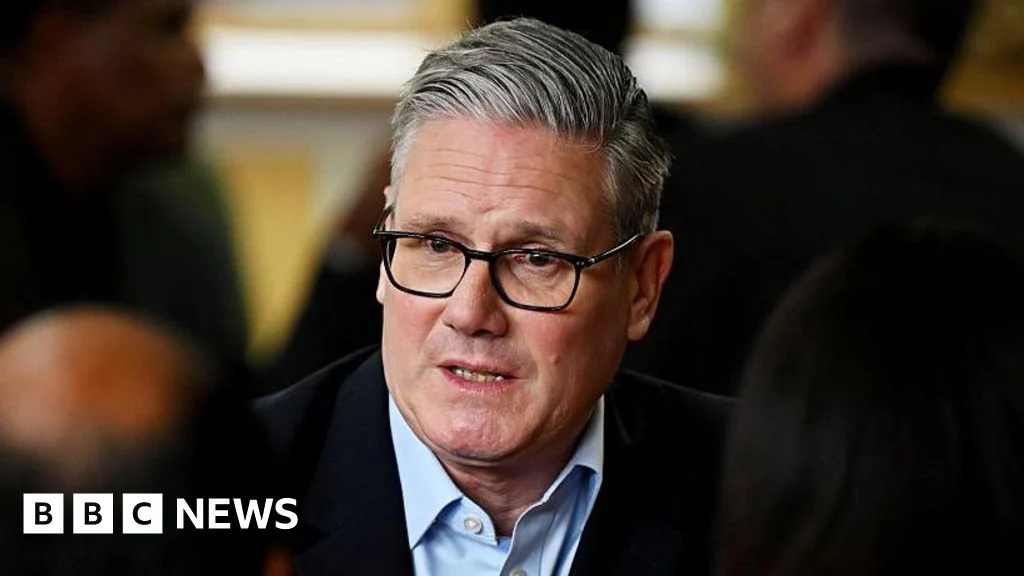
Government borrowing costs in the United Kingdom experienced a significant increase on Tuesday, driven by mounting uncertainty surrounding the political future of Prime Minister Sir Keir Starmer. The effective interest rate on 10-year government borrowing climbed to 5.13%, a level not seen since the 2008 global financial crisis. This rise occurs against a backdrop of broader market anxieties, including fears that the ongoing conflict in Iran could exacerbate inflation and necessitate further interest rate hikes.
Adding to market jitters, the prospect of a leadership change within the UK government has unsettled some investors. Speculation about potential shifts in fiscal policy, particularly the risk of looser public spending, has contributed to the elevated borrowing costs. This comes at a time when the UK's fiscal position is already considered fragile.
The political pressure on Sir Keir Starmer intensified following disappointing election results last week, with approximately 80 Labour Members of Parliament reportedly calling for his resignation. However, the Prime Minister has urged his cabinet to "get on with governing," emphasizing that the Labour Party's established process for challenging a leader has not been formally initiated. Some senior colleagues have publicly voiced their support for him to remain in his post.
While global governments have generally seen borrowing costs rise in recent times, influenced by geopolitical events like the Iran conflict, the UK has experienced particularly elevated rates when compared to similarly sized economies. Investors are closely monitoring the political developments and their potential implications for fiscal discipline.
Analysts at Capital Economics have indicated that a change in leadership at the top of the Labour party could lead to further increases in UK borrowing costs and a weakening of the pound. They noted that the UK's "already fragile fiscal position means that investors will be on edge for any signs of fiscal loosening." The firm suggested that potential successors to Sir Keir Starmer and Chancellor Rachel Reeves might not adhere to the same level of fiscal restraint.
Capital Economics specifically identified Andy Burnham, Angela Rayner, and Wes Streeting as potential frontrunners in a leadership challenge. The firm anticipates that these individuals would "probably raise public spending," potentially leading to increased government borrowing. This contrasts with the current administration's commitment to "iron clad" rules on borrowing, aimed at assuring markets of their economic plan's credibility.
Governments typically fund their operations through taxation but often incur deficits when spending exceeds revenue. These deficits are financed through borrowing from investors via the issuance of bonds, known as gilts in the UK. These gilts represent a loan that the government promises to repay at a specified future date.
Key to attracting investors is the assurance of a return on their investment, which is underpinned by a degree of certainty and confidence in the government's economic management. On Tuesday, yields across various gilt maturities – including two, five, 10, and 30-year terms – all moved higher, reflecting the heightened political risk.
The yield on 30-year gilts reached 5.80%, marking its highest point since 1998. The 10-year gilt yield serves as a benchmark for government debt, while the shorter-term two and five-year gilt yields can influence the pricing of fixed-rate mortgages with corresponding durations.
In addition to rising borrowing costs, the UK's primary stock index, the FTSE 100, saw a decline of 0.5%. Shares in British banks were particularly affected, amid concerns about potential tax increases under a new administration. The pound also weakened against the dollar, falling by 0.5% to trade at $1.35.
Anna Macdonald, investment strategy director at Hargreaves Lansdown, commented that elevated oil prices are contributing to inflationary pressures. She added that a "different UK prime minister might take a different view on borrowing, relaxing fiscal rules or extending them." This scenario, she explained, would likely compel investors, including the significant overseas buyers of UK government bonds, to demand a higher risk premium.
The cost of servicing the UK's national debt is closely tied to inflation and bond yields. This expenditure has been on an upward trend in recent years, now consuming approximately one-tenth of the government's total spending.


