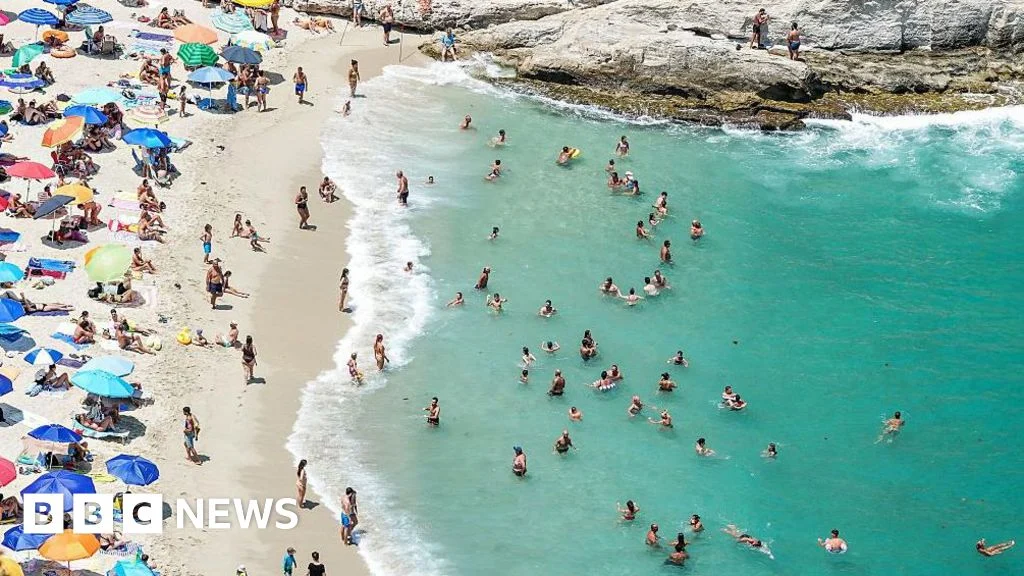
Europe's leading travel operator, Tui, has experienced a notable 10% decline in revenue derived from summer holiday bookings originating from the United Kingdom. This downturn is attributed to increased caution among UK consumers, influenced by geopolitical tensions, particularly the ongoing conflict involving Iran. The company has observed a discernible shift in booking patterns, with a move away from Eastern Mediterranean destinations towards those in the Western Mediterranean.
Furthermore, Tui has noted that customers are increasingly booking their holidays closer to the actual departure dates. In response to these market dynamics, Tui is implementing a strategic reduction in the number of seats it procures from its airline partners for the summer period. This reduction is expected to be in the range of 4% to 5%, while the company's own flight operations are slated to remain at current operational levels.
Despite the reduction in purchased seats, Tui's chief executive, Sebastien Ebel, has indicated that he does not anticipate any physical shortages of jet fuel in the coming weeks. This statement comes amidst broader concerns about potential supply disruptions. The Strait of Hormuz, a critical transit route for oil and liquefied natural gas, has been a focal point of these worries. Its potential closure has been linked to upward pressure on jet fuel prices.
In response to elevated fuel costs, some airlines have opted to increase ticket prices. Others, however, have chosen to reduce their flight capacity, a strategy aimed at attracting customers who are showing hesitation in committing to travel plans. Tui's financial results for the first three months of the year revealed a significant impact from the US-Israel war with Iran. The company reported a €40 million (£34.7 million) hit to its profits, stemming from costs associated with repatriation, welfare provisions, and lost revenue.
Overall, Tui posted an underlying loss before interest and tax of €188 million for the quarter. While this represents a loss, it is an improvement compared to the €207 million loss recorded in the same period last year. The company's total revenue from bookings for the current summer season has seen an overall decrease of 7% when compared to the previous year.
Investment director at AJ Bell, Russ Mould, commented on the situation, noting that while the travel and airline industry is emphasizing the absence of current fuel shortages, consumers are exhibiting nervousness. Mould suggested that greater clarity on alternative fuel sources, beyond those reliant on the Middle East, is necessary to restore public confidence and encourage holiday bookings.
Equity analyst at Hargreaves Lansdown, Aarin Chiekrie, echoed this sentiment, stating that consumers have understandably become more prudent with their spending on holidays. However, Chiekrie also observed that holidaymakers do not appear to be entirely abandoning their vacation plans. Recent data indicates a trend of later bookings, which, while not ideal for operators, is preferable to a complete collapse in demand.


