Federal Gas Tax Holiday: A Proposed Solution Amidst Rising Prices
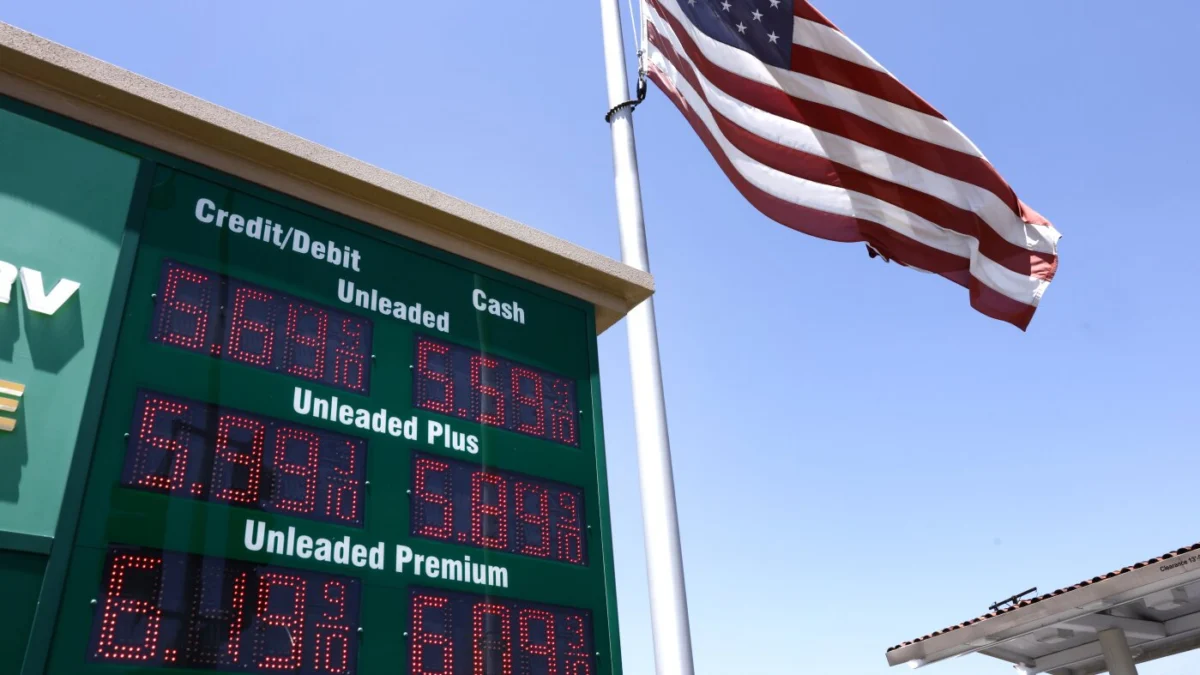
President Trump has advocated for a temporary suspension of the federal gasoline tax, a move intended to alleviate the financial strain on consumers grappling with elevated fuel prices. This proposal emerges as gasoline costs have reached four-year highs, largely attributed to oil trade disruptions stemming from the conflict with Iran. The federal gas tax currently stands at 18.4 cents per gallon, and a waiver would translate to a maximum saving of 18.4 cents per gallon for drivers. For a typical 15-gallon fill-up, this would amount to approximately $2.76 in savings. However, with the national average price for a gallon of gasoline hovering around $4.46, up from roughly $3 before the recent geopolitical tensions, the proposed relief would only offset a minor portion of the overall price increase.
The effectiveness and ultimate benefit of such a tax holiday are subjects of debate. While advocates champion it as a swift measure to provide immediate relief to consumers, critics argue that it could be both costly and counterproductive. One significant concern is that not all of the potential savings might reach the end consumer. According to Kent Smetters, faculty director at the Penn Wharton Budget Model, suppliers, including refineries and gas stations, possess a degree of market power that could allow them to absorb some of the tax reduction by slightly increasing their prices. This would effectively diminish the savings passed on to drivers. Penn Wharton estimates that approximately 13.2 cents per gallon might reach consumers, while Adam Hoffer, director of excise tax policy at the Tax Foundation, suggests a figure closer to 16 cents per gallon. This suggests that a portion of the intended relief could be retained by intermediaries in the fuel supply chain.
Furthermore, a reduction in the gasoline tax could inadvertently stimulate demand. Lower prices naturally encourage consumers to purchase more fuel, potentially exacerbating the existing supply-demand imbalance that is contributing to high prices. While a pause on the federal tax alone might not trigger a massive surge in demand, Patrick De Haan, an analyst at GasBuddy, noted that widespread suspension of state gas taxes could indeed lead to increased demand and, consequently, higher prices. State gas taxes vary significantly, ranging from 9 cents per gallon in Alaska to as high as 70.9 cents in California, with an average of 33.3 cents per gallon. Several states have already implemented or are considering measures to reduce or suspend their own gas taxes. For instance, Kentucky reduced its tax by 10 cents in May, and Georgia has extended its two-month freeze on its gas tax in response to the ongoing conflict with Iran.
The wider effects: Highway Trust Fund and Infrastructure Needs
Beyond the immediate impact on fuel prices, the suspension of gas taxes carries significant implications for public infrastructure funding. Revenue generated from the federal gas tax is channeled into the Highway Trust Fund, which is crucial for financing interstate highway construction and repair, as well as investments in mass transit systems. Similarly, state gas tax revenues are typically allocated to local road maintenance. The Penn Wharton Budget Model estimated that Georgia’s two-month pause on its gas tax resulted in a revenue loss of approximately $361 million for the state. Smetters emphasized the substantial financial impact, stating, “Now we’re talking real money.” This reduction in funding directly affects the availability of resources for essential road repairs and maintenance.
Rob Bhatt, an insurance analyst at LendingTree, highlighted the potential long-term consequences, warning that “Anytime you take away a source of funding for highway construction and maintenance, then you’re running the risk of the roads getting worse and not better.” The deterioration of road conditions leads to tangible costs for drivers. Patrick Marshall, a music teacher from New Orleans, recounted an incident where hitting a dip in the road resulted in nearly breaking a wheel off his truck, costing him $2,500 and a significant inconvenience. AAA estimated that damages from potholes alone cost American drivers approximately $26.5 billion in repairs in 2021. A recent LendingTree report, based on federal data from 2024, indicated that 8.9% of the nation’s road miles are in poor condition. Rhode Island fared the worst, with 31.5% of its road miles rated as poor, followed by California and Massachusetts. While Minnesota showed significant improvement between 2019 and 2024, reducing its share of poor road miles by over 60%, the national picture revealed minimal overall improvement during that five-year period.
The fundamental issue is that the federal gas tax system is facing a crisis of its own. For years, the revenue generated by the federal gas tax has been insufficient to fully fund highway construction and repairs, a problem that is steadily worsening. The gas tax was originally designed on the principle that those who use highways the most should contribute the most to their upkeep. This model, where increased mileage correlates with higher fuel consumption and thus higher tax payments, functioned effectively from the mid-1970s through the mid-1990s. During that era, gas tax revenues were adequate to cover all federal highway construction and maintenance expenses, as Adam Hoffer of the Tax Foundation explained, creating a self-sustaining system where drivers paid for the roads they used.
However, the system has become increasingly strained. The federal gas tax rate has remained unchanged since 1993, standing at 18.4 cents per gallon. In contrast, the cost of road repairs and construction has escalated significantly, and the price of gasoline has tripled over the same period. Smetters pointed out that the gas tax is a fixed rate, not pegged to the price of gasoline or adjusted for inflation, meaning its real value has eroded over time. Compounding this issue, vehicles have become more fuel-efficient, and per capita miles driven annually peaked approximately 20 years ago. These trends have led to a continuous decline in the amount of revenue collected through the gas tax. Consequently, the tax now falls short of the Highway Trust Fund’s needs annually, with an estimated shortfall of $17 billion projected for 2026. Congress has been compelled to bridge this gap using general taxpayer funds.
Raising the federal gas tax presents its own set of political hurdles. Hoffer noted that gas taxes are generally unpopular among politicians, drivers, and voters, making any increase a significant political challenge. Despite the potential benefits, such as discouraging driving and reducing carbon emissions, which in turn improve air quality and public health, political feasibility remains a major obstacle. Moreover, a well-structured gas tax is considered a fairer mechanism for funding highways compared to relying on general tax revenue.
The Evolving Landscape: Electric Vehicles and Future Funding Models
The growing adoption of electric vehicles (EVs) introduces another layer of complexity to the gas tax model. EVs utilize roads and highways, contributing to infrastructure wear and tear, yet they do not consume gasoline, and thus do not generate revenue through the gas tax. As EVs constitute an increasing proportion of the vehicle fleet, even a substantial increase in the gas tax would become less effective over time due to a shrinking base of gasoline-powered vehicles. To address this, many states have implemented EV registration fees, and the federal government is also exploring similar measures. However, given the current small share of EVs in the overall vehicle population, these fees do not adequately compensate for the gas tax shortfall. In some instances, EV fees have been set higher than the typical gas tax paid by conventional vehicle owners, raising concerns about fairness.
Alternative funding mechanisms are under consideration to replace or supplement the gas tax. A lobbying group representing major automakers has proposed a weight-based fee for all vehicle owners, ensuring that heavier vehicles, which cause more road damage, contribute more to infrastructure maintenance. Some states are experimenting with road-user fees, where drivers pay based on the number of miles they drive. These systems, which may use odometer readings or tracking devices, are viewed by economists as a more equitable way to collect revenue, aligning with the principle that greater road usage should correspond to greater financial contribution. However, the implementation of such mileage-based systems can raise privacy concerns, depending on the technology employed for tracking.
Smetters also pointed to congestion pricing and toll lanes as potential alternative funding sources. Despite these ongoing discussions and experiments, no single solution has emerged as a definitive replacement for the federal fuel tax. The current system, reliant on a static gas tax, is increasingly unsustainable. As the number of fuel-efficient vehicles and EVs grows, and as the cost of infrastructure maintenance continues to rise, the federal gas tax is becoming an increasingly inadequate mechanism for funding the nation’s transportation infrastructure. The challenge lies in finding a politically viable and economically sound solution that can ensure the long-term maintenance and improvement of the nation’s roads and bridges.
The proposal for a federal gas tax holiday, while intended to offer immediate relief to consumers facing high gasoline prices, overlooks the critical and long-standing issue of inadequate funding for highway infrastructure. The federal gas tax, unchanged since 1993, has failed to keep pace with inflation and the rising costs of construction and maintenance. This has led to a significant shortfall in the Highway Trust Fund, necessitating reliance on general taxpayer funds to cover the deficit. The increasing prevalence of fuel-efficient vehicles and the growing adoption of electric vehicles further undermine the gas tax’s viability as a sustainable revenue source. While a temporary gas tax holiday might offer a marginal, short-term benefit to drivers, it exacerbates the underlying problem of infrastructure funding, potentially leading to deteriorating road conditions and increased long-term costs for all road users.
The debate over gas tax holidays highlights a broader tension between immediate consumer relief and the long-term necessity of robust infrastructure investment. The current system, which relies on a fixed per-gallon tax on gasoline, is fundamentally broken. It fails to account for inflation, the rising costs of materials and labor, and the evolving nature of vehicle technology. Without a sustainable and equitable funding mechanism, the nation’s infrastructure will continue to suffer, leading to higher repair costs for drivers and a decline in the overall quality of transportation networks. Finding a solution requires a comprehensive approach that addresses both the immediate concerns of consumers and the pressing need for long-term infrastructure solvency.
The discussion around a federal gas tax holiday, championed by President Trump, brings to the forefront the immediate pressures of high gasoline prices on consumers. However, this proposed solution sidesteps a more profound and persistent challenge: the structural deficit within the Highway Trust Fund. The federal gas tax, a cornerstone of infrastructure financing for decades, has not been adjusted for inflation or the escalating costs of road construction and maintenance since 1993. This stagnation has resulted in a substantial annual shortfall, estimated at $17 billion for 2026, forcing Congress to allocate general funds to cover the difference. The increasing efficiency of vehicles and the accelerating adoption of electric cars further diminish the tax’s revenue-generating capacity, rendering it an increasingly obsolete funding model.
The potential savings from a gas tax holiday, estimated to be around 13 to 16 cents per gallon, offer only a partial reprieve from the current high prices, which have seen the national average exceed $4.40 per gallon. More critically, the revenue lost from suspending the tax directly impacts the Highway Trust Fund, jeopardizing funding for crucial road and bridge repairs. States that have already implemented gas tax pauses, such as Georgia, have experienced significant revenue losses, underscoring the fiscal consequences. The long-term implications of underfunding infrastructure are dire, potentially leading to increased vehicle damage from poor road conditions and a decline in the overall safety and efficiency of the transportation system.
As the nation grapples with the dual challenges of high energy costs and aging infrastructure, policymakers face the difficult task of balancing immediate economic relief with the imperative of sustainable long-term investment. The current federal gas tax system is demonstrably inadequate to meet these demands. Exploring alternative funding mechanisms, such as road-user fees, weight-based taxes, or congestion pricing, will be essential to ensure the future viability of the nation’s transportation network. Without a fundamental rethinking of how infrastructure is financed, proposals like a gas tax holiday, while politically expedient, risk exacerbating the underlying problems and deferring necessary solutions.


