President Donald Trump has sparked attention by saying, “I love the inflation,” after official figures showed U.S. prices rising at their fastest pace in three years. The Bureau of Labor Statistics (BLS) reported that the consumer price index (CPI) advanced by 4.2% over the prior 12 months in May, up from 3.8% in April, driven largely by higher energy costs in the wake of the U.S.–Israel–Iran situation. Trump, speaking at the White House, said, “I love it. The numbers were great. You know what I really love? I love the inflation.” He added that rising prices would “come down like a rock” once the war with Iran ends. Later, he told the New York Post that his remarks had been taken out of context, insisting that inflation was not higher than it could have been given the circumstances. “I love the inflation numbers because of what I’m talking about,” he said in another interview. He argued that even amid conflict, inflation was lower than anticipated and would fall further once hostilities subside.
In the meantime, the United States and Iran have exchanged strikes in the Middle East for a second day running. Trump noted nighttime operations that reportedly took “millions of barrels” of oil from Iran, suggesting these actions contributed to a small drop in oil prices. “When this conflict is over… you will see oil drop to where it was before,” he stated to reporters at the White House. He also referenced a trip to Iowa earlier in 2026, saying he had seen gasoline prices around $1.85 per gallon and claimed that prices would return to those levels soon. The global benchmark Brent crude remains higher than pre-war levels, underscoring persistent energy-market volatility.
Wednesday marked the third consecutive month of rising CPI, with households feeling the strain from the war in the region. Trump has repeatedly said inflation will cool once the war ends, though economists caution that inflation remains well above the Fed’s 2% target. Inflation pressures, particularly in energy, have kept overall price levels elevated and raised the prospect of further policy action by the Federal Reserve.
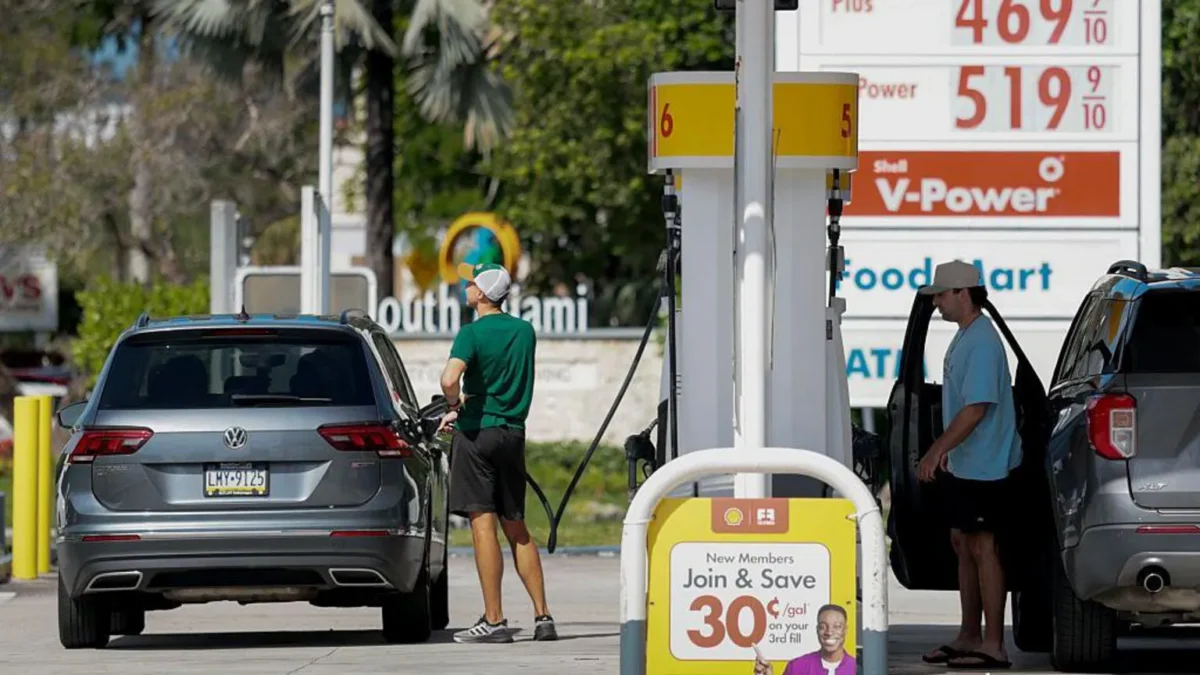
Energy costs, including gasoline and electricity, rose notably in May, reflecting broader increases in consumer costs as inflation remained a political and economic focal point ahead of elections. The American Automobile Association (AAA) reported the average price of regular gasoline at around $4.15 per gallon, up from roughly $2.98 on February 28, when Trump launched strikes on Iran. Iran’s response included actions that affected the Strait of Hormuz, a critical artery for global energy supply.
Economists see inflation as a continuing challenge, with forecasts suggesting that inflation data and the jobs picture will influence the Fed’s policy path in the coming months. May’s rise added to the trend of higher prices across categories such as air travel, personal care, and communications. While some pundits view the latest data as signaling a need for caution on monetary policy, others argue that a resolution of the conflict could help restore price dynamics closer to pre-war norms. The labor market and consumer sentiment also factor into the broader inflation narrative as policymakers weigh future rate decisions.
The CPI figures come as investors monitor whether inflation will ease and how the Fed will respond if inflation persists. While Trump pointed to potential relief as war constraints ease, other voices emphasize that disinflation would require a combination of supply stabilization and demand moderation.
Overall, inflation remains well above the federal target, and the path of energy prices and geopolitical developments will be crucial in shaping the trajectory of prices, borrowing costs, and economic activity in the months ahead.


